








Over the last half-century, we have created a system of publicly funded schools, both private and public, that is unique in the world.
We have given the chronically underfunded public system all the responsibilities and expect it to accept every child, including the most disadvantaged and so most expensive to teach, while starving it of resources. We have given sometimes extravagantly overfunded private schools all the rights, including the right to isolate themselves from the toughest end of education. As a result, we now have one of the most segregated education systems in the OECD: In the decade to 2015, Australia had the second-highest increase in concentration of disadvantaged students in disadvantaged schools, lagging only the Czech Republic. And we are continuing to use public funding to increase that segregation.
For those kids in the so-called “good” schools results have at best flatlined. For those in what are rapidly becoming residualised schools, results have plummeted.
And we haven’t just segregated our kids along class lines. We have sliced and diced them every way we can think of. We put girls with girls; boys with boys (though, as I’ve suggested, that might be changing a little); smart kids with smart kids; rich kids with rich kids; poor kids with poor kids; Christian kids with Christian kids; Muslim kids with Muslim kids; Jewish kids with Jewish kids; Catholic kids with … oh, wait, I’m not so sure most kids in Catholic schools are very Catholic any more; sporty kids with sporty kids; arty kids with arty kids; black kids with black kids; and white kids with white kids. Is this a good idea? Will it build a cohesive society? Does it help our kids to get to know one another and help break down prejudice? Or does it do the opposite?

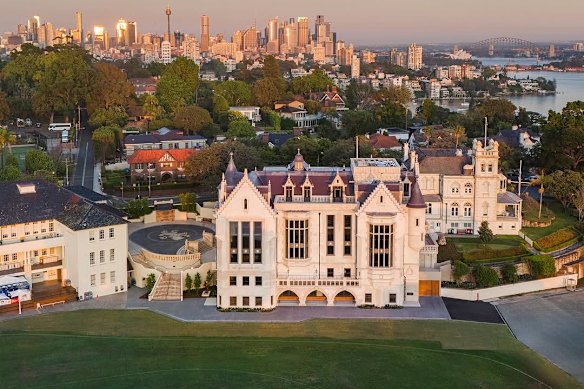
I keep wondering what exactly the decades of parental choice, neoliberal, competition-driven education policies have gained Australia. Fees have not become more affordable, particularly at the so-called “elite” schools, and as high fees have increased financial hardship, so choice has increased anxiety and stress. And if we think it’s bad now, one expert has calculated that on the current trajectory, some private schools may be charging fees of $100,000 a year by 2036.
I have asked defenders of the public funding of private schools why they support our current system, even debated them on the odd occasion. Rarely do they claim anything that adds to the public good. They never cite improvements in either excellence or equity. Instead, I always receive the same answers. It’s always more about their right to get the taxpayer to subsidise their private and positional choices than anything else.
The most common justification is that private school parents pay taxes, so their child is entitled to be subsidised. Their child is subsidised, like any other child, via their entitlement to a fully publicly funded place in their local public school.
Even better, this entitlement continues whether they choose to access the place or not. If they should lose their capacity to pay private school fees, their child is unhappy at the private school, or the private school is unhappy with their child, the local public school will accept them, no questions asked.
The same is not true in reverse. The fact that a family decides not to take up their public school place is not a justification for the funding to transfer to a different school.
Taxation is not a deposit account that we can draw on to “buy” whatever service we choose. Childless taxpayers also fund schools. According to the taxpayer argument, they should be able to withdraw that money. Our taxes fund public transport but just because someone chooses not to catch a train or a bus, we don’t believe their choice of private car should be subsidised by the taxpayer.
Another common justification is that sending a child to a private school helps public schools by reducing the burden of compulsory education. In fact, as I have argued more than once, the opposite is true. By removing the students requiring less support, private schools reduce the economy of scale in public schools. In other words, every middle-class kid who leaves the public system increases the ratio of needier students, thereby increasing the per-student cost. If most kids went to public schools, education would be cheaper for everyone, including governments, and much fairer.
Finally, there is the argument that public funding puts downward pressure on fees. There is precisely no evidence that this has occurred – rather, the opposite. Meanwhile, the proportion of disadvantaged students attending independent schools has shrunk dramatically. Hence, the alarming synchronicity of 28.9 per cent of students in private schools being from the highest socioeconomic backgrounds while exactly 28.9 per cent of the enrolments in public schools come from the lowest.
So how do we wind back the damage we have done – particularly as so few people want to recognise it even exists? I think Australia is as blind to the damage we are doing to our nation via the social segregation of our schools as America is to the horrific toll its refusal to implement sensible gun controls takes on its society. Tragically, those who suffer most in both instances are our children.
There are solutions. The Gonski review was an attempt to make our system fairer, and its recommendations might have had a positive effect, if politics and vested interests had not got involved. Those who care about public education, both as a principle and as an indispensable part of our democracy, must be prepared for the powerful and the privileged to do all they can to head off any changes.
The first suggestion about making our schooling systems more equal is, I believe, also the most politically achievable. It is something that has been suggested by many people, including participants in a national symposium on funding, equity and achievement in Australian schools, all of whom believe that all schools intercept of public money be subject to the same obligations.
In other words, all publicly funded schools should have to abide by the same standards of compliance, implementation and accountability for enrolment, behaviour and inclusion. This seems reasonable and logical, especially as many private schools now receive as much, if not more, public funding per student than the similar public school down the road.
In practice this would mean that private schools, once they had enrolled a student, would not be able to exclude that student for any reason that differs from the standard required from a public school to do the same. Perhaps even exclusion because of the nonpayment of fees should be subject to negotiation and arbitration by a body such as the Department of Education. This would prevent children that private schools decide they don’t want from being dumped on the already underfunded nearby public school, thereby compounding their degree of difficulty.
It would also require publicly funded private schools to shoulder at least some of the responsibility for compulsory education. As such, it is an eminently arguable proposition. Why should some schools in receipt of public funding have obligations to the public good, while other schools have none? The current education funding reforms, meant to bring every school up to its SRS (School Resource Standard), will not kick in fully until 2034.
Worse, they may still not be fully funded even then, given the definition of “fully funded” is disputed.
Education researchers Tom Greenwell and Chris Bonnor in their book, Waiting for Gonski, take this idea a step further. They suggest that all schools should be offered the chance of being publicly funded as long as they agree not to charge fees. They could keep their “special” character, usually religious, but would have to accept all children who wanted to attend within their area. Some private schools, especially high-fee ones, might decide this was a bridge too far and decline the offer. In which case they would lose their public funding and be self-supporting.
This would then release some badly needed dollars for schools struggling with high concentrations of disadvantage.
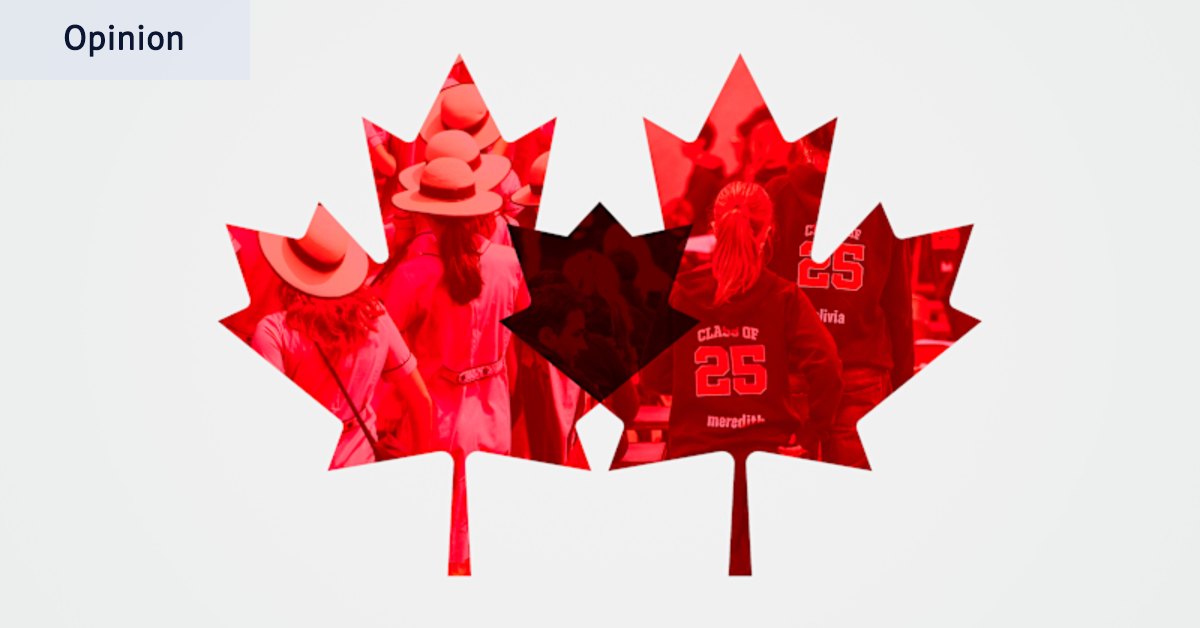
Greenwell and Bonnor call this “the Ontario Solution”, as that’s what schools in the Canadian province have done. Chris Bonnor told me about the shock the Catholic bishops of Ontario expressed when it was suggested that their schools could charge fees. They saw it as utterly antithetical to their religious mission. Maybe they should come and have a chat with the Catholic bishops in this country.
In both the United Kingdom and New Zealand, the majority of religious schools are part of the public system. They do not charge fees, must accept all local kids who want to come, but may keep their religious character. The only problem with this suggestion is that the private schools will fight it, and that matters because they are exceptionally powerful lobbyists. They can have their cake and eat it now. They will probably fight to the death against any attempt to rebalance the scales.
An edited extract from Jane Caro’s Rich Kid Poor Kid: the battle for public education, published by The Australia Institute Press, out on Tuesday, May 5
Start the day with a summary of the day’s most important and interesting stories, analysis and insights. Sign up for our Morning Edition newsletter.


