







The NRL, AFL and their clubs face the potential of heavy financial fallout from new restrictions on gambling advertising unveiled by Prime Minister Anthony Albanese.
The government will cap the number of TV advertisements for betting companies at three per hour between 6am and 8.30pm, with a total blackout during live sport broadcasts in those hours, as well as outlawing gambling sponsorships on jerseys and in stadiums.
Under existing laws, gambling advertisements are banned from five minutes before a live sport commences until 8.30pm. After 8.30pm, gambling ads can also appear during breaks.
The NRL and AFL both have major partnerships with Sportsbet, which have been valued at an estimated $15 million per year, while teams also have lucrative tie-ups with betting outlets.
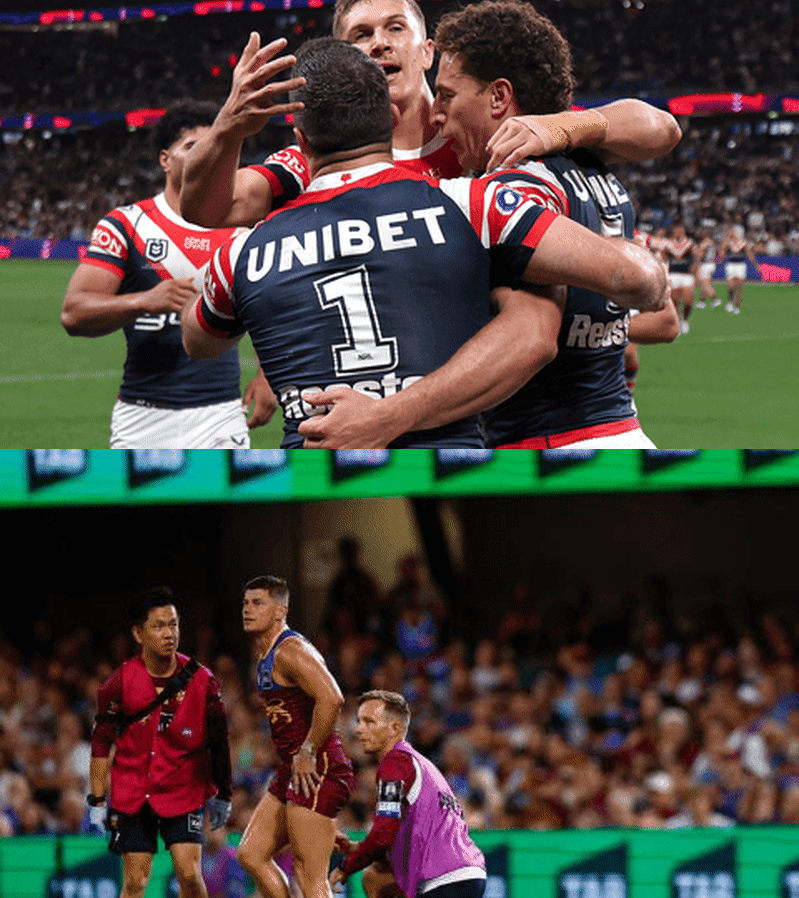
Five teams in the NRL – Wests Tigers, Sydney Roosters, Penrith Panthers, Newcastle Knights and the Dolphins – also have sports betting signage on their jerseys, but some other clubs have wound back visible links with wagering entities.
Cronulla last year ended a naming-rights deal under which its home ground was called PointsBet Stadium, while Manly ceased its front-of-jersey sponsorship with the same betting outfit after the 2024 season.
The AFL’s Brisbane Lions stand to be one of the biggest losers from the reforms if their partnership with the TAB is compromised. They are one of four AFL clubs that have sponsorships with gambling companies.
The Lions partner with TAB, the Giants recently signed an agreement with Unibet, the Dockers have a partnership with TABtouch and West Coast’s longstanding partnership with Crown Perth is in its 40th season this year.
However, none of those clubs carry advertising of a gambling company on their jumpers, with the bigger potential issue being limits on in-stadium advertising.
TAB advertises at the Gabba during Lions games. The club was contacted for comment.
But Sportsbet says its multimillion-dollar partnership with the AFL will not be affected by the reforms.
The gambling giant had already decided to withdraw in-stadia advertising at the MCG and Marvel Stadium at the start of this season.
While it did not seek compensation for the reduced exposure, the deal means rival betting companies cannot advertise at the grounds this year.
Sportsbet signed a seven-year deal worth around $100 million to become the AFL’s wagering partner in 2025.
The NRL and AFL declined to comment.
The changes fall well short of a complete ban, which was opposed by the major football codes and television networks, but could also affect the future value of sports rights.
The NRL has targeted a record broadcast rights deal of $4 billion over five years for the game, whose existing agreement with Foxtel and Nine, the owner of this masthead, runs out next year.
That would surpass the AFL’s seven-year, $4.5 billion broadcast windfall – the largest in Australian sport history – which was signed in 2022 and began last year.
“It certainly will present a challenge for them because all of a sudden, the commercial revenues flowing in will be less,” said Global, Media and Sports principal Colin Smith. “Therefore, the ability to pay for rights will be affected.”
Former Network 10 chief operating officer Jon Marquard is less concerned about the ramifications for sports rights despite the soft advertising market for free-to-air television.
“I don’t think it’s going to have too much of an impact,” said Marquard, who runs television and sport advisory Janez Media. “People are still going to pay for sports for its innate value for free-to-air broadcasting and for streamers.”
Rugby union and Australian soccer are less exposed to the changes, but Cricket Australia won’t be untouched. It has advertising for Bet365 displayed on the boundary rope during international matches in Australia.
It is expected there will be a carve-out in the new laws for coverage of horse racing, given its intrinsic connection to betting.
Sportsbet said in a statement on Thursday it was concerned the “overly blunt restrictions” risked pushing more Australians towards illegal offshore betting operators.
However, industry heavyweight Matt Tripp, who sold his stake in Sportsbet to Irish betting giant Paddy Power for $338 million before founding digital wagering operator Betr, said he supported changes to the advertising landscape.
“I’m all for reform, providing they are sensible changes to protect the consumer and the public more broadly,” said Tripp, who co-owns the NRL’s Melbourne Storm.
“If it’s in the best interest of the community, I’m supportive.”
While the TAB declined to comment on the proposed ad bans, former AFL chief and Tabcorp CEO Gillon McLachlan has long been on the record saying there was too much gambling advertising.
The government’s package follows the English Premier League’s landmark decision to ban gambling sponsorship on teams’ playing shirts after this season but is in contrast with an explosion of advertising in the United States since sports betting was legalised in 2018.
Similar laws passed in New Zealand last year have made it illegal for any organisation other than TAB NZ (and its partner brands) to advertise betting on sports or racing, which extends to the playing kits worn by visiting teams.
NRL clubs with gambling affiliated endorsements – including Penrith and Brisbane (whose back-of-jersey deal with The Star Casino falls under the New Zealand legislation) – have worn specifically made jerseys without those sponsors when playing the New Zealand Warriors at home.


