








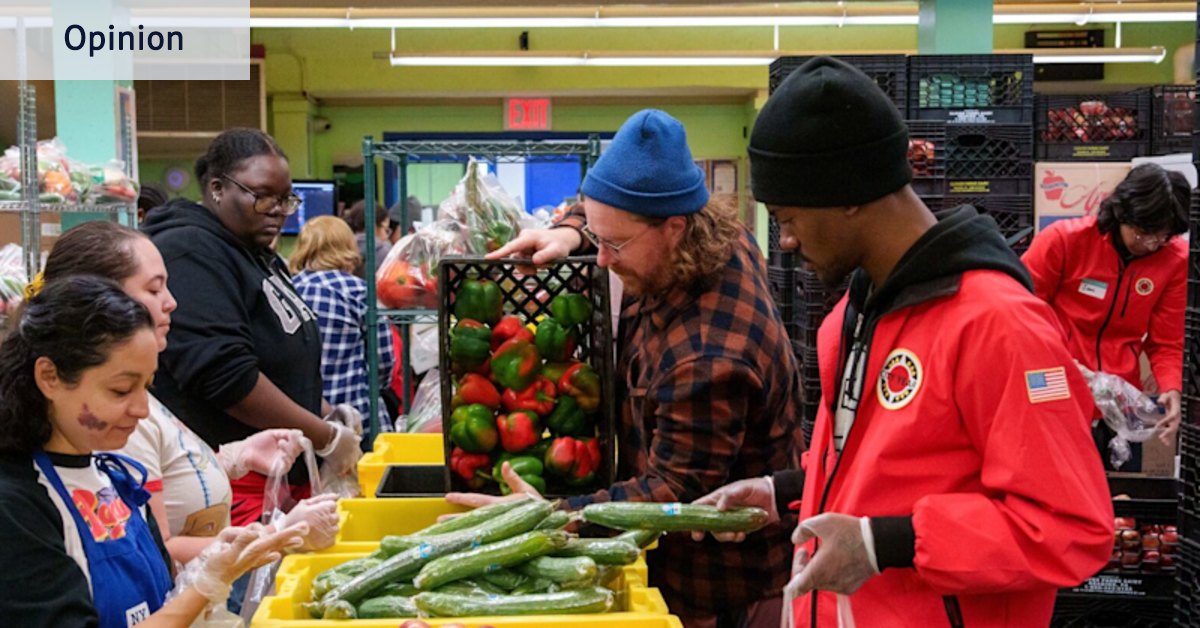
On a cold autumn morning last week, a security guard outside a food bank in the New York neighbourhood of Harlem was dealing with a steady stream of people. A friend and I had come to this branch of the city’s largest hunger relief organisation, the Food Bank for NYC, to drop off donations our kids had collected for a school community service project.

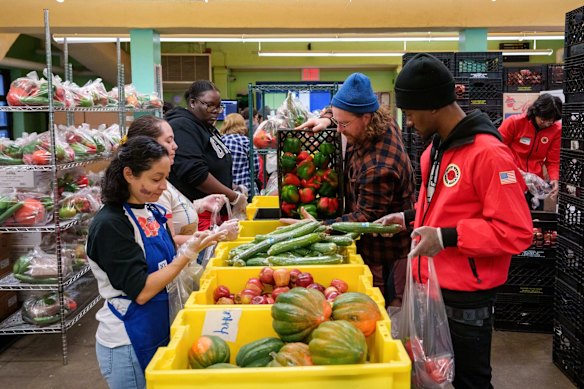
Volunteers sort donated food items at a food bank in New York. Credit: Bloomberg
As we unpacked bags of soap, shampoo and toothbrushes, a woman with salt-and-pepper hair knocked on the window. “Can you help me?” she asked. “What exactly is being done for people who didn’t get their food stamps?”
During the federal government shutdown, 42 million Americans who rely on the country’s largest food assistance program have been living under a cloud of anxiety. The Trump administration has refused to fully fund the program, resulting in delays and uncertainty over whether recipients would receive benefits this month.
An end to the longest government shutdown in US history is now in sight, after the Senate passed legislation on Monday night (local time). But while politicians have spent the past six weeks arguing in the nation’s capital, here in New York, where 1.8 million residents rely on food stamps, lines for donated food have grown longer.
More than 350 people waited for groceries at the Food Bank for NYC’s Harlem branch last Thursday night, more than double the number from six weeks earlier, staff told me. More federal workers, some of whom have not been paid during the shutdown, have joined the queue.
Loading
Desperate stories of people struggling to put food on the table have made headlines in recent weeks, but hunger is nothing new in America’s richest city. New York might be home to Wall Street titans, luxury skyscrapers, designer boutiques and 384,500 millionaires, but one in four of its residents live in poverty, nearly double the national average, according to research published earlier this year by Columbia University and Robin Hood, an anti-poverty group.
“Monday through Sunday, we know that there are millions of New Yorkers facing food insecurity,” Sultana Ocasio, director of the Food Bank for NYC’s Harlem branch, told me. “That’s not new to us.”
You don’t need to visit a food bank to see people struggling. In this city, the gap between rich and poor seems to be everywhere you look. Each day, people beg for spare change outside pizza shops and cafes. Most nights, a man sleeps on the steps of the bank across the street from our apartment in Greenwich Village. Meanwhile, a short walk away, a store sells knitted sweaters for dogs worth $US50 ($76). You can buy your pet pooch a packet of Alaskan salmon chips while you’re there. You don’t have to be a bleeding heart to recognise there’s something seriously wrong when dogs seem to enjoy a better quality of life than some of this city’s human residents.


