










Youth workers and mentors will be embedded in two major Melbourne hospitals under a new state government-funded pilot program designed to divert injured youth offenders away from a life of crime.
Under the $2.5 million program, young people admitted to trauma units after being injured in a violent incident such as a machete brawl or a gang attack will be connected with a youth worker or mentor, who will be able to offer practical support to help them turn their life around.
This includes helping the young people access housing, alcohol and other drug services, or pathways into work and study as they recover from their injuries.
The pilot will be run at The Alfred and Royal Children’s hospitals later this year and mirrors similar initiatives in the United Kingdom and the United States that have shown some success in curbing youth crime rates.
Violence Reduction Minister Sonya Kilkenny said the program would be the first of its kind in Australia, and possibly the southern hemisphere.
“It’s drawing on those models that are known to work,” Kilkenny said on Sunday.
“We are tailoring them to Victoria, and we’re going to roll this out as a nation-leading project under our Violence Reduction Unit to get in early, to intervene, to be able to access that critical window when these young people come into our trauma services, and try to change the trajectory of their lives.”
The latest figures released by the Crime Statistics Agency in March show Victoria is grappling with its highest crime rate since 2016. The surge is in part driven by youth offenders, who are now responsible for more than half of the state’s carjackings, home invasions and robberies.
Youth crime in Victoria rose by about 2 per cent in 2025, despite increased police efforts to crack down on youth gangs which led to 1223 children being arrested a combined 6997 times and the seizure of a record 17,400 knives and machetes.
Professor Mark Fitzgerald, director of trauma services at The Alfred, has seen his fair share of horrific injuries caused by bladed weapons.
He said that while doctors treated young people for their injuries when they were taken to hospital, their care often ended there.
“We don’t actually rescue their lives; we just save them from that moment,” Fitzgerald said.
He said the new pilot program offered about 20 to 30 per cent of those young people the opportunity to turn their lives around and build a future.
“Something that’s based in reality rather than just some sort of unreal distortion of what life is really about,” he said.
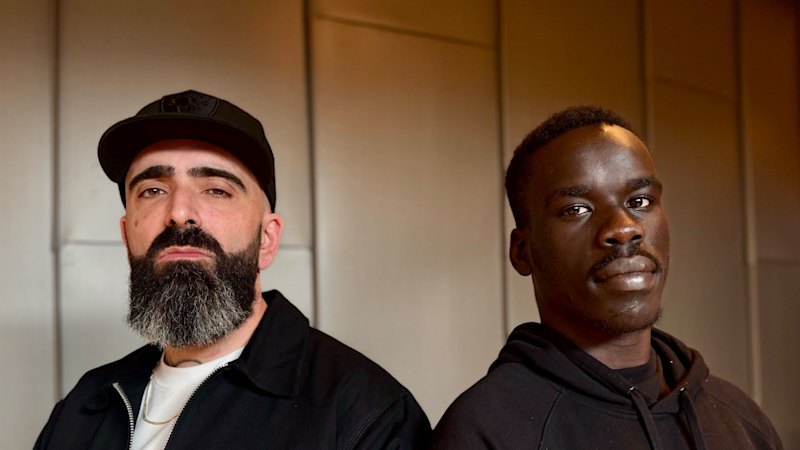
Shayne Hood is a chief executive at 16 Yards, an organisation that pairs at-risk children with reformed offenders to help guide them away from crime. The organisation is one of the youth services involved in the pilot, along with the Youth Support and Advocacy Service.
Hood said many young people felt lost and struggled to find themselves away from dangerous “hyper-identities”.
“What we do is we build new identities,” he said. “There’s a great world outside, that sits outside of crime.”
Mentor Jacob Kuol knows that all too well.
After falling in with the wrong crowd and “making a few mistakes”, he spent time in custody but eventually turned his life around through mentorship and sheer perseverance. Now, he is using his experience to help others leave “the life”.
“I can tell them that I’ve been in that position, so I have the correct advice to navigate them out of that life because I’m living proof that I made it out,” Kuol said.
“A lot of young people have low self-esteem, and they don’t believe in themselves. I just help them believe in themselves and let them know that you are meant to be greater, you are worth more.”
Kuol said a hospital stay often came with a reality check for many young people, offering mentors like himself an opportunity to intervene and steer people away from previous patterns.
Associate Professor Joseph Mathew, deputy director of trauma services as The Alfred and one of the brains behind the pilot, calls that window “a teachable moment and a reachable moment”.
“Trauma specialists encounter these young people at their most vulnerable moment, as they recover. We see a window where they are receptive, they are open,” Mathew said.
The pilot will be funded for two years and include six social workers and mentors working across both hospitals.
Mathew said his ambition was to eventually roll out the program to all hospitals in the state.
“It will be a model for the rest of the country,” he said.
Start the day with a summary of the day’s most important and interesting stories, analysis and insights. Sign up for our Morning Edition newsletter.


