









China is moving to tighten electric vehicle safety rules, in a shift that could shape how EVs are designed here in Australia.
Since the start of 2026, Chinese regulators have moved to close loopholes around three high-profile EV features: flush door handles, touchscreen-only controls and yoke steering wheels.

The push follows a series of crashes, including fatal incidents in which people were reportedly trapped in vehicles with pop-out door handles after power failures. Those cases appear to have hardened Beijing’s approach and raised fresh questions about whether some futuristic EV design trends are creating new safety risks.
MORE: Aus ‘ground zero’ for China car battle
And the changes are likely to carry weight globally.
Carmakers wishing to maintain access to the Chinese EV market — the world’s largest — will have little choice but to adapt their global design language, a shift that will inevitably reshape the Australian market.
Data from the Federal Chamber of Automotive Industries and the Electric Vehicle Council shows sales of Chinese-built cars rose 31 per cent in 2025 to 252,702 vehicles, accounting for roughly one in every five new cars sold.
Buttons make a comeback

In a massive backflip coming out of China, new regulations will also address the industry’s growing reliance on touchscreens.
The Ministry of Industry and Information Technology has proposed draft rules targeting heavily screen-based interiors from brands like Tesla.
The proposed regulations clarify that indicators, hazard lights, gear selection and emergency calling through physical buttons with a minimum surface area of 10×10 millimetres.
This puts Tesla’s ‘screen-only’ gear shifting directly in the crosshairs, potentially forcing a tactile U-turn for the minimalist EV giant.
The change aims to keep critical functions easily accessible so drivers can act without taking their eyes off the road.
The proposal is still open for public consultation, but it is expected to apply to newly built vehicles from July 1, 2027, with manufacturers given until 2028 to comply.
Flush door handle ban
Earlier this year, China announced a ban on flush door handles, a feature popularised by Tesla and widely copied by other EV brands.
The new rules, formulated by the Ministry of Industry and Information Technology, specified that vehicle doors must have hand-operated mechanical releases on the inside and outside, and the interior handles must be easily identifiable.
MORE: ‘Not viable’: Albo warning to China car brands
The standards are due to take effect in 2027, with a grace period for existing models running through 2028.
And China is not the only country raising concerns.
US authorities and European regulators are also examining similar safety reasons, which could spell the end of flush handles on more vehicles sold around the world.
Yoke steering wheel ban
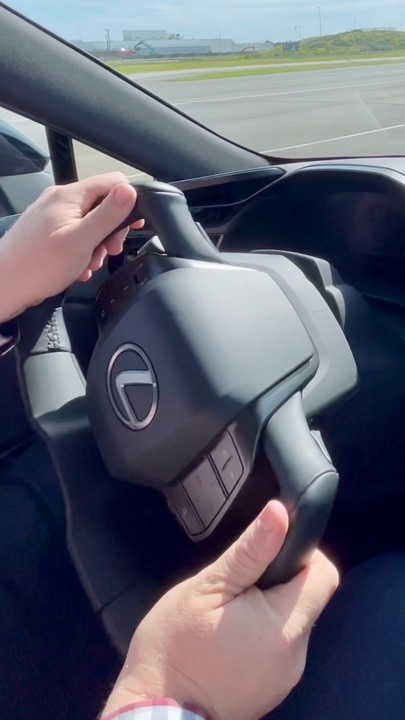
China is also taking the stance to ban the yoke steering wheel outright, another design feature embraced by some EV makers.
Local media reports say Chinese regulators are targeting the yoke for its lack of hand support during high-speed emergency manoeuvres. More critically, safety audits suggest the design poses a ‘projectile risk,’ where fractured metal or plastic shards could be launched at the driver when the airbag is triggered.
MORE: ‘Spot pricing’: Big warning on Aussie car costs
Yoke steering wheels are set to be banned when the new rules take effect in 2027; however, new models that have already obtained the ministry’s approval can still be produced and sold in a transition period that ends before 2028.


