


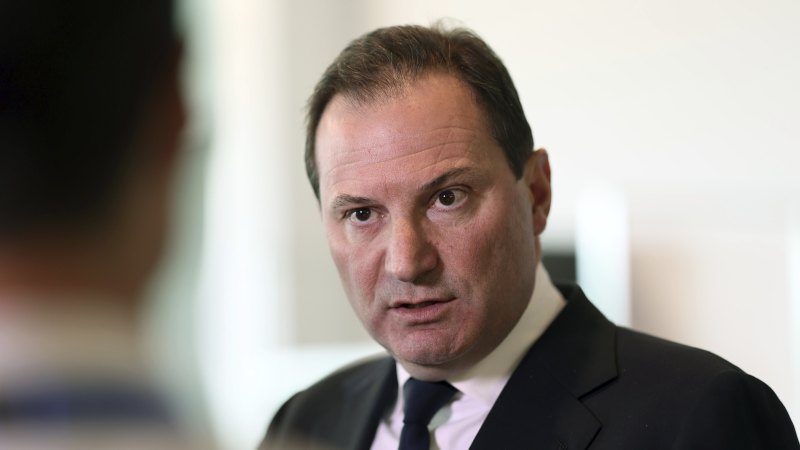

The head of Australia’s largest power retailer says growing contributions from renewables and batteries are cutting the cost of generating electricity – a shift that could offer much-needed relief for household energy bills if the downturn holds.
Origin Energy chief executive Frank Calabria’s cautiously optimistic outlook on short-term power prices follows a landmark quarter for the nation’s energy transition, during which wind, solar, hydro and battery discharges supplied more than half of the eastern seaboard’s main grid for the first time.
Record-breaking output from renewables, paired with a rare stretch of no major unexpected coal-fired power station outages, helped stabilise the grid and drive a 44 per cent reduction in the wholesale price of electricity – what retailers pay generators for power – over the three months to December.
“The wholesale electricity prices, if they ultimately persist, will find their way into forward retail tariffs,” Calabria said on Thursday.
Swings in wholesale costs do not immediately affect the retail prices paid by households, but regulators take them into account in March when they draft each state’s annual default market offers – the maximum that retailers can charge customers who do not take up deals.
Other factors also influence electricity bills, such as costs covering construction and maintenance of power poles and wires, Calabria added. Known as network charges, these can often account for 40 per cent of a typical power bill, and may offset the relief from reductions in the wholesale price component as more infrastructure is needed to cater for growing electricity demand and link far-flung renewable energy zones and major cities. But any reduction in the various components of the bill helps, Calabria said.
This year’s “default market offers” will have added significance for household budgets after the Albanese government announced in December it would end its $75-a-quarter energy bill rebates.
Despite higher renewable output and battery discharges curbing price swings after sunset so far this summer, Calabria cautioned that the retail impact of lower wholesale prices was not locked in yet, and market conditions could deteriorate quickly if sudden power station outages or a lack of wind or sunlight collided with bursts of elevated demand.
“There is still uncertainty,” he said.
Electricity bills have gone up hundreds of dollars a year across parts of Australia since 2022, largely due to the fallout from Russia’s invasion of Ukraine boosting coal and gas prices and adding to the cost of generating power.
The rollout of new renewable projects and transmission lines is also lagging the speed needed to compensate for the closures of coal-fired power stations, which still provide critical back-up for wind and solar to ensure the lights stay on.
Last month, Origin Energy agreed to delay the closure of Australia’s biggest coal-fired power station, the Eraring generator in NSW, following warnings from authorities that the grid was under-prepared for its retirement.
Origin, which supplies power and gas to more than 4 million customers across Australia, is a diversified energy company spanning coal and gas-fired power generation, renewable energy and grid-scale battery storage.
On Thursday, the company lifted its profit target for the year ahead after posting stronger-than-expected underlying earnings of $593 million.
The Business Briefing newsletter delivers major stories, exclusive coverage and expert opinion. Sign up to get it every weekday morning.
 Nick Toscano is a business reporter for The Age and Sydney Morning Herald.Connect via X or email.