







Historically, in an election campaign, the major political parties save up big announcements for the crunch weeks just before the vote, when the media – and therefore, the logic goes, voters – are watching.
At the last election, Labor hardheads realised the fragmentation of media meant they could not count on reaching most voters within the five or six weeks of a campaign. Instead, the government announced its big-bang health policies early in the year, giving them time to filter out through the hundreds of different channels now available.
This is a long way of saying that it is very difficult right now to discern exactly what is happening politically with the budget. It may be even harder to discern what is happening on the substance – but one step at a time.
Despite the tenor of most reporting, the early polls would not have troubled Labor. Newspoll found Labor losing no votes. The Resolve Political Monitor, in this masthead, found Labor going backwards, but moving within a range it has been in since March. Yes, there is now a debate about the broader changes to capital gains tax. But given that this budget upset decades-old assumptions about property taxes, Labor should have been thrilled there was no immediate voter revolt.
Which brings us back to Labor’s election epiphany: as news of the wider budget filters out to voters, this may change. But it is hard to say because, so far, both sides of the debate are mangling their case.
The loudest outrage so far has come from the tech sector. That has the feverish feeling familiar to anyone who has ever been on a group chat in which everyone agrees with everyone else and takes each other too seriously. It is hard to avoid the sense that tech founders have dramatically overestimated how sympathetic they are as protagonists in this tax battle.
Some possess the self-awareness necessary to see this – such as veteran investor Daniel Petre: “You’ve got your kids in school, you’ve got the benefit of Medicare, you’ve got your degrees in Australia, you’ve got your family and friends, and you are leaving for a seedy tax haven because of about 10 to 15 per cent more tax on your shares? Cool the f— down and take a valium.”
More gently, recent tech founder Jamie Hall put it like this: “If it was only a matter of money and tax rates, my brothers in tech would have moved to Monaco already. As it is, we take for granted a lot of public services that need to be paid for.”
And how will those services be paid for? In part, by raising taxes. That is something the government has been flagging since it came to office: the gap between the services we expect and the taxation being collected.
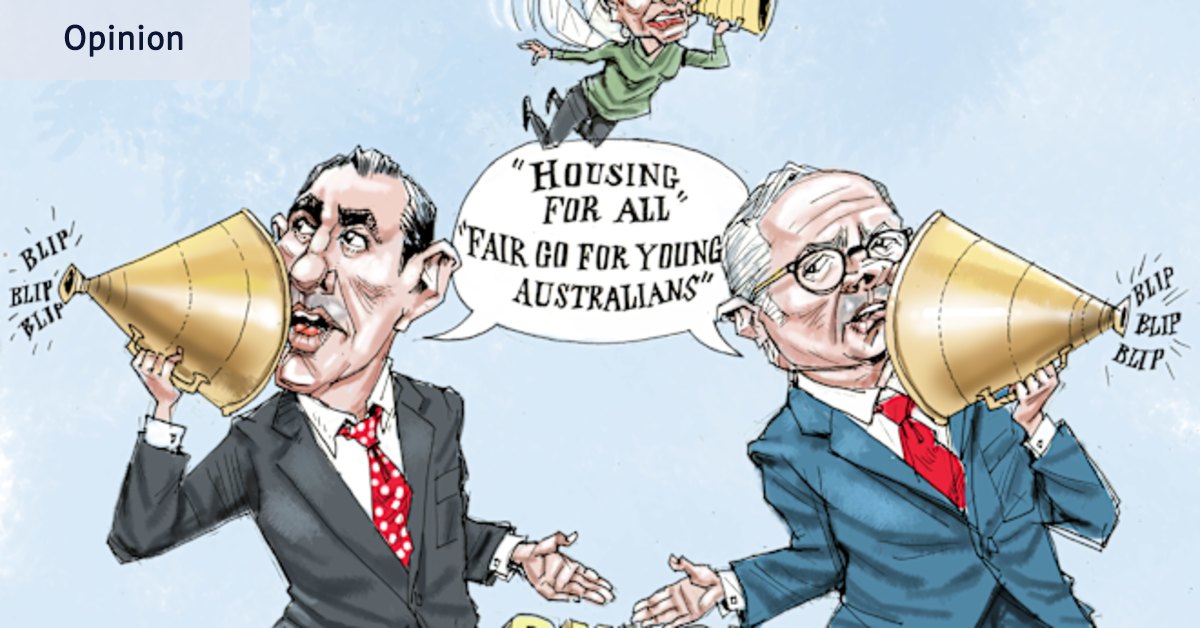
Not that the government has made that argument much recently. In the lead-up to the budget, its focus was on the intergenerational inequity in housing. Since the budget, housing has stayed prominent, but it has been joined by arguments about inequality between those who earn income from work and those who earn income from assets.
The truth is that all three are issues – and they are connected. With its budget measures, the government addressed all three. That is a serious policy undertaking.
And yet its shift in focus, from property to broader inequities in the tax system, has left the government’s arguments muddy, a risk this column warned of just before the budget. And that’s not the only reason. In its attempts to make the case for these broader changes, the government swerves between high-end values statements and more detailed explanations couched in technocratic language.
Most voters won’t grasp most of this debate. But they would be reassured by a government both willing and able to explain exactly what is happening in ordinary language.
Perhaps the government is wary of digging in too deep, given it is likely to make changes. The disingenuousness of the tech sector’s arguments does not mean every criticism of these proposals is misplaced. The arguments around small business in particular should worry Labor. This area feels a little like Bill Shorten’s franking credits proposal in 2019. As journalist Karen Middleton has pointed out, it is all too possible for unaffected people to imagine they will be caught up in such changes.
It’s worth recalling the government’s “retreat” on superannuation last year. Encountering a backlash to specifics, it came up with another plan that achieved the same goals. Critics, feeling they had been heard, were satisfied. You can imagine the government doing something similar here. That would be very different from a full retreat, in which Labor decided only to apply its changes to property – which would be deeply embarrassing and at odds with its philosophical arguments.
Before the budget, it seemed Labor was finally going to pick a fight on a topic voters care about – housing. Labor’s victory is that it will get its housing changes through without that battle. But its loss is that it needed that battle: a public demonstration of its willingness to fight for people who feel they’ve been ignored.
A new Redbridge/Accent poll shows how urgent that is. It raises the real possibility of One Nation becoming the official opposition after the next election – and even perhaps winning seats from Labor and pushing the government into minority.
There is a race on between the parties to convince voters that they, too, understand things need to change. One Nation’s advantage is that it can’t do anything: it can make announcements without the difficulty of acting. Labor’s advantage is the opposite: it can do things, using its willingness to persist through difficulty as a sign of its conviction. Actually changing things helps too.
That means Labor needs to win this fight. There are no clear signs it is losing – but it could be doing more. Sometimes, in politics, showing conviction goes a long way: voters can be convinced if they see the politician is convinced. The prime minister’s passionate display on Saturday will help. Sharp, clear, detailed advocacy – combined with moderate, principled compromise – might do the rest.
Sean Kelly is a regular columnist and was an adviser to Labor prime ministers Julia Gillard and Kevin Rudd.
Get a weekly wrap of views that will challenge, champion and inform your own. Sign up for our Opinion newsletter.


