


“I have deep respect for the rule of law and for accountability in our democracy. No one – certainly not the chair of the Federal Reserve – is above the law.
“But this unprecedented action should be seen in the broader context of the administration’s threats and ongoing pressure” for lower interest rates and more broadly for greater say over the Fed, he said.

Powell has spoken out about efforts to indict him.Credit: Bloomberg
“This new threat is not about my testimony last June or about the renovation of the Federal Reserve buildings. It is not about Congress’ oversight role. Those are pretexts. The threat of criminal charges is a consequence of the Federal Reserve setting interest rates based on our best assessment of what will serve the public, rather than following the preferences of the president.”
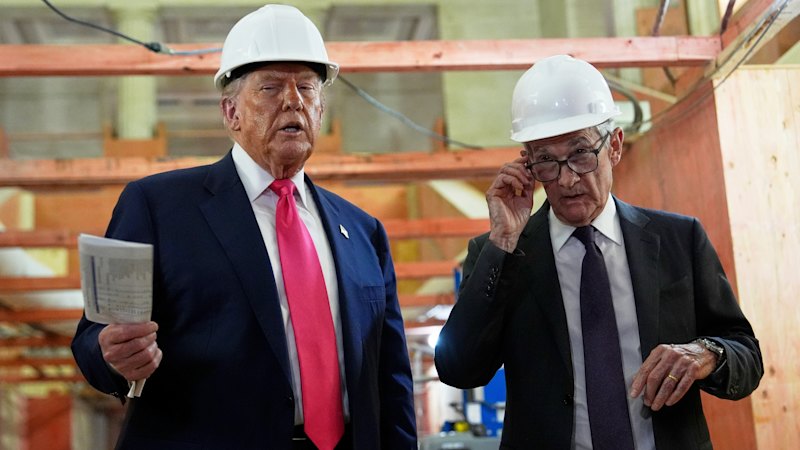
Trump told NBC News Sunday that he had no knowledge of the Justice Department’s actions. “I don’t know anything about it, but he’s certainly not very good at the Fed, and he’s not very good at building buildings,” Trump said.
A Department of Justice spokesperson declined to comment but added: “The Attorney General has instructed her US attorneys to prioritise investigating any abuse of taxpayer dollars.”
‘Low point’ in presidency
Trump has demanded the Fed cut rates sharply since resuming office in January, blaming its policy for holding back the economy and musing about firing Powell despite the legal protections ostensibly covering the Fed chair from removal.

The Federal Reserve building in Washington.Credit: Bloomberg
The independence of central banks, at least in setting interest rates in order to control inflation, is considered a central tenet of robust economic policy, insulating monetary policymakers from short-term political considerations and allowing them to focus on longer-term efforts to keep prices relatively stable.
The inquiry into Powell “is a low point in Trump’s presidency and a low point in the history of central banking in America”, University of Pennsylvania Fed historian Peter Conti-Brown said.
“Congress did not design the Fed to reflect the president’s daily fluctuations, and because the Fed has rebuffed President Trump’s efforts to take the Fed down, he is launching the full weight of American criminal law against its chair.”
Turning point
The subpoenas and statement by Powell mark a stark shift in the long-standing battle between Trump and Powell. Trump elevated Powell to the chair’s job during his first term, but quickly soured on him and made his opinions clear in a series of rebukes and threats.
Powell, for his part, had largely eschewed comment on the president’s actions or statements, instead acknowledging that chief executives often express opinions about a variety of issues, and pledging, as he did in the Sunday statement, to “continue to do the job the Senate confirmed me to do”.
However, the Trump administration’s latest moves, coming within months of the end of Powell’s term as chair in May, appear to have marked a turning point. Powell has directly accused the administration of using the legal system to try to achieve its goal of getting the Fed to lower interest rates further and faster than the bank’s body of 19 policymakers feels is appropriate.
Powell has the right to continue on the Fed board until January 31, 2028, depriving the president of an additional Fed appointment – what would be Trump’s fourth on the seven-member board – until near the end of his term.
The White House early last year began criticising the Fed’s $US2.5 billion renovation of two of its buildings in Washington, describing it as overly costly and ostentatious.
Some analysts at the time did call it a pretext for the Trump administration’s pressure campaign for lower interest rates, but Powell did not. The Fed chair instead posted detailed explanations of the work on the central bank’s website and sent letters to members of the Trump administration providing background.
Loading
