







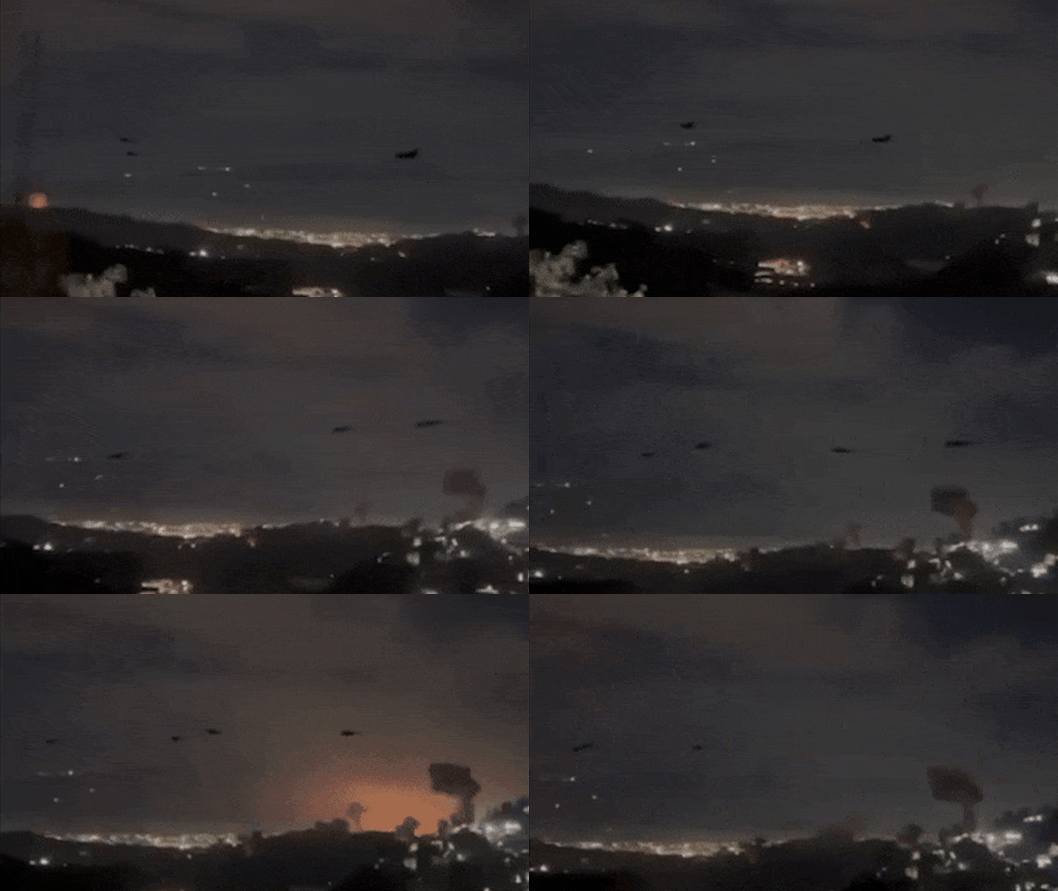

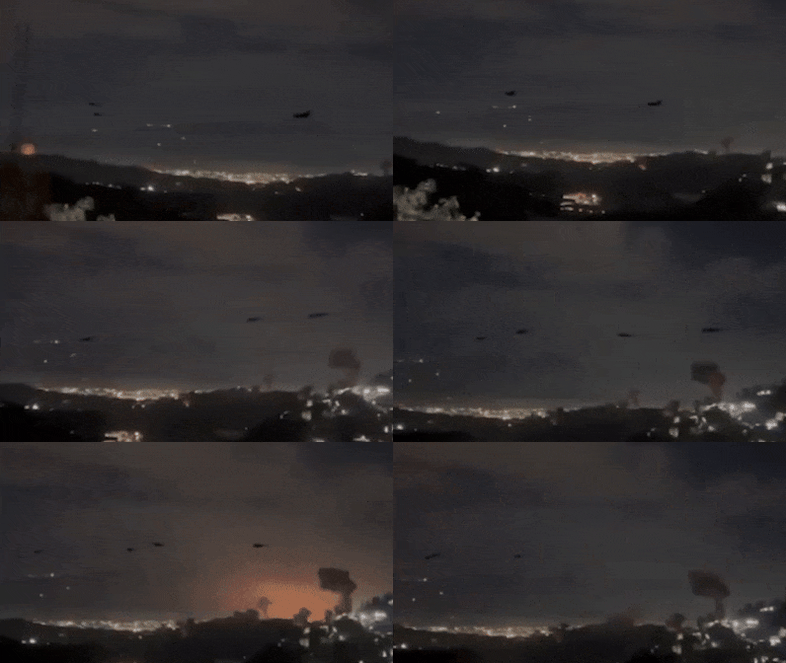
Venezuelan officials would later say that American strikes targeted naval infrastructure and medical warehouses in the nearby port.
The muffled explosions confused Roison Figuera, 29, who said he thought they were part of the final episode of the Netflix show Stranger Things he was watching at home.
“And another one goes off,” he said, “and I say, ‘Well, no, this is not the television’.”
He went up to the roof of his house, which has a direct view of the port of La Guaira. He saw another explosion erupt, so he took out his phone.
“At first, I thought a fuel truck or a ship had exploded,” said Figuera, a journalist and dancer. “But then I actually thought – half-joking – I asked myself, ‘Have the Marines arrived?’”
When he heard from colleagues that similar explosions were taking place in Caracas, he realised some kind of attack was taking place.
Closer to the port, people driving a car captured the moment in which a strike hit the ground. “Another one is coming, there it comes!” a man said right before driving past a loud bang and a massive fireball. Another explosion is heard as the car rushes down the street.
Some of the destruction was filmed by residents as they made their way through a city under siege. The precision of the strikes was visible in the ruins of the port. Mobile phone footage captured fires burning behind blue-fenced facilities with shipping containers.
On the streets, people were starting to clear the rubble in an attempt to restore traffic to the main coastal artery of La Guaira, which connects the port with the highway that climbs up to Caracas.
Chaos also ensued in Caracas after US strikes hit Fort Tiuna, a fortified military base that houses, among other things, Venezuela’s Ministry of Defence. Maduro and his wife, Cilia Flores, were captured at the defence compound.
Armando Polachini, who lives in a residential complex next to the fort, was kept awake by neighbours throwing a loud party. But the music was abruptly eclipsed by the thunderous roar of an explosion. When moments later the power went out – part of a cyber-operation that cut power to large swaths of the capital to allow US military aircraft to approach undetected – a thought grabbed him.
“The first thing that came to mind was these are the Americans,” said Polachini, 44, the manager of a clothing brand. “I grabbed my phone and the first thing I did was try to record what was happening.”
Below his balcony, crowds rushed from their apartments and into the streets, fleeing either on foot, by car or on motorcycles. Polachini decided to stay put and calm his family members, who began to panic.
“It was a pretty horrible situation,” he said. “I still have it playing over and over in my mind. Over and over. The sound of the missiles – the sound of them falling.”
Hours later, after dawn broke over the coast, Figuera went to film the aftermath in La Guaira. A massive plume of smoke loomed over the port. Other Venezuelans in the greater Caracas area and nearby northern coast emerged from their homes to find their communities transformed, and lined up at the few open supermarkets to try to stock up on supplies: toilet paper, precooked corn flour and canned goods.
“There is an eerie silence here,” Figuera said. “I’m kind of in shock. I don’t feel anything. I’m just waiting to see what might happen.”


