






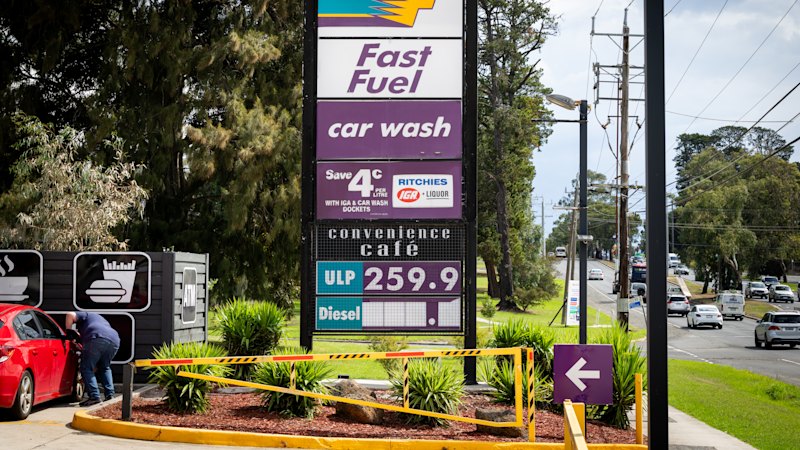
Unleaded petrol was selling at an eye-watering 259.9¢ a litre at Fast Fuel service station in Wantirna on Wednesday. Diesel wasn’t selling at all. Yellow signs with a sad face emoji had been stuck to every hose in the forecourt, reading: “Sorry this hose not in use.”
“I’ve been out of diesel at my sites for over a week. A couple of my sites will be out of unleaded in the next day or so,” said Paul Andronicu, the director of four independent service stations in Melbourne’s outer east.
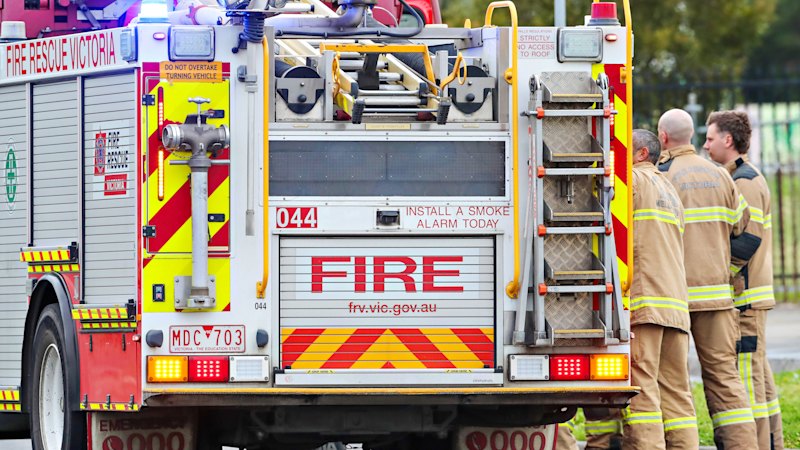
The number of Victorian service stations that had run dry of diesel reached 92 by 5pm on Tuesday, including 48 in Melbourne and 44 in the regions, while the number without petrol hit 115, including 61 in the city and 54 in the regions.
Andronicu is an independent fuel retailer who relies on the spot market rather than long-term contracts with fuel distributors, and believes they have put operators like him at the back of the queue.
“They’ve shut us out so we can’t get product,” he said. “We’re a high-volume independent, we buy off the spot market. I’m getting dribs and drabs from whatever is left over in allocation from my suppliers.”
Victorian Energy Minister Lily D’Ambrosio said the government was concerned that certain communities serviced by smaller players in the market were being punished.
“Small distributors of fuel that typically buy the fuel from the spot market, they are not necessarily at the top of the queue,” she said.
“We can’t afford for there to be gaps in particular areas and for certain communities to be punished when it comes to a national problem. We’re all trying to work together to ensure that there is fairness in where the fuel goes,” she said.
D’Ambrosio said she had written to the liquid fuel distributors and would meet them on Thursday to seek assurances that additional supplies released to the market by the Commonwealth would be used to fill local gaps in supply.
Motorists were trickling into Fast Fuel’s Wantirna servo on Wednesday afternoon. Most of those who spoke to this masthead said they had changed their behaviour to manage steeply rising fuel costs.
Mark Orwin, who lives in coastal Torquay and visits his elderly parents in Ringwood once a week, said he had begun taking the train from Geelong some weeks to save money.
“It turns an hour-and-a-half journey into a 2½-hour journey,” he said.
Plasterer Mark Gurech said he had picked up an extra shift and was working six days a week just to pay for unleaded fuel. The weekly cost of filling his tank had risen to $180, he said.
“I’m working six days, Monday to Saturday, an extra eight hours a week,” he said.
“Either you fill up a full tank and survive on noodles … otherwise you’ve got to keep [refuelling] day by day.”
P–plater Chloe Rose, who has been driving for about 12 months, said she was regularly topping up her tank with small amounts of fuel to avoid a big financial hit.
“Basically as soon as it gets below three-quarters full, otherwise it costs too much,” she said.
April Poutee, also on her Ps, had a more novel technique: holding the fuel hose above her head and shaking it to get every drop into her tank.
Her father, Mark Poutee, was nonplussed about the diesel outage. He had been holding off until he absolutely had to shell out for diesel as he watched prices soar above 300¢ a litre.
“That’s why I haven’t filled up, and now there’s no fuel here,” he said.
This masthead contacted major distributors Viva, Ampol and Shell with written questions on how they were managing the current spike in demand for fuel and whether they had experienced any shortages. None replied.
Peter Anderson, chief executive of the Victorian Transport Association, said there was no shortage of fuel on Australian shores yet, but that surges in demand were contributing to local shortages.
“We’ve got two ships sitting down at Geelong full of crude being pumped into the refinery, and we’ve got 88 ships coming to Victoria in April. So right now we don’t have a fuel supply problem,” Anderson said.
Anderson said fuel distribution was “a one-speed system”.
“There aren’t a whole lot of tankers sitting around waiting for a spike in demand,” he said. “They work to a schedule, and they’ve planned their schedule weeks ahead. So what that mens is, if you run out of diesel on Sunday, you don’t get supply until Tuesday.”
The Victorian Transport Association and the Transport Workers’ Union applied to the Fair Work Commission on Wednesday for fuel surcharges to be recognised and reviewed weekly within supply chain contracts, warning the economy faced a looming supply problem in which transport operators would park their trucks rather than transport goods at a loss.
On Wednesday, the head of Australia’s largest taxi company, A2B, whose brands include 13cabs and Silver Service, wrote to Victorian Transport Minister Gabrielle Williams asking for the $1.20 commercial passenger vehicle service levy – which is added to all cab and ride-share trips and collected by the state to fund industry assistance – to be redirected so that taxi drivers can keep the fee.
Unlike ride-share apps such as Uber and Didi, which have hiked their fares to compensate drivers who are hit by spiralling petrol costs, taxi meter rates are set by state governments and reviewed annually. Victoria has yet to adjust its rate.
Wantirna resident Frank Liang spent more than $120 refuelling his car on Wednesday and said he was bracing for the increased cost of fuel to flow on to other essentials.
“Because the petrol has increased, the transport costs will increase, and because the transport has increased, everything will be increased,” Liang said. “The living cost, food, everything will be going up. I wish the Middle East war would be stopped soon.”
Start the day with a summary of the day’s most important and interesting stories, analysis and insights. Sign up for our Morning Edition newsletter.


