


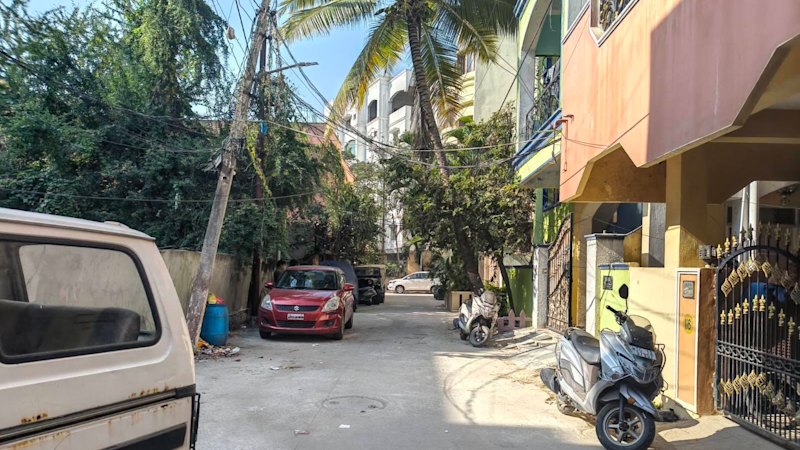
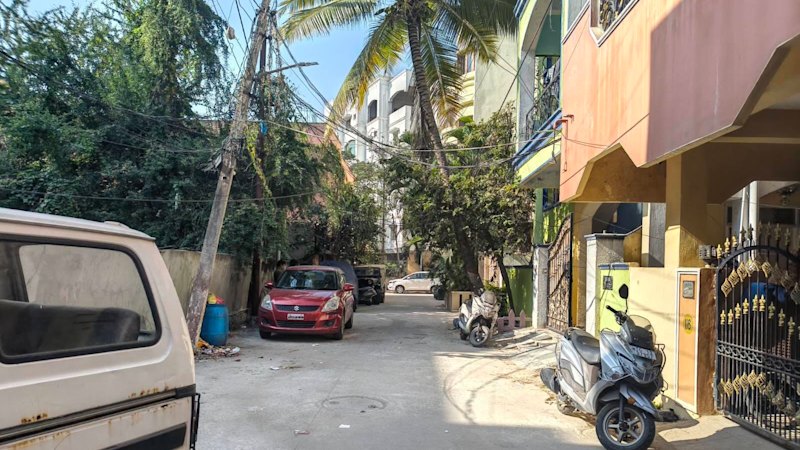
“When they came back, we immediately arranged their marriage,” Tajuddin, 52, said. The brothers then settled down in Toli Chowki with the money they had earned. “How else do you think we built this house? And threw two lavish weddings?”
When the elder Akram – who was killed in Sydney last Sunday in crossfire with police – left for Australia in 1998 in search of work, his sister and an elder brother remained in Toli Chowki with their families. Some of the few residents of the area who ventured outside during the past week called the Akram family “respectable” but “private”.
Loading
After the attack, Akram’s relatives told police that they had had only limited contact with him and “no knowledge of his radical mindset or activities, nor of the circumstances that led to his radicalisation”. Then the brother’s family locked their house and left, worried the press would mob them.
“There are only respectable people residing here,” said Mujib Abdalla Baabbad, the president of Al Hasnath Housing Colony, the complex where Akram’s siblings live. “It is unfortunate that our colony is being dragged into this.”
Baabbad, too, once worked overseas, living in Dubai for 35 years. “All of us move abroad for the same reasons: for better safety, quality of life, higher wages, better employment.”
Emigration is part of the local culture and history in Toli Chowki and the rest of Hyderabad, said Serish Nanisetti, a journalist and author of a book on the region’s history. The practice’s roots go back to the year after India gained independence from the British in 1947. When the new nation annexed the princely state of Hyderabad by military force, communal violence and widespread unrest followed.
Loading
“Hyderabadi Muslims were suddenly stripped of their wealth, land, status, respect and sense of security,” Nanisetti said.
Having lost almost everything, they turned to emigration.
Nazima Begum, a cook who has worked in the neighbourhood for 17 years, described a community in flux. “There are no old-timers left in the area,” she said. “They have all died or moved abroad.”
Despite the hardships of separation, families continue to send members abroad.
“There were no jobs here,” said Tajuddin. “I told them I will take care of our parents, you just go and bring back enough money.”
Since returning, the brothers now own an imported-fruits business. Tajuddin, who had grown estranged from them, owns a grocery store and a drinking-water bottling business, which hardly turn a profit.
Does Tajuddin regret not going abroad himself? “Daily! My destiny would have been so different, no? If you are foreign-returned, you get more respect, no? Your marriage prospects also look up,” he said.
Bondi Beach incident helplines:
- Bondi Beach Victim Services on 1800 411 822
- Bondi Beach Public Information & Enquiry Centre on 1800 227 228
- NSW Mental Health Line on 1800 011 511 or Lifeline on 13 11 14
- Kids Helpline on 1800 55 1800 or chat online at kidshelpline.com.au
This article originally appeared in The New York Times.
Get a note directly from our foreign correspondents on what’s making headlines around the world. Sign up for our weekly What in the World newsletter.
