










Speed, data and the rise of AI-driven decision making
As companies scale into new markets, the volume and velocity of financial information increases dramatically. This is driving strong interest in platforms capable of providing rapid reporting, automated controls and integrated data models.
James Haslam, group chief operating officer and chief financial officer at ELMO Software, says the next phase of finance transformation hinges on the quality of data and the speed at which teams can turn it into insight.
“I really see data integrity, efficiency and speed making a massive difference in helping decision making for finance teams,” Haslam says. “With the speed that we are able to manipulate data and do things in real time, more so than spending weeks looking at information and trying to decode it, we can really give those insights back, helping sales teams and helping generate revenue.”
Haslam says consolidation is central to this shift. “When I think of consolidating our finance stack, I think of how we have expanded globally and how we have brought our finance team as one global function. The measurable outcomes really are the speed and efficiency that we are now able to report and the accuracy of the information. That has increased substantially since we made those changes.”
As AI tools become more deeply embedded in financial operations, Haslam sees both growth and cost control benefits. “I believe it can really be accretive. On one side we can drive growth by giving insights back to revenue functions. On the other, we can automate a lot more and use AI to help control the cost base.”
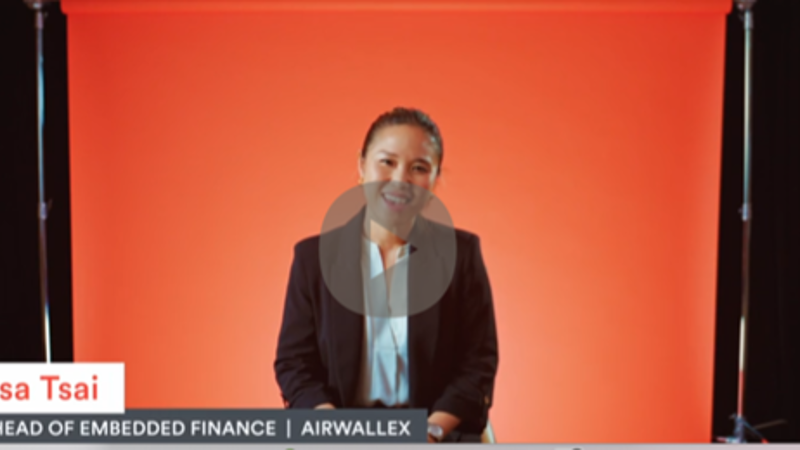
Tsai says the next leap in finance transformation will come from giving AI a complete and uninterrupted view of a company’s financial activity. She says the real opportunity is the quality of intelligence that emerges when everything is connected. “AI becomes far more powerful when it can see every part of your financial operations in one place,” Tsai says. “The moment all your workflows, payments and accounts are unified, AI can start giving you insights you simply could not access before.”
She says this is why consolidation is now seen as the foundation for more advanced AI use cases rather than a convenience exercise. A vertically integrated stack gives AI a single source of truth across approvals, cash flow, reconciliation and FX, enabling the shift from reactive tasks to proactive recommendations.
Tsai stresses that the impact is especially strong for global businesses. With one platform underpinning finance across markets, AI can interpret inflows, outflows and approvals in real time, helping teams act with more speed and certainty. This, she says, is what unlocks the next phase: “When your stack is unified, AI can finally work at the same global scale as your business – and that’s when finance moves from automation to real strategic advantage.”
Simplifying systems to support scaling businesses
For mid-market enterprises and high growth companies, the complexity of operating across different jurisdictions is increasingly acute. Managing compliance, payroll, billing and payments across multiple platforms can slow expansion and restrict leadership teams from focusing on strategy.
Matt Patterson, head of SMB and growth at Airwallex, says organisations are facing a new level of urgency. “We are definitely seeing consolidation in the market from an efficiency perspective. Businesses are looking for ways to scale and adapt to this ever changing environment. Having the right financial platform in place where they can consolidate most of their financial infrastructure is key to scaling in this economy.”
He says the value of a connected stack shows up in the day-to-day management of operations. “Having a more connected financial stack gives businesses the opportunity to scale in a very complex, ever evolving industry. With the ability to consolidate and scale with the emergence of AI and new payment platforms, that is key to leapfrogging competitors.”
For small and medium enterprises, Patterson says the commercial gains are tangible. “Cost of living and cash flow issues are plaguing SME businesses today. Financial platforms give businesses the opportunity to consolidate and streamline operations in a way that lets them monitor, predict and scale moving forward.”
Consolidation as a driver of insight and organisational alignment
Beyond efficiency, consolidation is increasingly viewed as a way to better integrate finance with the rest of the business. Leaders want systems that give them insights across workforce planning, revenue performance, payments, procurement and employee behaviour.
Rob Dunn, general manager of product at Employment Hero, says the benefits extend far beyond typical finance functions. “The biggest benefits are the fact that you can have a lot more information in one space and draw a lot more insights from your activities. You can see a lot more efficiencies by improving workflows across many areas,” he says.
Dunn says the insights that emerge from connecting systems are often unexpected but highly valuable. “When we work with small businesses we consolidate finance, but also talent management and HR payroll. By consolidating those down, we can find efficiencies between workflows that otherwise would not have come to light. That plays out at greater scale in larger financial areas as well.”
Having a cohesive view of financial operations also strengthens planning and decision making. “Having one finance ecosystem means the insights we draw out are very differentiated,” Dunn says. “When we are conducting our planning, we are able to get deeper into the root causes of delays or inefficiencies, but also uncover new opportunities because of the unique insights that come through.”
His advice to enterprises considering the shift is to approach consolidation strategically. “Firstly, understand how you are uniting your data systems and workflows. Have a clear objective of what you want to prioritise first, whether it is system efficiency through workflow optimisation or new data alignment and insights.”
What comes next
The drive to consolidate finance technology stacks is reshaping the priorities of Australian leadership teams. The move is no longer about implementing individual tools. It is about creating a unified financial infrastructure that can support faster reporting, more accurate forecasting and more responsive decision making across the business.
As inflationary pressures continue and capital becomes more expensive, organisations are seeking new ways to unlock commercial upside from their internal operations. Consolidation offers a path to improve productivity, sharpen competitiveness and give finance functions the data they need to contribute directly to growth.
The next phase will be defined by how effectively companies can integrate AI tools into consolidated stacks and convert real time information into actionable strategy. The organisations that succeed will be those that treat finance transformation as a core capability, not a back office upgrade, and invest in systems that can scale with the ambition of the business.
In a market where every decision must be made with greater speed and confidence, the ability to see, manage and move money across the enterprise in real time is becoming a competitive advantage in its own right. For many Australian companies, consolidating finance technology is emerging as a critical step in building a more resilient and commercially agile future.
To find out more, please visit Airwallex.


