


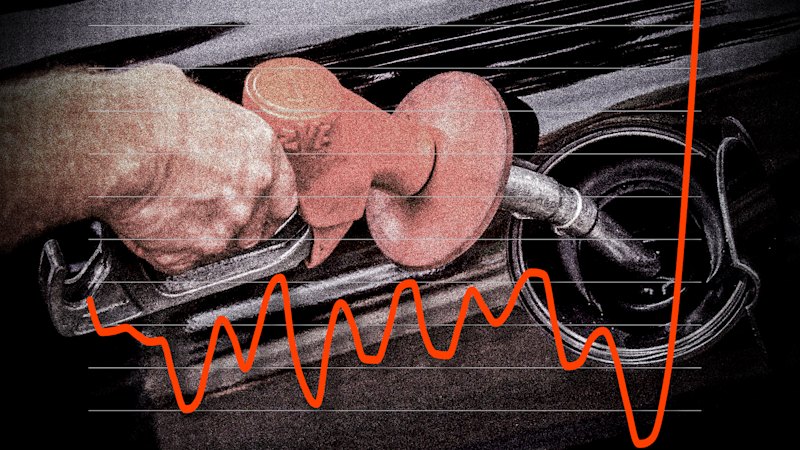

The price of petrol in Australia jumped again this week to reach an all-time high as the war in the Middle East continued with no end in sight.
At service stations across the country, regular unleaded has been selling for an average of $2.19 a litre, according to the Australian Institute of Petroleum. That’s a 20 per cent increase since the conflict began on February 28, and the most expensive weekly petrol price on record.
The size of the shock is almost entirely down to one thing: the ongoing closure of the Strait of Hormuz, a busy shipping channel that usually carries one-fifth of all the crude oil the world needs to make petrol, diesel and jet fuel. Australia remains well supplied, with ample refined fuel stocks and shipments still arriving on schedule to more than meet demand. But the longer the crisis persists, the greater the danger of even bigger price rises, or even shortages, hitting home.
“If it goes on for another month, this becomes a more challenging conversation,” one Australian fuel executive said.
Energy traders have feared for decades that Iran may lash out and do precisely what it is doing now: shutting the narrow passageway as geopolitical leverage, and holding crucial oil supplies hostage. Yet those worries have not led to enough investment to enable oil-rich countries in the Persian Gulf to bypass it and export their crude out of the region via other means, such as new overland routes, experts say. This means that for now, the Strait of Hormuz, which also carries huge amounts of natural gas and petrochemical feedstocks, remains the most critical energy choke point anywhere in the world. And unless it is reopened swiftly, it will test the energy security of countries everywhere, as far away as Australia.
There are ways you can circumvent the strait. One is Saudi Arabia’s 1200-kilometre East-West Pipeline, which can transport 7 million barrels of oil a day from the Persian Gulf to the Red Sea port of Yanbu. The other bypass runs through the United Arab Emirates, a pipeline connecting Abu Dhabi’s oilfields to the port of Fujairah, located outside the Strait of Hormuz, with a maximum capacity of 1.5 million barrels a day.
But these pipelines had much of their capacity already utilised, and could only redirect a fraction of the 20 million barrels of oil a day that usually flowed across the strait on giant ships, said Joaquin Vespignani, associate professor of economics at the University of Tasmania.
“Saudi Arabia’s East-West line and the UAE’s Fujairah route can only bypass about 20 to 25 per cent of these flows,” he said.
“Production, storage and export infrastructure are built around Gulf loading through Hormuz, so alternatives are inherently limited in scale and flexibility.”
Efforts by Gulf producers to bypass the strait via pipelines are steadily increasing, and tankers are en route to the Red Sea to load more Saudi pipeline crude and deliver it to the international market. But this would only “partially mitigate the disruption”, said Jorge Leon, senior vice president at international research firm Rystad Energy.
“Even assuming full utilisation of these alternative routes, a significant share of exports, potentially in the range of 8 to 10 million barrels per day, would remain exposed if the strait remains inaccessible,” he said.
There is another way to help plug the shortfall: co-ordinated releases of strategic oil reserves. Last week, the International Energy Agency, an intergovernmental body with 32 member countries, including Australia, agreed to release 400 million barrels of oil from emergency stockpiles, the biggest release since it was formed in the 1970s. Energy Minister Chris Bowen said Australia would release about six days’ worth of petrol and diesel supply from storage.
The unprecedented releases will provide a significant and welcome buffer, the agency said, but cautioned that they remained a “stop-gap measure”. Without a swift resolution to the conflict, the combined impact of greater pipeline use and stockpile releases will still fall short of what’s needed to plug the gap, keep a lid on prices and avoid severe economic consequences in the medium term if the conflict drags on.
“Supply remains tight,” Vespignani said.
Because oil was a highly traded commodity on an integrated global market, even a regional disruption in Hormuz affected all countries, not just those directly importing from the Gulf, he said.
“If prolonged, the law of one price ensures the shock transmits globally – leading to higher inflation, pressure on transport and energy sectors, and potential slowdown in global growth,” he said.
The IEA expects global oil supply to fall by as much as 8 million barrels a day this month, amounting to nearly 8 per cent of world demand, as Gulf countries cut back and key production and refining hubs are damaged by airstrikes.
However, the Paris-based agency still expects global oil supply will rise by 1.1 million barrels a day over the course of the whole year, exceeding demand by 2.4 million barrels a day.
In a recent update, the United States Energy Department said it expected disrupted oil flows, temporary oil and gas well closures and a persistent “risk premium” to keep global oil prices elevated until at least the middle of the year. This week, a barrel of Brent oil, the global benchmark, has been trading above $US100 a barrel, a level not seen since the fallout of Russia’s invasion of Ukraine in 2022.
Assuming oil flows are soon re-established through the Strait of Hormuz, growing oil inventories will “again begin to weigh on prices”, and could push Brent oil back to an average of $US70 by the end of the year.
The Business Briefing newsletter delivers major stories, exclusive coverage and expert opinion. Sign up to get it every weekday morning.
 Nick Toscano is a business reporter for The Age and Sydney Morning Herald.Connect via X or email.