






Doctors are treating thousands of patients whose cancer diagnoses were delayed by the pandemic, and some cases that would have been treatable with early detection are now incurable.
Oncologists are also warning of waves of recurrent cancers due to these later-stage diagnoses.
A new study published in Lancet Oncology found that more than 55,000 expected cancer cases were not diagnosed during the first nine months of the pandemic in 2020 in seven countries – Australia, Canada, Denmark, Ireland, New Zealand, Norway and Britain.
Diagnostic rates for melanoma and rectum cancers were the hardest hit in Australia, trailing predicted figures by 11 and 10 per cent. There was a 9 per cent diagnostic gap in colon and breast cancers, 7 per cent for prostate cancers and 6 per cent for lung cancer.
According to the study, which was written by the World Health Organisation’s International Agency for Research on Cancer, 3740 cancer cases were missed in Australia during this nine-month period.
“Ongoing surveillance is essential to determine whether these missing cancer cases were diagnosed later and whether long-term outcomes are affected,” the study said.
Melbourne oncologist Dr Cameron McLaren observed a surge in late diagnoses for bowel cancer between 2022 and 2023 following the coronavirus lockdowns.
He said there was an over-representation of patients diagnosed at stage 3 of the disease – which requires more invasive treatment – due to delayed screening and testing during lockdowns.
While most of these patients had finished their treatment and were now in remission, he expected a higher-than-usual number would relapse.
“We will see more people with a recurrence of bowel cancer because they presented later,” he said.
“We could expect to see multiple waves of recurrent cancers as an echoing effect of the pandemic.”
While the Lancet study captures data from a nine-month period, state-based cancer registries reveal thousands of cancers that should have been detected early were missed during extended lockdowns in Australia.
Professor Sue Evans, director of the Victorian Cancer Registry, said about 4000 fewer Victorian women and 3500 fewer men were diagnosed with cancer between 2020 and the end of 2023 than was predicted.
She said that while lockdowns had disrupted some screening services, research had found that people also delayed medical checks because they didn’t want to be a burden on already stretched health services.
“If people are worried about their health or notice any spots or changes other than what is considered normal they should go to their GP for a check-up,” she said.
Luc te Marvelde, head of data analytics at the Victorian Cancer Registry, said that while there had been a rise of cancer diagnoses following the pandemic, he believed there were still “missing” cases in the community.
“I don’t think we have caught up yet,” he said.
Professor Declan Murphy, a urologist at Peter MacCallum and Epworth Healthcare, is treating at least four patients with advanced or incurable cancer who delayed testing during the pandemic.
“In a parallel universe they would have been diagnosed in 2020 or 2021 with a localised cancer that could have benefited from curative treatment like surgery or radiation,” he said.
“Instead, they have turned up in 2023 or 2024 with a locally advanced or metastatic cancer … cure is either not possible or much less likely. They might still have surgery or radiation, but their recurrence rates are going to be much higher.”
He said one patient recorded prostate-specific antigen (PSA) test readings of 4.2, 4.8, and 5.1 across 2017, 2018, and 2019, but after missing check-ups during the pandemic, the patient’s next reading in 2023 soared to 60.
Murphy said this indicated that the cancer had progressed to an advanced or metastatic stage.
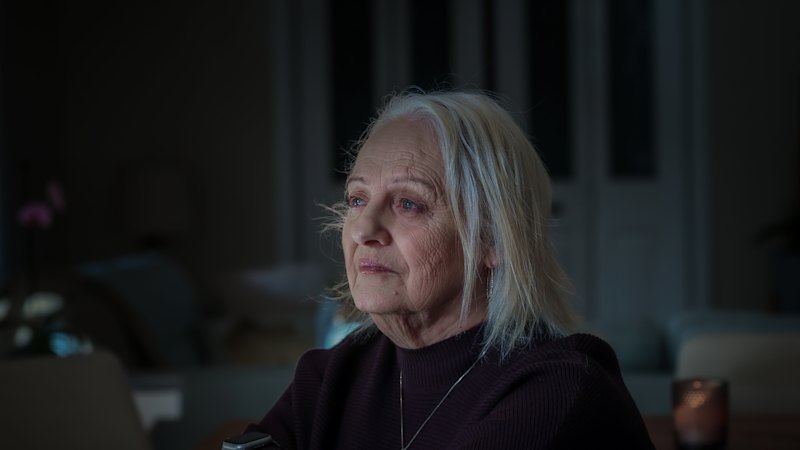
In 2021, Cheryl Priest developed an upset stomach that didn’t resolve for weeks. She initially attributed her discomfort to overindulging in rich foods.
But when a relative asked if she was wearing fake tan, she decided to seek medical help.
Priest’s GP took one look at her jaundiced face and said she needed to go to hospital.
After undergoing scans at the hospital, the then 64-year-old from Melbourne’s north-east was diagnosed with pancreatic and lung cancer.
“It was frightening,” she recalled.
She underwent a 12-hour surgery to remove the cancer in her pancreas and then spent 10 days in the intensive care unit, where she wasn’t allowed any visitors.
“Opposite my bed there was a separate section for people with COVID,” she said. “I would watch them wheel people out in body bags. That was pretty disturbing.”
She later endured six months of chemotherapy and then another surgery to remove part of her lung.
Before the pandemic, Priest diligently checked her bloods every year. But she skipped two of these checks during the pandemic. She wonders if the results from these skipped tests would have led to an earlier diagnosis.
While Priest is now in remission and has returned to her previously active lifestyle, she is still living with the effects of her cancer treatment. She has lost feeling in her fingers due to her chemotherapy treatment and was recently diagnosed with type 1 diabetes as a result of losing part of her pancreas.
“Mentally, it will never go away,” she said.
Professor Anne Cust, a cancer epidemiologist and director of the Daffodil Centre, a partnership between Cancer Council NSW and the University of Sydney, said delayed diagnoses led to thicker melanomas.
Cust said patients with thicker melanomas might need more skin removed, skin grafts and potentially immunotherapy.
“If they had picked it up earlier, it might just have been a surgical removal,” she said.
But she said the consequence of a delayed melanoma diagnosis might not be as severe as other types of cancer such as lung cancer.
“In many cases, treatment would still lead to a good outcome,” she said.
Start the day with a summary of the day’s most important and interesting stories, analysis and insights. Sign up for our Morning Edition newsletter.


