






Elliott Hill, the chief executive of Nike, slipped quietly into a side entrance at the Stade Louis II in Monaco as cheers echoed through the concrete halls.
He wore a suit with a swoosh pinned on his lapel instead of his usual athletic wear to meet Nasser Al-Khelaifi, the head of the Qatar sovereign wealth fund’s sports investment arm that owns the French soccer team Paris Saint-Germain.
Al-Khelaifi put his arm around Hill’s shoulder, and the two moved to the side to talk business. They discussed a potential deal, and the PSG boss hinted that a player might sign with one of Nike’s competitors. Then they headed upstairs to their seats to watch the team face off against AS Monaco on a brisk February evening.
“Since he arrived, he changed everything at Nike,” Al-Khelaifi said of Hill, who came out of retirement to take the job 15 months ago. “It was tough before.”
In recent years, Nike lost its iron grip on the sports world, which had driven the company’s sales and defined its brand. The company chose to chase sales in fashion, releasing new colours of existing shoes instead of coming up with the footwear breakthroughs for which Nike was known.
Relationships became strained with some of the leagues, teams, athletes and retailers that Nike worked with, amid complaints the company was neglecting them, according to people with knowledge of the situation. US Major League Baseball players complained about the quality of its jerseys. At one point, its coveted uniform deal with the US National Football League was at risk.
Hill, 62, is trying to restore those connections through his own style of corporate diplomacy, racing around the globe to meet with some of the sports world’s most influential executives and athletes. The push is part of a broader plan aimed at digging Nike out of a lengthy sales rut.
Hill said he wanted to emulate Nike co-founder Phil Knight, who at 88 remains the company’s chair emeritus. Knight helped recruit Hill, who had retired from Nike in 2020 as president of its consumer and marketplace division.
“If you watch how Phil Knight ran the company, it always began with relationships with athletes,” Hill said. “And that now includes teams and leagues.”


In early February, Hill left Nike headquarters in Beaverton, Oregon, on a 16-day journey, starting with Super Bowl week in San Francisco. Immediately after the game – which he watched with the NFL commissioner, Roger Goodell – Hill flew to Italy for the Winter Olympics to meet athletes including Chloe Kim, the American snowboarder, and Auston Matthews, the captain of the US men’s hockey team.
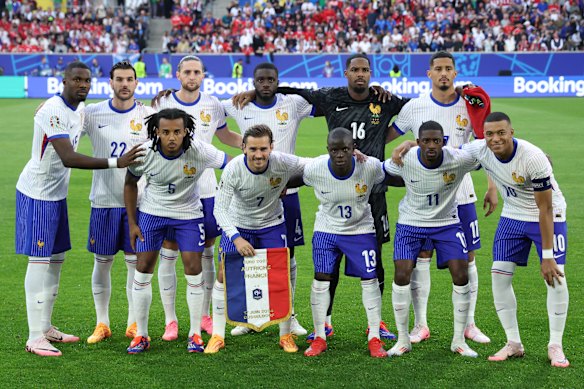
Then he was off to Monaco to meet the French soccer team, which has a uniform deal worth more than €80 million, or about $130 million, per year with Nike.
About 11pm, after the PSG match, one of Hill’s executives told him they were invited to dinner with Al-Khelaifi. They were at Cipriani until 1am.
Whether in a boardroom or a locker room, Hill, a Texan who was an athletic trainer for the Dallas Cowboys before interning at Nike in the 1980s, will turn on the charm with his polite Southern drawl. He will greet everyone in the room, billionaire or construction worker. People seem to like him, regardless of how well, or badly, the business is performing.
When Hill started as CEO of Nike in 2024, the company was enduring one of the worst periods in its 60-year history.
His predecessor, former eBay chief John Donahoe, had been brought on five years earlier to modernise Nike’s e-commerce capabilities. Donahoe redirected sales to the company’s online store while shutting out most of its retail partners. His first years were a rousing success: Nike broke $US50 billion (about $70 billion) in revenue in the fiscal year that ended in May 2023.
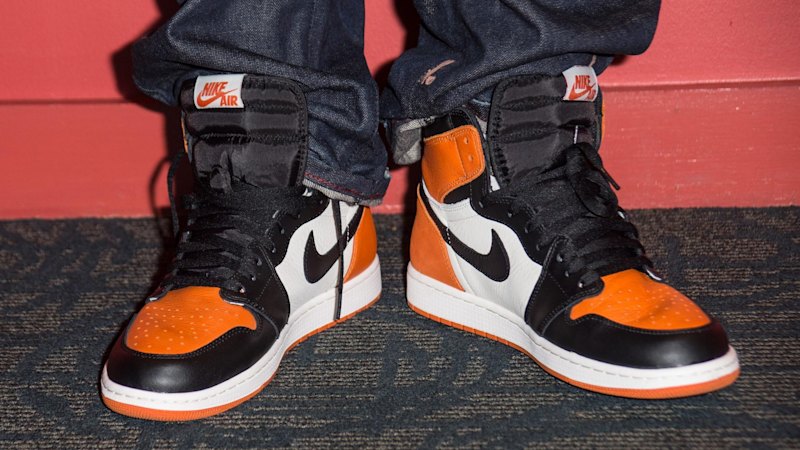
But in that quest for growth, Nike drifted away from its sports connections. Product development slowed, and some top athletes – such as Tiger Woods, Simone Biles and Nikola Jokic – left for other brands.
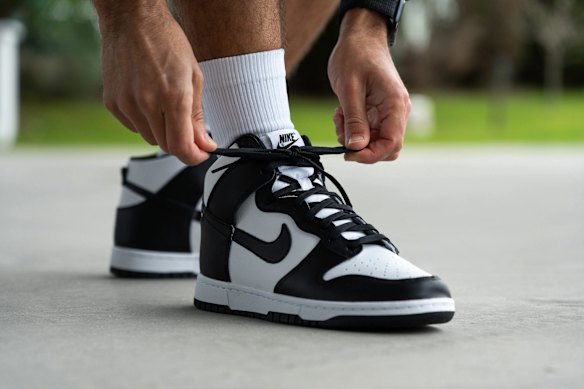
By the end of 2023, the business had come apart. Sales fell as demand for its lifestyle sneakers, including Air Force 1s and Dunks, waned, and the company had few replacements. Management began a $US2 billion cost-cutting plan that included laying off more than 1600 corporate employees.
In June 2024, Nike had its worst day ever on the stock market after an abysmal earnings report, erasing more than $US28 billion [about $40 billion] in market value. Within four months, Donahoe was out.
“Nike became one of the largest brands in the world by embracing others,” said Simeon Siegel, an analyst at global investment firm Guggenheim Partners. “What happened in that era was an about-face. It was a desire to do more with less.”
During Hill’s first days, he picked up the phone to tell Nike’s closest partners – including Regis Schultz, who runs JD Sports, and Adam Silver, the commissioner of the National Basketball Association – that things would be different.
At the top of his list was Roger Goodell. Nike’s NFL uniform deal was set to expire in 2027, and the league had opened bidding to Nike’s competitors. Hill worked to lock down an extension, and within two months, the company signed a new deal running through to 2038.
Hill restructured the entire Nike organisation around sports. Internal teams that had been split by men’s and women’s businesses instead realigned around individual sports, such as tennis, golf or skateboarding. Each division owns its relationships with its sport’s community and works directly with its elite athletes.
He also cut a small number of corporate staff last year and slashed nearly 800 jobs at distribution centres. “You never want to have to go through any sort of layoffs, but to re-centre the company, we’re doing some of that,” Hill said.
There has been some progress. Sales rose 1 per cent in Nike’s most recent quarter, with a strong performance in North America.
The morning after his late dinner in Monaco, Hill arrived at FC Barcelona’s facility in Sant Joan Despí, just outside the city. Pere Romeu, the manager of the women’s soccer team, spoke with him on the practice pitch as the team finished training. They gave him a signed jersey and posed for photos.
Hill has declared soccer a top-priority sport, alongside basketball and running. Barcelona’s team, like PSG, is one of Nike’s critical deals, giving it a strong presence among the world’s most prestigious squads.
He walked to another field to meet Pablo Gavira, known as Gavi, a star on the Barcelona men’s team, and used the bits of Spanish he had picked up over the years to quiz the 21-year-old midfielder about his custom blue Nike boots. Hill tried to glean technical insights straight from one of the best young players in the world. How is the toe room? Is there proper traction on the surface?
But Gavi didn’t care: “He loves the colour,” Hill said. “He said, ‘If you look good, you play good.’ ”
He veered off to shake hands with more Barcelona players. “Always an opportunity to flip somebody to the swoosh,” he quipped.
The next meeting was with Alexia Putellas, one of the world’s top soccer players, outside the youth academy she attended as a child.
Putellas, 32, may be one of Nike’s most integral sports figures in the coming years. She has her own edition of a Nike soccer boot, the Phantom 6, adorned with her own logo. For her, the company’s support is crucial, and she’s constantly in contact with Nike executives about her brand.
“When I have an idea, I call and we share some ideas about my journey, or my project, or the club,” Putellas said. “Maybe once per week, minimum.”
The stadium where Barcelona’s teams play, Spotify Camp Nou, is undergoing a €1.5 billion ($2.45 billion) renovation, and Hill was treated like an ambassador when he arrived. Barcelona’s interim president, Rafa Yuste, greeted him with a speech in a reception suite and staff served hors d’oeuvres of foie gras and cannelloni.
Hill’s final stop was a Nike flagship store. This one was covered in images of Putellas and a giant queen chess piece, a nod to her nickname: La Reina.
Nike sponsors thousands of athletes. Then there is Michael Jordan.
The billionaire American basketball legend’s brand, now more than 40 years old, generates more than $US7 billion (nearly $10 billion) in annual revenue and is a crucial business for Nike.

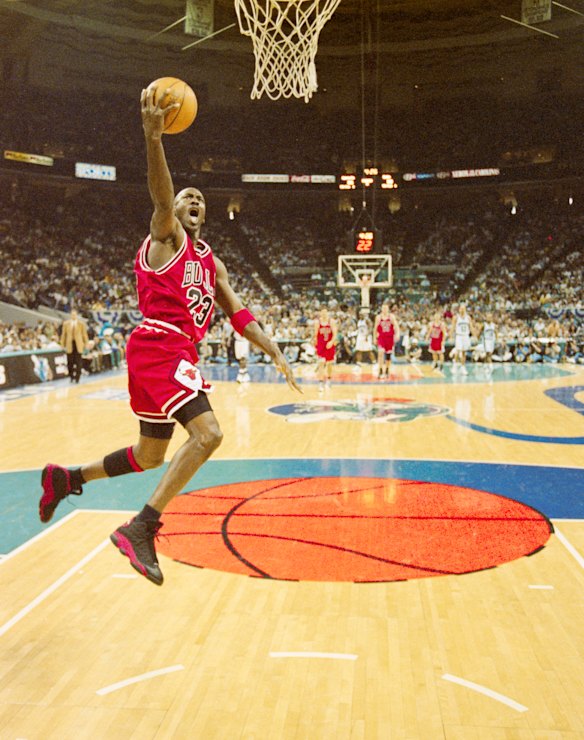
Hill meets with Jordan every three months to discuss plans. Executives present a performance update and share plans. Then perhaps the pair have dinner or visit Jordan’s private golf course.
“I texted him on his birthday,” Hill said while scrolling through his phone for evidence. “I try to send little notes to athletes just so they know that I’m watching what’s happening in their world.”
Jordan, 63, said in an email that Hill had been a longtime supporter of the brand and that he is what Nike needed. “What sets Elliott apart is his ability to build trust – with athletes, partners and people on the ground around the world.”
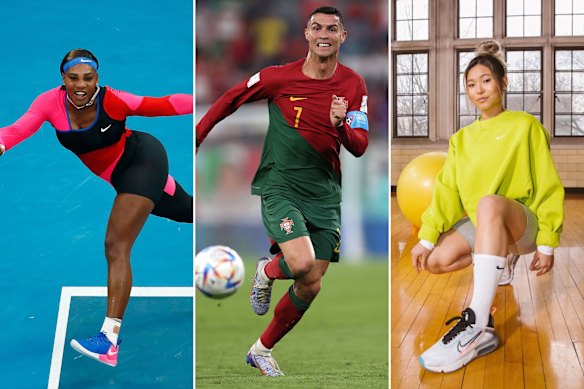
Nike maintains contracts and relationships with current and retired superstars in most of its sports, with Cristiano Ronaldo in soccer, Serena Williams in tennis, Mike Trout in baseball and Paul Rodriguez in skateboarding.
But in basketball, where Nike dominates with a roster that includes LeBron James, Kevin Durant and Victor Wembanyama, all eyes are on its relationship with the Indiana Fever’s Caitlin Clark.
Clark will soon enter her third WNBA season and hasn’t released a signature shoe with Nike. But one is set to debut sometime this year, in what will be a high-stakes moment. Nike designers worked with Clark for more than a year to develop the sneaker.
Hill said it’s vital that his products win. Even at the Winter Olympics, where so few events involve sneakers, he lamented that so many of the bobsledders wore footwear – essentially track spikes adapted for running on ice – made by Swiss brand On.
The situation is most urgent in running. With intense competition from brands such as Hoka and Asics, the company that invented the “super shoe” with carbon fibre plates for long-distance runners has fallen off. Last year, runners in Nike shoes won only two of the major marathons. Adidas athletes won seven.
As he returned to the Barcelona streets, Hill surveyed the shoes of passersby to tally the brands on their feet.
“Just like in sport, we keep score,” he said.
This is an edited version of a story first published in The New York Times.
Read more from Good Weekend:


