









Hot Chili managing director Christian Easterday said: “Addition of a higher-grade starter pit would significantly strengthen the front-end of Costa Fuego’s 20-year mine schedule and be a game changer for scale and economics. Costa Fuego is rapidly shaping as a low-risk, coastal contender to adjacent major copper developments in the Huasco Region and Vicuña District of the high Andes.”
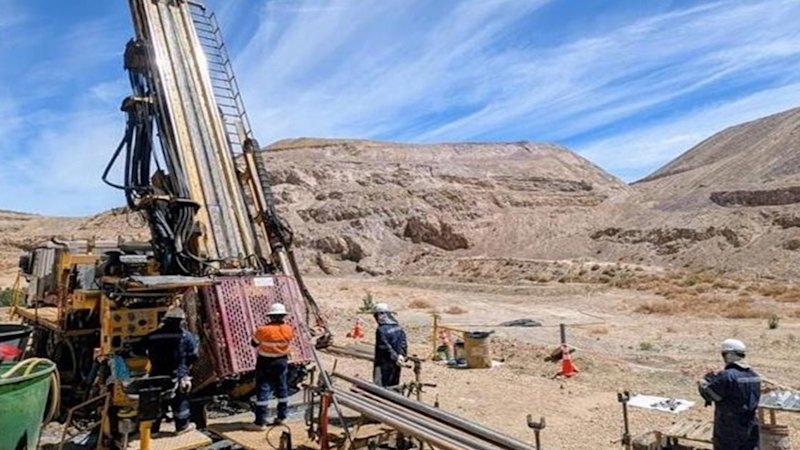
Hot Chili’s November intersection at La Verde, really put the market on notice, with a staggering 529m intercept grading 0.41 per cent copper and 0.21g/t gold. The hit sent the company’s stock soaring by almost 50 per cent in two weeks to $1.25 a share.
Market pundits have clearly understood the significance of La Verde to the broader Costa Fuego story. Copper-gold porphyry monsters all along South America’s west coast regularly drop like flies as major takeover targets from the likes of BHP, to Lundin Mining and even a $1.7 billion bid for SolGold’s Cascabel porphyry by Jiangxi Copper Corporation just last week.
Costa Fuego remains one of the largest undeveloped copper deposits outside the majors, hosting a combined 798-million-tonne resource grading 0.45 per cent copper equivalent. That inventory carries 2.9 million tonnes of contained copper, 2.6 million ounces of gold, 12.9 million ounces of silver and 68,000 tonnes of molybdenum.
A recent pre-feasibility study at Costa Fuego outlined average annual production at a whopping 95,000 tonnes of copper and 48,000 ounces of gold over the first 14 years of production, generating a post-tax net present value of A$1.81 billion at a conservative A$6.50 per pound copper price – now A$8.20.
With assays to come and a cluster of look-alike magnetic targets still to test, La Verde keeps adding momentum to an already compelling coastal copper development for Hot Chili, at a time when the global hunt for new porphyry supply monsters shows no sign of slowing.
Is your ASX-listed company doing something interesting? Contact: mattbirney@bullsnbears.com.au


