



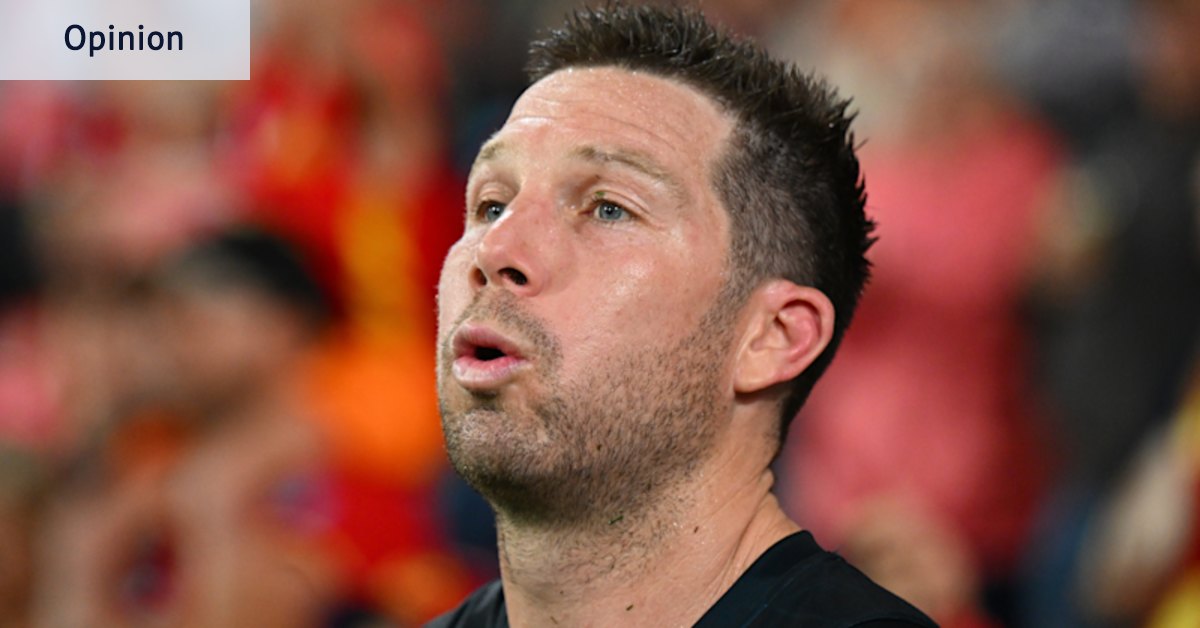




“The truth of social media and attention,” entrepreneur Frank Greeff told the ABC this week, “is like, unfortunately, the more nuance you have, the quicker someone will scroll past and not really care about what you’re saying.”
Greeff, who founded a real estate marketing platform, made this comment while discussing the virality of his meme campaign targeting Labor’s tax changes in the federal budget. At the same time, he defined more than a political battleground – there is a warning in his words for how we debate issues in this country.
Since Labor was returned to office in a landslide last May, its supporters and external observers have urged it to take bold, reforming action. After what our chief political commentator James Massola called “four years of cautious incrementalism”, this year’s budget upped the ante.
When you change taxation, you change the nation, as Paul Keating might have said (but didn’t). And it is entirely predictable that you will generate a reaction.
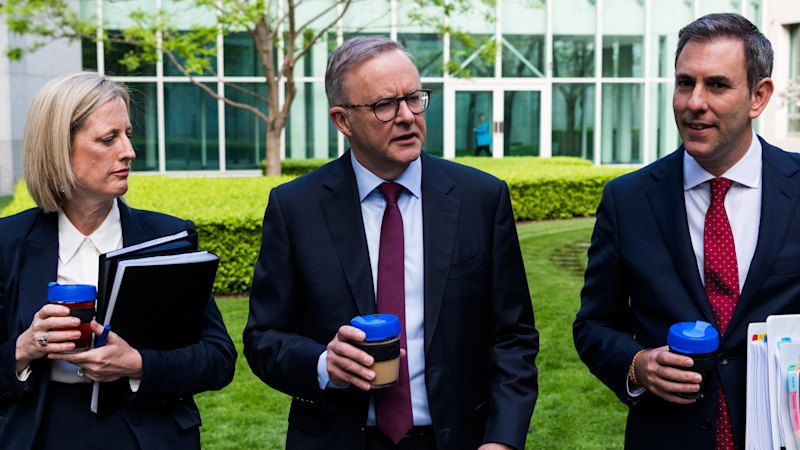
Have Prime Minister Anthony Albanese and Treasurer Jim Chalmers prepared for that reaction? It is a question that goes not only to basic political competence but to history. Neither man is likely to have forgotten how the debate over the resource super profits tax in 2010 ended for Kevin Rudd, or how allegations of a broken promise and a “carbon tax” damaged Julia Gillard.
While Albanese and Chalmers have sought to portray the changes to capital gains tax, negative gearing and taxation of trusts as restoring equity between those who earn through labour and those profiting from assets, the meme campaign has portrayed them as stifling enterprise and taking an unfair cut from start-ups.
As Greeff grudgingly admits, some of the numbers put up to support this claim are misleading. But in politics, that is academic if a message gains traction. As was the case in 2010, Gina Rinehart can be expected to invest in making that happen, and shadow treasurer Tim Wilson – the father of the Coalition government’s 2019 franking credits roadshow – has already hitched his wagon to Greeff’s meme train. In the fallout of the 2019 election, a chastened shadow treasurer Chalmers said Labor needed to “listen to the message it was sent” and “learn from the result”.
There are signs of Labor tacking with the wind, first with indications of a carve-out from the new capital gains tax rules for start-ups and cabinet secretary Andrew Charlton flagging consultation on “real concerns out there”, then with news that it was open to changes on taxation of trusts.
The Age backed the budget as a first step to tackling entrenched problems facing our economy, but it is a vital part of the democratic process that reasoned debate within parliament and beyond it shapes the ensuing legislation, whether the arguments made come from the opposition, the Greens or others on the crossbenches.
The government will also need to demonstrate that every idea it fights for has a cogent policy reckoning at its base. Every fight it loses will detract from the credibility of the whole.
Sadly, other kinds of debate are now amplified by technology. Being able to distil a message on taxation that has both factual accuracy and cut-through on social media may sound like a big ask – it’s also the job in modern politics. Failure to deliver, viewed alongside Labor’s failure to make an effective case for the Voice to parliament, would suggest a serious weakness.
Albanese may well be counting on the obvious structural weakness of the Coalition and its allies to resurface: their fondness for hyperbole. On Friday morning, Nationals senator Bridget McKenzie drew from that well, claiming that changes to rules on trusts (the Coalition has revived the term “death tax” for these) would affect “over a million Australians”. As our reporter Nick Newling points out, the true figure is at most 10,516.
The Liberals also need to consider recent history, from Sussan Ley’s apoplexy over a Joy Division T-shirt to Jane Hume’s ranking of this Labor government as the worst the nation has known, and ask themselves whether this is the direction in which they want to take our public discourse.
Beyond that, is it even an effective route back to power? Tony Abbott might think so, but Peter Dutton’s demise offers a counter-example.
As our federal political correspondent Natassia Chrysanthos reports today, voices are emerging to question the tale of budget catastrophe.
Jessy Wu, a former venture capital investor who has since founded a small business, told her: “What looks like howls of displeasure from across the whole ecosystem is in large part coming from the portfolio companies of big Australian [venture capital] funds.”
We should recall the furore that accompanied this government’s introduction of 60-day scripts for common medicines in 2023, in which the Pharmacy Guild launched a loud and emotive campaign predicting ruin for its sector. Labor stood its ground and was vindicated.
The same sort of challenge now presents itself on a much larger scale. As Massola pointed out before the budget, “the sales job [Chalmers] does will be critical”.
But as he added after the budget, the contest is also about the question of public trust. We hope answers to that question can be forged in a high-fact environment, for the sake of all the nation’s constituents.
Get a weekly wrap of views that will challenge, champion and inform your own. Sign up for our Opinion newsletter.


