








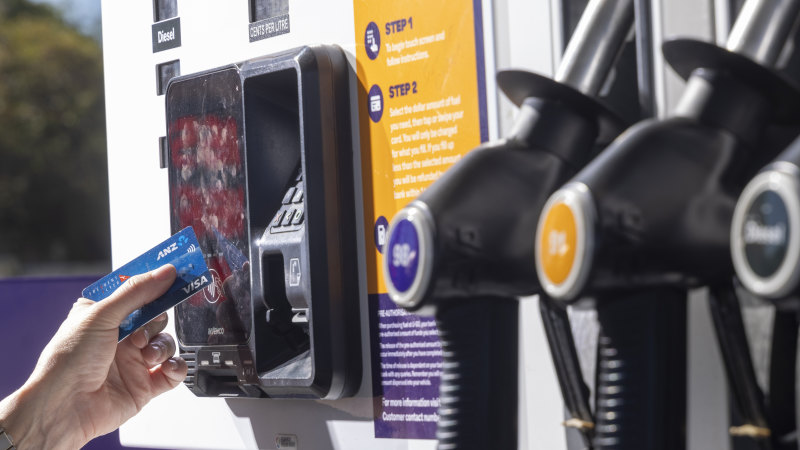


One of Australia’s largest fuel companies is preparing to triple the size of its discount chain of unstaffed service stations following a surge in demand this year as motorists look for relief from record-high petrol and diesel prices.
Ampol, which runs hundreds of service stations across the country and the Lytton oil refinery in Brisbane, gained regulatory clearance on Wednesday for its $1.1 billion acquisition of British retailer EG Group’s 470 Australian petrol stations.
Ampol chief executive Matt Halliday said the acquisition of the EG network would allow Ampol to rapidly expand the rollout of its lower-cost U-GO unstaffed service stations – which have lower overheads and can generally sell fuel more cheaply – from roughly 50 locations to more than 170.
“About 125 of the new sites will be converted to U-GO,” Halliday said. “It enables this offer to be taken to scale.”
The growing popularity of budget, staff-free stations comes as the war in Iran continues to choke oil supply from the Persian Gulf and push up the cost of fuel worldwide. At service stations across Australia, average prices spiked to record highs above $2.50 a litre for regular unleaded, and nearly $3.20 a litre for diesel, in March. While fuel prices have since eased, they remain well above pre-war levels, according to the Australian Institute of Petroleum.
Sales figures from Ampol suggest budget-conscious motorists have been migrating to its generally lower-cost, self-service bowsers in droves. On Wednesday Halliday revealed that Ampol’s group-wide fuel volumes grew 3 per cent in the past quarter, with the U-GO brand driving three-quarters of that growth.
The Australian Competition and Consumer Commission said its approval of Ampol’s EG acquisition would require it to divest 41 sites to avoid reducing competition in areas where Ampol and EG sites overlapped.
“The ACCC was concerned the acquisition could materially reduce competition and reduce choice for Australian motorists,” commissioner Philip Williams said.
“We are very conscious of community concern about fuel prices and cost of living, and we are continuing to closely monitor and report on the fuel industry.”
The driver of this year’s high oil and fuel prices has been the closure of the Strait of Hormuz, a vital shipping channel off Iran’s southern coast. For each day that the strait remains effectively closed, nearly 14 million barrels of oil, or 14 per cent of the world’s supply, is lost.
Despite this, Australia’s major fuel companies and the Albanese government remain confident that domestic supplies remain stable, and enough tankers are still arriving on schedule to more than meet demand. “Overall, the industry has adapted very well to the situation,” Halliday said. “We’ve got good supplies through June, July and into August.”
But the longer the conflict goes on, the more alarmed energy executives and analysts are becoming about the global fuel inventories, which are continuing to fall to worryingly low levels.
“Stocks are being drawn down, and that can only be sustained for so long,” Halliday said. “If this is not resolved as we move through the third quarter, that will put more pressure on international pricing.”
The Business Briefing newsletter delivers major stories, exclusive coverage and expert opinion. Sign up to get it every weekday morning.


