


Opinion

People talk about living in the Valley like they might talk about doing time.
You sign up for a two-year stretch. At first, you immerse yourself in the vice and degeneracy, but then it wears you down, you get clean and, if you’re lucky, your rental agent grants you parole at the 18-month mark.
Then you’re out of there, minus a good portion of your bond, but with a good dose of PTSD.
I’ve lived in the Valley for much of the past eight years, and I get it.
The first four years were at FV by Peppers, on the corner of Brunswick Street and St Pauls Terrace, and I definitely saw things I wouldn’t tell my mother about (although dear old mum, bless her, once picked me up and was delighted to spot a former colleague walking along Brunswick Street … before he stepped into The Den sex shop). A good number of my neighbours were sex workers and cashed-up drug dealers.
There were parties and lock-ins at local restaurants, and noise complaints and visits from security.
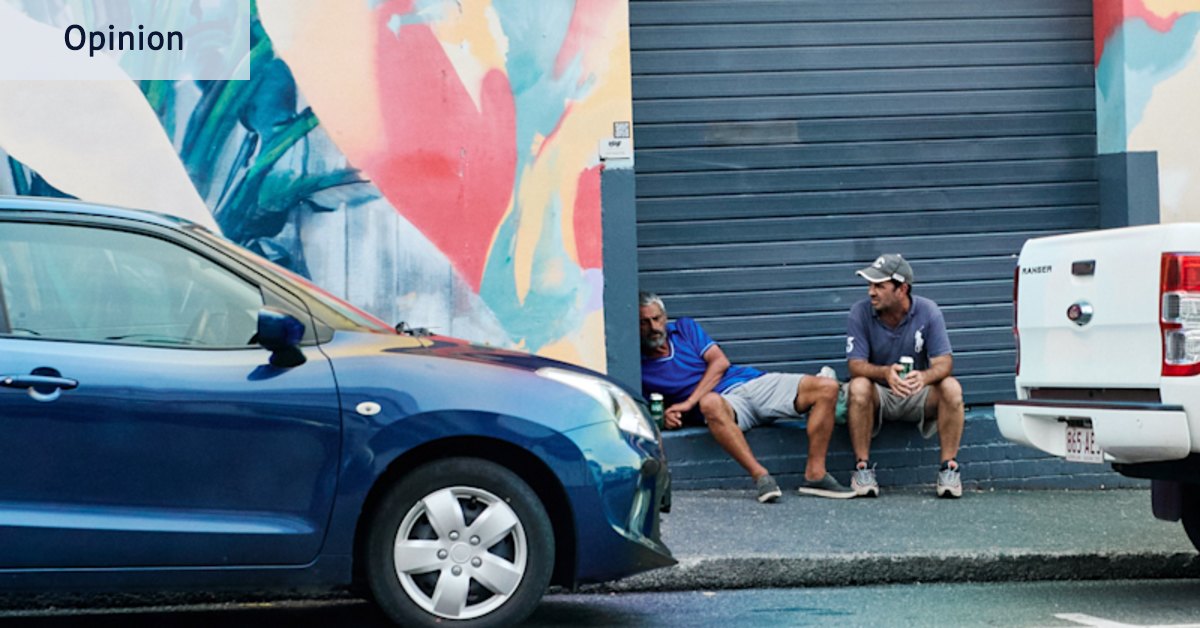
On a typical Friday walk home along Brunswick Street, you’d step over passed-out punters and fist-bump the occasional security guard before escaping into the elevator to your apartment.
It was fun, and sometimes funny, but frequently exhausting, and when I moved out in 2021, like many others, I thought I was making good my escape.
I did, but not really. These days, I live on Wandoo Street, still in the Valley but a vastly different part. And it underlines how this is very much a suburb of two halves.
There’s the club-driven grunge and grit of Brunswick Street and its surrounds, and then there’s the perfectly manicured glamour of James Street, the area in which I live. And yet, the two, within easy walking distance, co-exist happily enough.
That’s in part because despite its careful curation, James Street is, in many ways, just as real as the suburb’s less-salubrious elements. The restaurants here – Essa, Hellenika, Bianca – are the real deal, and its collection of boutiques is one of the best in the country.
Someone once said to me: “Imagine being in London in the middle of winter and seeing a picture of The Calile? You’d be on the plane in no time.” James Street represents the city’s international future as we head towards the Olympics, and it’s one of the few places in Brisbane where drivers simply accept that pedestrians rule.
Planners and designers in Sydney and Melbourne study places like James Street – this planned precinct in a city that got good at executing them after it knocked down so much heritage.
But that’s the other thing I love about this end of the Valley – it does have heritage and history. You just need to know where to look. There are the converted war-era Nissen huts on Arthur Street that now house Italian diner Mosconi and, until recently, King Arthur Cafe, and the old air-raid shelters near the corner of Wickham and East streets.
The suburb played a significant role in World War II, particularly after General Douglas MacArthur – allied commander of the south-west Pacific theatre – moved his headquarters to Brisbane in 1942. It was the home of the US 5th Air Force service command, an ordnance and enlistment depot, and an air freight depot.
The history goes back further, of course – thousands of years in the case of the Indigenous Turrbal and Jagera people. The suburb was named by Scottish migrants who arrived in Moreton Bay on the 608-tonne SS Fortitude in 1849.
Initially farmland, Fortitude Valley’s growth was turbocharged by the arrival of the train line in 1890, and the subsequent retail rivalry between Thomas Beirne and his former manager, James McWhirter.
Its resistance to floods helped the Valley remain Brisbane’s primary retail district right up until the rise of suburban shopping centres in the 1970s. Then came a decline.
If the blocks around James Street are known for their wartime history, the areas up the hill towards Brunswick Street and the guts of Wickham Terrace still have echoes of the “Moonlight State” of the Bjelke-Petersen years, when police corruption was rampant.
Les Bubbles, a steakhouse, was once Bubbles Bath-House, the illegal casino and massage parlour at the centre of the Fitzgerald Inquiry; the infamous Hot Lips strip club sat on the corner of Brunswick Street and St Pauls Terrace; and in 2017, then-Queensland attorney-general Yvette D’Ath announced the government would reopen the coronial inquest into the 1973 firebombing of the Whiskey Au Go Go nightclub, which killed 15 people.
There’s a sense the Valley has never quite reckoned with those dark days, even as gentrification of the streets surrounding Brunswick, Alfred and Constance threaten to flatten much of the past entirely.
As a journalist, you like to be somewhere that’s in a state of flux or transformation – that’s where the stories are, and that’s Brisbane right now.
Fortitude Valley continues to play a key part in that transformation. And as you sit and watch the apartment blocks rising around you – this city slowly being rewired to go up instead of out – you can’t see that changing any time soon.
Start the day with a summary of the day’s most important and interesting stories, analysis and insights. Sign up for our Morning Edition newsletter.
 Matt Shea is Food and Culture Editor at Brisbane Times. He is a former editor and editor-at-large at Broadsheet Brisbane, and has written for Escape, Qantas Magazine, the Guardian, Jetstar Magazine and SilverKris, among many others.