


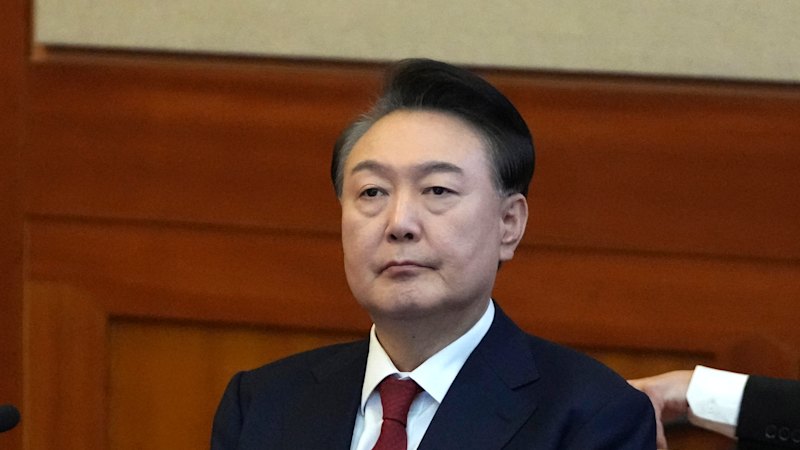
His criminal conviction is the latest step in a profound fall from grace for the former prosecutor turned conservative politician who became the first-ever sitting president in South Korea to be arrested.
On December 3, 2024, Yoon sent troops into the national parliament, claiming South Korea was under siege from the majority opposition and “anti-state” forces, sparking an immediate uproar across the country. At the time, his party was governing in minority and was struggling to get bills through the parliament.
Loading
Yoon withdrew the martial law decree six hours later after opposition MPs voted to reject it and later impeached him, suspending his powers. The move plunged South Korea into its worst political crisis in decades, as thousands of protesters rallied in the streets for weeks, calling for his ouster as he barricaded himself inside the residential compound.
The crisis exposed the deep political divisions between the country’s conservative and liberal flanks, as Yoon’s supporters also took to the streets, many channelling US President Donald Trump’s MAGA movement by waving “Stop the Steal” banners.
Yoon was eventually arrested more than a month later when police stormed his compound in a seizure effort that involved more than 3,000 officers.
He was formally removed from office in April last year after the country’s Constitutional Court upheld his impeachment in a unanimous decision.
South Korea last handed down a death sentence in 2016, but has not executed anyone since 1997, and is regarded as a de facto abolitionist state.
Yoon is not the first former president to face the death penalty on insurrection charges, and it is very unlikely he will be executed even if he is found guilty.
In a previous court case in 1995-1996, when former South Korean Presidents Chun Doo-hwan and Roh Tae-woo were accused of insurrection, prosecutors sought the death penalty and life in prison for Chun and Roh respectively.
