



What in the World, a free weekly newsletter from our foreign correspondents, is sent every Thursday. Below is an excerpt. Sign up to get the whole newsletter delivered to your inbox.
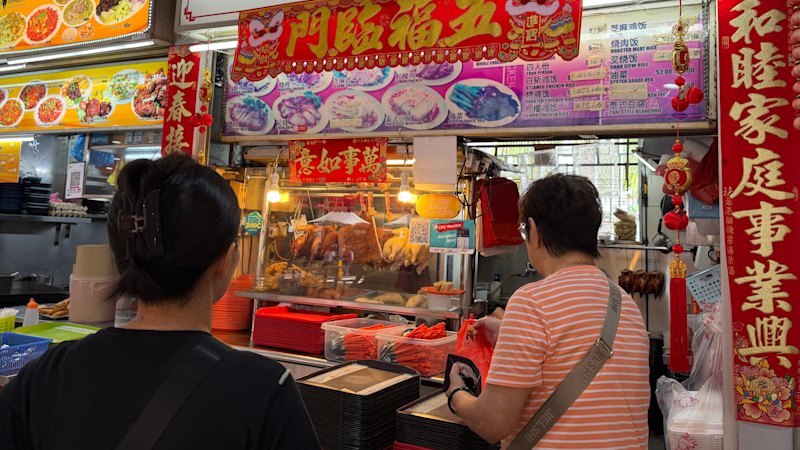
Singapore: For the past few weeks, I’ve been on a farewell tour of my favourite hawker stalls in Singapore, squeezing in final feasts of chicken rice, nasi lemak and mutton biryani.
The Little Red Dot (as Singapore is affectionately known) of 6 million people is about as food-obsessed as nations come, and these are some of the top-tier dishes that capture the Chinese, Malay and Indian roots of this sweltering island.
The real Singapore, if I can humbly suggest, is not the glamour of Marina Bay Sands hotel or forking out $60 for a Singapore Sling at Raffles’ Long Bar.
It’s the experience of steaming in your own sweat over a plate of tasty, cheap fare at one of the many hawker centres across the island, joined in this happy trauma by dozens of locals doing the same.
I’m soaking it up while I can.
In the meantime, I’ve been packing up my apartment, selling what belongings I can, preparing to ship the big stuff home to Sydney (goodbye, coffee machine!), and whittling down what’s left into two or three suitcases – the foundation of my new life in Beijing.
On December 8, I stood outside the China visa centre in Singapore’s CBD, held my open passport up to the sky, and snapped a photo against the backdrop of the city’s famously glitzy skyline.
“We got it,” I messaged my editors. “After five long years, we can move back to Beijing and re-establish our bureau.”
It was a triumphant moment, cruelled slightly by Telstra’s global roaming, which chose that exact moment to choke as I tried to send the snap of my J1 visa.
The J1 is a year-long resident correspondent visa that allows a reporter to live and work in China. Our “journey to J1” has been circuitous, buffeted by the shifting political winds of the Australia-China relationship.
When I started in this role in April 2024, moving to Beijing seemed out-of-reach. My colleague and predecessor, Eryk Bagshaw, had tried to navigate a pathway for return during his three-year posting as North Asia correspondent, but ultimately to no avail. With China not an option, Singapore – a safe, COVID-era backstop during the chaos of closed borders – became a longer-term base for our coverage of the region for Eryk, then me.
At the time, no Australian media outlets had reopened their China bureaus since the dramatic exit of the ABC’s Bill Birtles and The Australian Financial Review’s Mike Smith in September 2020, when the political relationship between Beijing and Canberra hit its nadir.
The jailing of Australian journalist Cheng Lei, who spent three years in a Beijing prison, was chilling for many of us in the journalism community, even if we hadn’t known her personally. By the time I clocked on in Singapore, she had been freed and reunited with her young children in Melbourne only a few months earlier.
So I bought an expensive TV, joined a hockey club, got to know my neighbours, and settled into life in Singapore, expecting to spend three years here.
But quietly I hoped the dynamic would shift. It did.
At the political level, the relationship between Canberra and Beijing continued to stabilise as the Albanese government took a lower-volume approach to dealing with frictions than the Coalition, while making no major concessions on national security policy. Cabinet ministers began travelling to China again after a seven-year hiatus, and China’s number two, Li Qiang, toured Australia in July 2024.
Then, in August that year, The Australian’s North Asia correspondent, Will Glasgow, became the first to get the green light to move back to Beijing. He had been based there in early 2020 and had navigated the visa approvals process once before. But his success this time around was a turning point for other Australian correspondents scattered around Asia.
J1s were once again obtainable.
To my mind, this meant one thing: Singapore was over. We had to get to Beijing as soon as possible.
My editors agreed that we should redouble our efforts, and we found the Chinese side also wanted to engage.
It would take another 16 months of discussions and meetings between my editors and Chinese diplomats in Sydney, Melbourne and Canberra (and several in-person meetings myself on visits home) before I would be standing on the street in downtown Singapore, J1 visa in hand.
In the meantime, other constraints loosened. Short-term journalism visas began to flow again, meaning Australian reporters could enter China for a week or two, providing we were there to cover official events that permitted international media.
This typically meant going to Beijing or Shanghai for events such as trade shows or industry exhibitions, but it also opened the door to other fascinating aspects of Chinese life, culture and the economy.
I’ve been to China five times in the past 18 months. Each time I trekked home to Singapore more convinced than ever of the importance of the China story, the urgency of getting there to tell it, and the vast opportunities for us to bring you, our readers, on-the-ground coverage with all the colour and nuance it deserves.
I’ve spoken to Chinese parents at a marriage market in Shanghai hoping to find matches for their stubbornly single children. In Guangzhou, the world’s epicentre of fast fashion, factory workers shared their hardship at being caught in the crossfire of US President Donald Trump’s tariff war.
On trips to Beijing, I squeezed in side quests hunting for smuggled Australian lobster before the ban lifted, and spoke to Chinese Catholics about their hopes to one day see the Pope set foot in China. On the roadside on the outskirts of the capital, China’s migrant labourers – the rural poor who had fled to the city in search of low-paid construction work – told me how even those jobs were hard to come by now after the country’s devastating property market collapse.
And my personal favourite – a one-day blitz to the small, quirky town of Manzhouli, nestled on the China-Russia border in Inner Mongolia, where dozens of Russian truck drivers arrive each day to courier home the goods sustaining Vladimir Putin’s wartime economy.
China is a nation galloping towards economic, technological and military supremacy, at a time when the US is unmooring as the anchor of the international system. It’s a recalibration that poses big questions for Australia, wedged between our biggest trading partner and our closest ally. Arguably, there’s never been a more important time for Australian journalists to be there.
My arrival will take the number of Australian media outlets represented in China to three. The ABC moved back late last year. Hopefully, there are more to come.
Which brings me back to Singapore. I leave with a great deal of affection for the Little Red Dot and the people I’ve met here, locals and expats alike.
But my time here has been spent preoccupied looking north, tapping my foot anxiously, watching the clock, waiting, hoping for the visa to come.
 Lisa Visentin is the North Asia correspondent for The Sydney Morning Herald and The Age. She was previously a federal political reporter based in Canberra.Connect via X or email.