



In the end, the numbers just got worse – no matter what Sussan Ley did.
These poll results offer both a damning indictment of the final days of her leadership and vindication for the Liberal Party’s decision to sack her.
They also offer a glimpse at the momentous challenge ahead for Angus Taylor, even if he has delivered a small lift to the Coalition’s plummeting primary vote.
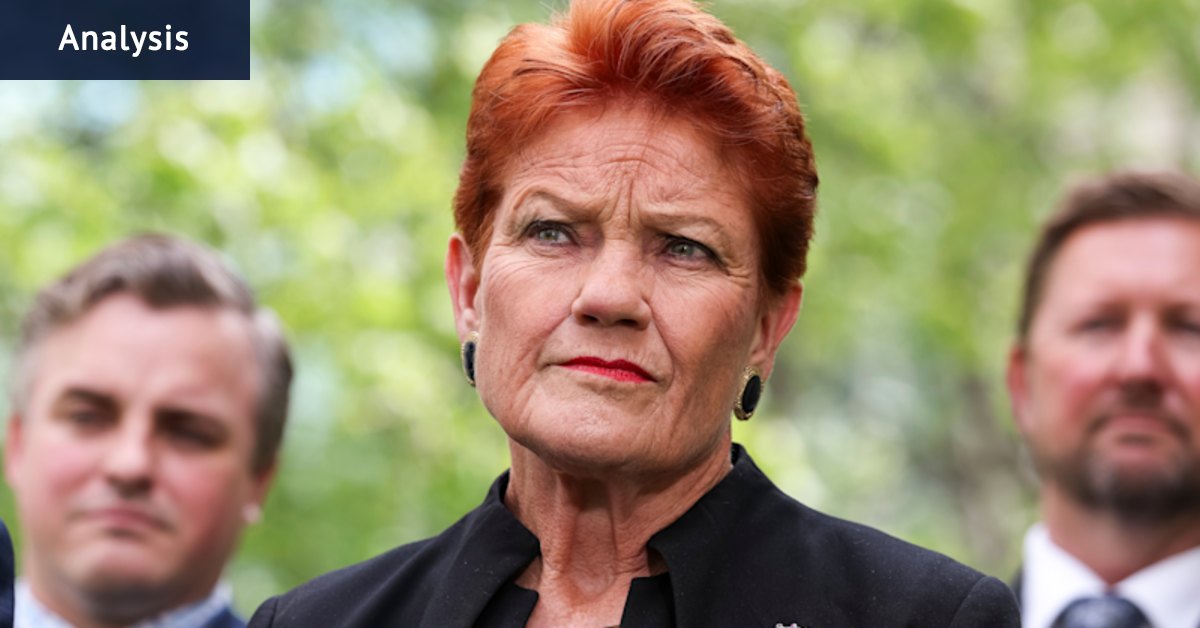
The official opposition and One Nation each secured a primary vote of 23 per cent, a record low for the Coalition and a record high for Pauline Hanson’s party, as support in the polls has almost quadrupled since 6.4 per cent of Australians voted for her candidates at the election last May.
This month’s Resolve poll was conducted from February 8 to 14, a week that began as Ley struck a bargain with Nationals leader David Littleproud to reunite the Coalition, but ended with Taylor in charge of the Liberal Party. All 1800 respondents were asked to express their primary vote intention with Ley as leader and then with Taylor in charge and the results, for Ley, were disastrous.
With Ley in charge, the Coalition secured a primary vote of just 20 per cent, whereas One Nation won the primary vote of 25 per cent of voters. In other words, things had gotten so bad under Ley that the Coalition was trailing One Nation, for the first time ever in the Resolve poll, by 5 percentage points.
That is a statistically significant movement outside the margin of error of plus or minus 2.3 per cent and it underscores the extent to which voters had switched off from Ley.
Voters started deserting the Coalition for One Nation soon after the last election, and the Coalition’s months-long civil war only hastened the decline in the Liberal primary vote.
One Nation’s popularity has also created a new problem for pollsters estimating the two-party-preferred vote, which has led this masthead – and others – to hold back from highlighting those results.
When voters were asked to state their preferences, Labor held a 10 percentage point, 55-45 lead over the Coalition in the two-party-preferred vote.
But those numbers are potentially inaccurate because in some seats where One Nation is polling well, a two-candidate preferred count that pitched Labor against One Nation, or the Coalition against One Nation, would be more accurate.
One Nation support is typically concentrated in a smaller group of seats – rural and outer urban – so it is not yet clear which seats should be polled on a two-candidate-preferred basis.
Resolve Pollster Jim Reed said the two-party-preferred vote “only works at a national level when you have a binary contest”.
“We’ve always preferred to focus on primary vote, which is how we were able to call the Greens and teals wins in 2022,” he said.
“The political shift here is beginning to look more like the UK experience now, where Reform began cannibalising one side of politics, but then went on to damage both sides of politics.”
The preferred prime minister rating has also not been in the spotlight this month, as it usually is, as the data compared only Ley and Albanese, rather than Taylor and Albanese.
Even if Ley were still the opposition leader, this result would be a disaster as Albanese holds a substantial 16 percentage point lead over Ley, 38-22, with the rest undecided. Last month, Albanese led Ley by 4 points, 33-29.
The ongoing collapse in support for both major parties is spelt out here and in other polls. At the election in May last year, 33.6 per cent of voters gave their first preference to other options, including One Nation, the Greens or an independent.
Less than 12 months later, 45 per cent of voters say they would vote for someone other than the major parties in a contest between Albanese and Taylor. Just under half, 49 per cent of voters, would have voted for minor parties and independents while Ley still led the opposition, an even worse result.
These figures highlight just how far the Coalition has fallen out of favour. The recovery by a couple of percentage points in the first flush of the Taylor-led opposition is nice, but to form government one day, the opposition needs its primary vote to be closer to 40 per cent than 20 per cent.
Oh, before Labor starts gloating, Albanese should remember that his party could be next as disaffection for the major parties grows.
Cut through the noise of federal politics with news, views and expert analysis. Subscribers can sign up to our weekly Inside Politics newsletter.
 James Massola is chief political commentator. He was previously national affairs editor and South-East Asia correspondent. He has won Quill and Kennedy awards and been a Walkley finalist. Connect securely on Signal @jamesmassola.01Connect via X or email.