


Just as world events have forced him to update his famous thesis on “the end of history”, American political scientist Francis Fukuyama this week sought to backtrack on his later book that characterised the United States as a “high-trust society”.
Domestically, trust had been eroded by 30 years of political polarisation, he wrote in an essay on Substack. And globally, “there has never been a time when the United States was more distrusted, by both traditional friends and by rivals, as at the present”.
Fukuyama says the war with Iran and the crisis over the Strait of Hormuz represent a fundamental rupture in the security structure buttressed by the North Atlantic Treaty Organisation. It is an alliance based on trust but “no sane European leader can think that support for the United States today will be reciprocated by a Trumpist United States down the road”.

Whether such cynicism is justified or not, the war in Iran has raised profound questions about American power under US President Donald Trump. The world has once again seen an awesome display of US (and Israeli) military might, but unlike the recent mission in Venezuela or last year’s bombing blitz of three Iranian nuclear sites, there are serious questions about whether the campaign was strategically successful.
Iran has suffered a “generational military defeat”, US Central Command says, via more than 13,000 strikes on military targets, including Iran’s navy, missile stocks and defence industrial base. While some early retaliatory strikes hit Gulf countries, disrupted global air travel and damaged energy infrastructure, Iran’s capacity to fire back diminished rapidly and a dwindling number of missiles were intercepted as the weeks went by.
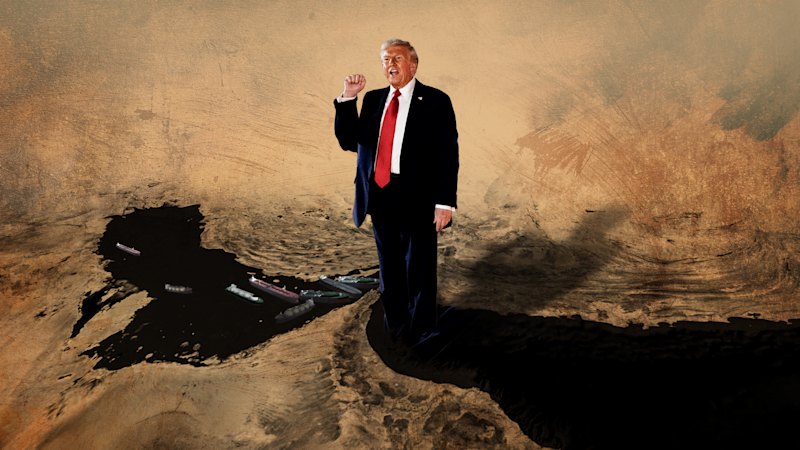
And yet while the Iranian regime lost on the battlefield, it may have won geo-strategically and economically through its weaponisation of the Strait of Hormuz. With little action except for some drone attacks and the threat of mines, Tehran found it could effectively blockade the key shipping passage through which a fifth of global oil supplies ordinarily transit.
Now, amid a hastily agreed ceasefire and the start of talks in Islamabad, it is the status of the strait and Israel’s ongoing bombing of Hezbollah targets in Lebanon that stand as major roadblocks to a potential peace deal to end the war.
But several other big-ticket issues are also unresolved: the fate of hundreds of kilograms of highly enriched uranium still in Iran, the regime’s future enrichment rights and intentions, and the leadership of the “new” Iranian regime itself.
Richard Fontaine, chief executive of the Centre for a New American Security and a former foreign policy adviser to the late Republican senator John McCain, says it is too soon for a final assessment of who will emerge from the war with the greater advantage. But Iran has some advantages now that it didn’t have before – namely, its hold on the Strait of Hormuz.
“A world where Iran is in control of that energy choke point – which it was not in control of before the war – I think is not a success for the United States, and should be unacceptable. That’s the situation as of today,” Fontaine says. “Then you have the fact that the regime survived.”
Others look at it differently. Trump’s former national security adviser John Bolton, a noted Iran hawk and a regular critic of the US president, says the war has severely weakened the regime. Hundreds of its top leaders have been killed and a premature leadership crisis broke out following the assassination of supreme leader Ali Khamenei and the absence of his son and successor Mojtaba Khamenei.
Bolton told a Foreign Policy magazine event on Thursday (Washington time) that splits were developing at the top levels of what remained of the regime, and “things are beginning to come apart”. “It’s people in the regime itself who look around and say, ‘Maybe this ship is going down, and I don’t want to go down with it’.”
He was critical of Trump for bailing on the operation too soon and failing to convince the American people that regime change in Tehran was in their best interests. “Trump obviously has not made that case, and it could be a crippling mistake,” Bolton said.
At the outset, when he announced combat operations in a recorded video from Mar-a-Lago, Trump entertained the idea of regime change but he said it would be up to the Iranian people to do it for themselves once the war was over. Now, however, he says regime change has already occurred, and praises the new Iranian leaders as “smarter” and more moderate than their predecessors.
Trump’s coalition partner, Israeli Prime Minister Benjamin Netanyahu, made regime change an explicit goal of his campaign, but he has now acceded to the ceasefire in Iran and to talks with Lebanon (despite launching Israel’s biggest bombing onslaught on Beirut just hours after the truce was announced).
Many commentators accused Netanyahu of deliberately violating and trying to undermine the ceasefire, though US Vice President JD Vance said Lebanon was never included in the truce and the Iranians’ belief that it had been was a “legitimate misunderstanding”. But even after that, Pakistan’s Deputy Foreign Minister Saeed Khatibzadeh told the BBC that Israel’s strikes on Lebanon were a “grave violation” of what had been agreed.
This confusion over Lebanon is “not a great start”, Fontaine says, although it is still early days. “There’s a fog of war, and there’s also a fog of diplomacy, and we’re seeing a lot of fog of diplomacy here.”
The task now falls to Trump to rein in Netanyahu’s maximalist ambitions and his instincts to keep fighting. Trump confirmed reports he had asked the Israeli leader to pull back. “I spoke with Bibi and he’s going to low-key it,” the president told NBC News. “I just think we have to be, sort of, a little more low-key.”
Experts agree Netanyahu has little choice. “If Trump tells Bibi to stop, Bibi will stop,” says Charles Kupchan, a senior fellow at the Council on Foreign Relations and a former director of European affairs on Barack Obama’s national security council.
“When Trump told Bibi that he was done in Gaza, Netanyahu basically signed the truce and went along with the game plan. Trump has an enormous amount of leverage over Netanyahu. Netanyahu needs Trump.”
Kupchan says the bigger problem is the Strait of Hormuz. Its supposed reopening has been slow, at best – reports suggested the regime had agreed to allow only 10 to 15 ships a day through the critical waterway, not all of them necessarily oil tankers. Reuters reported that just one tanker and five dry bulk carriers had sailed through in the first 24 hours of the ceasefire, citing ship tracking data.


Trump, having entertained the idea of Iran charging fees to use the strait – and at one point floating the prospect of the US somehow charging a toll – now says this cannot happen. “They better not be and, if they are, they better stop now!” he posted on Friday (AEST).
Later, he said Iran was doing a poor job of allowing oil through the strait, suggesting it was contravening their agreement.
“That strait has to open and it has to open soon,” Kupchan says. “That’s why [Trump] agreed to a ceasefire – because this war has blown up in ways that he did not expect, and it has produced a huge shock to the global economy and it’s hitting the American consumer hard.”
Then there is the broader question of whether the US and Iran can agree on a peace deal. That may start to become evident as soon as this weekend when negotiators, led by Vance on the US side, meet in Islamabad. Complicating matters is the lack of clarity about both sides’ positions ahead of the ceasefire – Trump claimed Iran submitted a more reasonable proposal that bore no resemblance to its earlier, 10-point list of maximalist, unacceptable demands – but this document has not been made public.
“I hope he’s right,” Kupchan says. “If he’s not right, then I think this war will ramp back up. Right now, I would say the US and Iran are not on the same planet … they’re whistling past each other.”
Analysts also agreed that now was the time for allies to help reopen the strait, as long as the ceasefire holds. Australian Defence Minister Richard Marles on Friday said he was talking to Britain and France about how Australia could best assist.
Fontaine says: “Other countries may say, ‘Hey, you guys got us into this’. But this is a matter for the entire world, including Europe and countries in Asia.
“I’ve seen articles about people running out of diesel in rural Australia. If you end up in a situation where Iran is turning this into its own Panama Canal and charging millions of dollars in tolls and can shut down passage of any ship to any country … that’s a bad situation for everybody, no matter how we got ourselves into this.”
NATO secretary-general Mark Rutte dashed to Washington this week to meet with the president amid Trump’s threats to withdraw the US from the alliance, and reports that he is considering moving US troops out of allied nations that didn’t support the war in Iran.
Speaking at the Ronald Reagan Presidential Foundation & Institute on Thursday, Rutte noted Australia, Japan and South Korea were among those countries that had offered to assist in reopening the strait – though it would mostly be a NATO effort.
“Many allies that long looked to [the US] as an inspiration are now kind of scratching their heads and saying, ‘What the hell happened?’.”
Charles Kupchan, a senior fellow at the Council on Foreign Relations
Rutte, a former prime minister of the Netherlands who is good friends with Trump, has become the great saviour of US-NATO relations. Unencumbered by European electoral politics, he can appease Trump’s whims while gently reminding him of the value of the trans-Atlantic pact.
“Rutte is a smart man,” says Dan Shapiro, a former US ambassador to Israel. “He’s not blind to what he’s dealing with. He’s made a calculated gamble that lavishing praise on Trump, even as Trump trashes and threatens NATO, might just save the alliance. And he can take that risk, which elected leaders in Europe cannot. Noxious, but hopefully effective.”
Fontaine says the Trump administration has not shown itself to be particularly savvy in building coalitions – something that is proving to be an Achilles heel as the going gets tough. “There has to be strength in numbers,” he says. “No one wants to live in a world where Iran controls the Strait of Hormuz.”
Kupchan, like Fukuyama, says America’s standing in the world is at a low ebb – not just because of the way Trump has prosecuted the war against Iran, and his petulant demands for allies’ help, but because of how the administration has pursued foreign policy more broadly.
“Over the course of American history, the country has been an idealist power navigating a realist world,” Kupchan says. “Now you have an administration that just doesn’t embrace idealist aspirations. It believes that international law and rules of engagement are for wimps. The secretary of war [Pete Hegseth] calls military rules of engagement ‘stupid’.
“I think that many allies of the United States that long looked to this country as an inspiration are now kind of scratching their heads and saying, ‘What the hell happened?’. Iran makes this problem worse, but it really is the cumulative effect of an administration that is breaking out of a rules-based international system.”
Get a note directly from our foreign correspondents on what’s making headlines around the world. Sign up for our weekly What in the World newsletter.
