


The history is convincing, now, that all sides continued the fighting without greatly changing the final terms of the peace. The Austro-Hungarians lost an empire. What stands out in Iklé’s account is the capacity for military and political leaders to bring disaster on their nations by wearing the cloak of national honour.
Another lesson? Peace requires pragmatism. Finland brought Russia to a halt in the Winter War of November 1939 by fighting in sub-zero temperatures after Josef Stalin ordered an illegal invasion. Finnish leader Carl Gustaf Mannerheim chose to negotiate a peace deal in March 1940 while he retained bargaining power, even though this meant ceding territory.
Soon enough, after Germany invaded Russia, the Finns were at war with Russia again. The alliance with Germany was temporary, however, and Mannerheim responded wisely to the gains by Russian forces. He agreed to another armistice with Stalin in September 1944.
The terms were unfair: Finland gave up land and paid reparations worth about $9 billion in today’s money, all of it transferred by train in 140,000 carriages over eight years. But Mannerheim is a hero in Finland because he ensured its sovereignty.
Iklé, who rose to senior positions in the Pentagon, was not an advocate for peace at any price. He was an advocate for rational decisions on when to stop fighting. In his words, the goal should be a settlement to bring “greater and more lasting security” than existed before the fighting broke out.
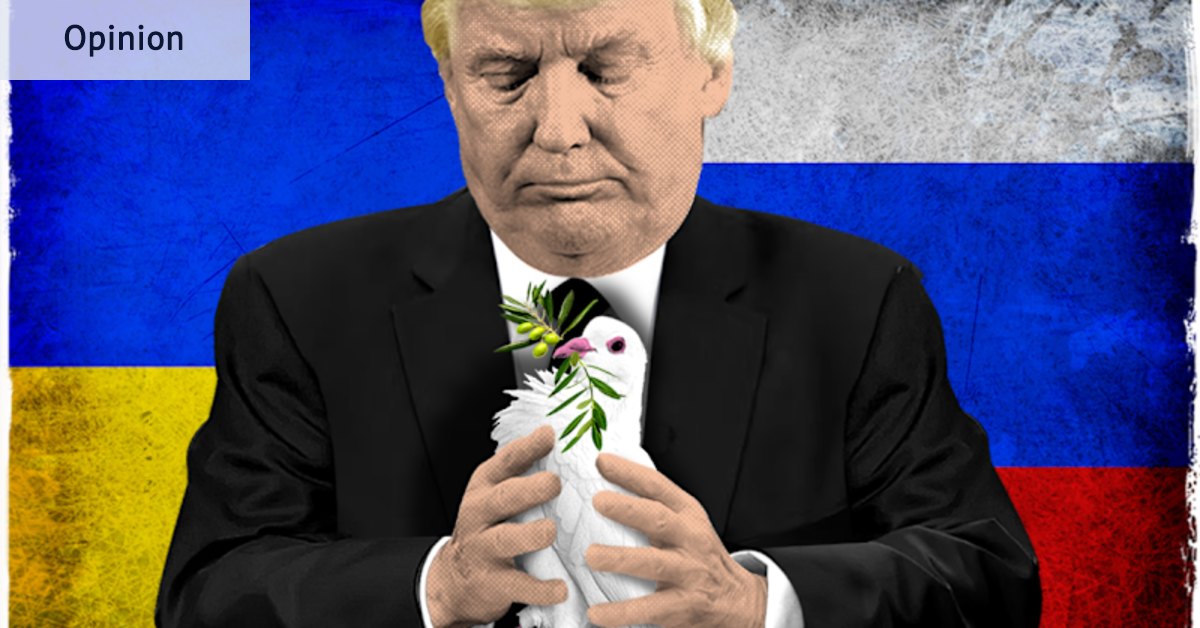
Trump fails on that key test. His 28 points deliver so many gains to Putin that they become a reward for war. The US president says this may not be his final offer, so he is willing to give ground. Even so, issuing the draft plan with a Thursday deadline was a shameful act.
The terms state that Putin gains the Crimea and the Donbas regions, is freed from foreign sanctions and is restored to the G8. He secures a cap on the size of the Ukrainian army, but not one on his own, and halts any NATO expansion. While the plan includes a vague security guarantee for Ukraine, it lacks a powerful deterrent. It almost invites Putin to see if Trump will blink again.
Loading
The great cruelty is that Ukraine does not have enough time to seek a better outcome. Will the terms be any better if it fights for another year, or two, or three? How many would have to die to make that possible?
Russian forces have gained ground in Pokrovsk in the Donbas, according to the Institute for the Study of War. Poland says 99,000 young Ukrainian men aged from 18 to 22 have crossed into its country over the past two months. Close aides to Zelensky are caught up in a corruption scandal. Trump appears to be threatening to withhold weapons if Ukraine does not agree to a deal. Russia is making an incredible number of drones and missiles despite sanctions that were meant to strangle its economy.
Zelensky cannot afford to wait. Ukraine has stopped a brutal Russian takeover and kept its sovereignty, but it needs its allies to maximise pressure on Putin so the peace can be sought on terms that last.
The European response to the Trump plan is crucial because it outlines a peace plan with far greater deterrence aimed at Putin to avoid a future conflict – for instance, by allowing a larger Ukrainian army, positioning foreign troops in Ukraine and mapping out the “gradual” removal of sanctions on Russia so they only end if the peace is secure.
Trump cares little about the long-term fate of Ukraine, but Europe does. And Australia should. Moscow is using hybrid warfare against liberal democracies – for instance, by paying criminals to commit arson, or using cyberattacks, or engaging in foreign interference – and there is no rational case for suddenly halting all the pressure on Putin.
History holds the lessons about how to end wars, as Iklé and others have shown. One of the biggest is that the terms have to ensure security for both sides, so there is a chance for a settlement that holds.
Trump fails the history test with his draft plan. Perhaps he will heed the proposals from Europe. It is not too late for a second draft.
David Crowe is Europe correspondent for The Sydney Morning Herald.
Get a weekly wrap of views that will challenge, champion and inform your own. Sign up for our Opinion newsletter.
