


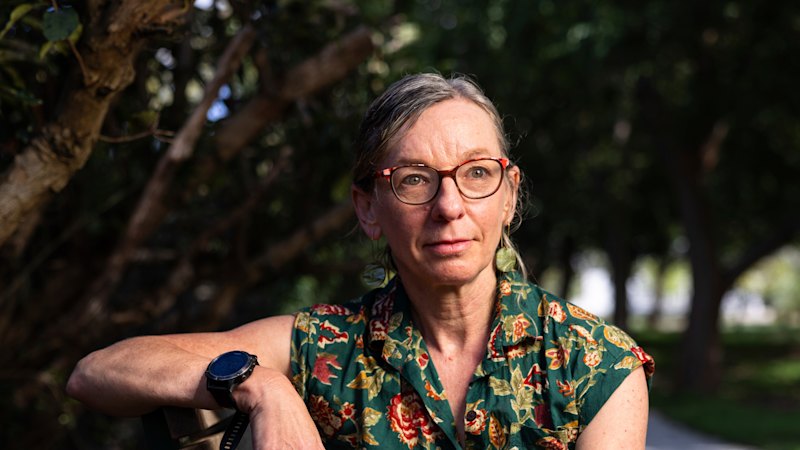

Simone Annis was about to celebrate her 50th birthday when she noticed a lump in an unusual spot.
She was fit, healthy, and had recently run a marathon, so was blindsided when a colonoscopy confirmed she had anal cancer – a disease she knew nothing about.
But the shock of the diagnosis was compounded by the fear and uncertainty she found when she tried to learn more about the disease online.
“There was a lot of shame and stigma, which I actually didn’t feel at all,” the Canberra-based artist said. “I decided straight away that I was going to be very honest with everyone, my friends and my family, and use the word anal.”
New anal cancer diagnoses have almost doubled in two decades. Since the 1980s, there has been a 75 per cent increase in the rate of women getting the disease, and a 25 per cent increase in men.
Since 2001, the age-standardised rate – which adjusts for fair comparisons across populations – increased from 1.8 to 2.2 cases per 100,000 people.
Women account for more than 60 per cent of people diagnosed. Nine in 10 cases are caused by the human papillomavirus (HPV), a common sexually transmitted infection.
Professor Richard Hillman, who runs one of the few clinics dedicated to the disease in Australia, said many of his patients do not feel comfortable disclosing the condition to family and friends.
Some say they have bowel cancer because it’s easier to explain. One was told by her surgeon he did not think she was “the type of person who would get anal cancer”.
“There’s a lack of awareness, not just in the general community, but in many healthcare professionals as well,” Hillman said. “Often, the women feel a little bit abandoned.”
That is why Hillman’s team at St Vincent’s in Darlinghurst, alongside researchers from the University of Sydney, have developed a toolkit giving women diagnosed with anal cancer and their doctors accurate and reliable information about the rare disease.
The resource aims to break down common myths about the cancer, give health professionals advice about how to discuss it, and guide women through their diagnosis and treatment.
In women who have not been vaccinated against HPV, the virus is most often acquired in the cervix, through sex with a male partner.
In some, this can transfer to the anus, where persistent infections can cause changes in the anal lining that progress to cancer.
The most obvious symptom is bleeding, which can be initially mistaken for a haemorrhoid or fissure.
Radiotherapy treatment is effective, and more than 70 per cent of those diagnosed are alive after five years, but it can have long-term effects – particularly on sexual function and intimacy.
Mary Hayes, a PhD candidate and nurse at St Vincent’s, said the toolkit was based on interviews with women diagnosed with the cancer, many of whom shared confronting stories about being dismissed by specialists, travelling long distances for radiotherapy in Sydney, and feeling isolated even after they had finished their treatment.
“A lot of these women that we spoke to didn’t tell their family, their friends – they maybe had one person who knew about their diagnosis,” Hayes said. “It can be very isolating, very lonely.”
The toolkit will be rolled out at cancer clinics across NSW, Victoria, and South Australia.
The national HPV vaccination program, which has made immunisation free for girls since 2007 and boys since 2013, has helped dramatically reduce incidences and deaths from cervical cancer. About 86 per cent of 15-year-old girls and 83 per cent of 15-year-old boys were fully immunised against HPV in 2023, and Australia is projected to become the first country to eliminate cervical cancer within the next decade.
Hillman said this success should provide a blueprint for how to boost awareness and early diagnosis of other HPV-linked cancers. If caught early, anal cancer can be treated with surgery rather than radiotherapy, which can cause long-term changes to skin, surrounding tissue, and sexual function.
“It’s a really devastating, tough, life-changing disease,” Hillman said. “These poor women need as much help as they can get.”
Dr Suzanne Mahady, a gastroenterologist and clinical epidemiologist at Monash University, said universal HPV vaccinations would eventually result in a reduction in anal cancer, but this would likely take decades.
While some of her patients can feel awkward discussing anal and rectal issues, Mahady said people should not be afraid to visit their doctor if they notice unusual symptoms.
“Doctors are trained to talk about these things … we work with this all the time,” Mahady said. “We don’t judge it differently from any other work that we do.”
Start the day with a summary of the day’s most important and interesting stories, analysis and insights. Sign up for our Morning Edition newsletter.
 Angus Thomson is a reporter covering health at The Sydney Morning Herald.Connect via X or email.