










The long-time chairman of the AFL’s Indigenous Advisory Council has described the new head office plan to address the decline of First Nations footballers in the game as “shallow and self-centred”, and reflecting a deep lack of understanding of the crisis in traditional Indigenous pathways.
Paul Briggs, a decorated community leader who became the inaugural chair of the advisory council in 2015, quit the role late last year along with fellow directors Joe Morrison and Pat Turner after the AFL Commission bypassed the council when it ticked off the new Indigenous blueprint.
The blueprint to increase Indigenous numbers on club lists from its current 20-year low, revealed by this masthead last month, was devised by Taryn Lee, the AFL’s new general manager of First Nations engagement and inclusion. Not only was the Briggs-chaired IAC – established by Gillon McLachlan in 2015 to provide advice to the AFL in the implementation of Indigenous strategy and policies – not meaningfully consulted, but Briggs said the strategies remained under-resourced and focused on elite statistics at the expense of meaningfully addressing the grassroots issues.
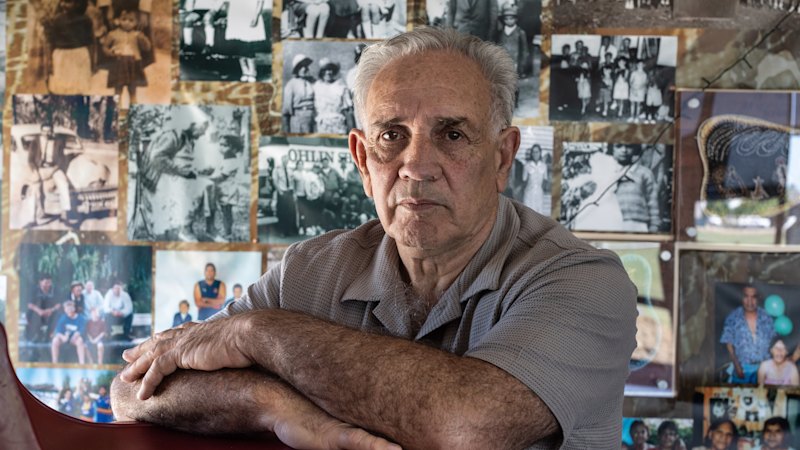
“We just felt really disrespected,” said Briggs, whose Shepparton Rumbalara Football and Netball Club is celebrating its 30-year anniversary as an AFL Victoria-affiliated club. “It’s an advisory body I chaired that wasn’t resourced enough and the AFL passed a new plan that we hadn’t made a contribution to. That’s why we stepped away.
“We couldn’t stay at an organisation that doesn’t take advice from an advisory body. You don’t have to take all our advice, but at the least you should seek it.”
Although the new AFL strategy identified Indigenous player retention as a key platform, Briggs questioned whether head office was doing enough to support Indigenous players to keep them in the AFL system. He said the game’s diversity talent manager Paul Vandenbergh required more support.
That view was endorsed by St Kilda coach Ross Lyon, who last week questioned AFL boss Andrew Dillon over the game’s decision to savagely cut Vandenbergh’s allowance. St Kilda’s Indigenous cohort including Bradley Hill, Liam Henry, Nasiah Wanganeen-Milera and Marcus Windhager remained deeply troubled this week regarding the Lance Collard case and were hosted by Vandenbergh in Adelaide.
Vandenbergh, who ran the game’s third Gather Round multicultural Mob Breakfast one week ago, remains a father figure to the game’s Indigenous and Sudanese players across the competition, working closely in recent times with Willie Rioli, Collard, Tyson Stengle and Bobby Hill as they navigated various issues.
Briggs’ thoughts on the lack of representation at the AFL were echoed by Geelong premiership player Mathew Stokes, who worked at head office after his playing retirement and now runs his own civil and infrastructure business.
Of the AFL’s new Indigenous blueprint he said: “We’re not putting enough football people in charge. We’ve got a massive problem here, and we’ve got Denise Bowden who’s replaced Helen Milroy on the [AFL] Commission and Taryn Lee in a senior role, which is great.
“What they’re really good at is social policy and campaigning but Pauly Vandenbergh in his role needs more support. He needs his own portfolio with people underneath him. He’s not a footballer, but he was a professional NBL player, and he’s been around our players for so long he’s the only one all our players talk to.”
Briggs added: “Senior decisions in the AFL space are more about process without a clear strategy. How can one Aboriginal person make an impact on the commission without the correct support underneath?”
Internally, the view is that the AFL’s inclusion team and football team have remained disconnected. Although Chad Wingard’s recent departure from Taryn Lee’s inclusion team disappointed some clubs, they were buoyed by the former Port Adelaide and Hawthorn star’s ascendancy to become the first national boss of the Next Generation Academies.
Lee, who had previously worked on the Collingwood executive to lead the club’s inclusion policies in the aftermath of the Do Better report, essentially has replaced Tanya Hosch, although the role is no longer an executive one. Hosch raised eyebrows at the AFL Indigenous camp 17 months ago when she demanded answers from the clubs for the falling Indigenous playing numbers at a time the pathways numbers had also drastically dropped.
Like Stokes, Briggs said that the AFL’s proposal to consider mandating one Indigenous rookie spot on every AFL club list was heading down a welfare route, as opposed to a prosperity and productivity route.
“If a proposal can’t have synergy with how we are working in our regions, how can they work up the chain? If single mums can’t get their children to training on time and if boys are standing at the back too nervous to speak up when they’re trying to get into the Bushrangers side, then what use is a rookie spot without support?
“The AFL should be thinking more strategically and have put forward a strategy with a budget attached. It should be reflected in how the pathways are supported with a budgetary element to that. We bring people through the turnstiles. We help teams win premierships, but it goes back to pre-natal, to childcare centres, through AFL Victoria, the SANFL, the WAFL, the NTFL. The commitment from the AFL wasn’t strong enough.”
Of First Nations footballers after their AFL careers, Briggs observed: “When you have the jumper on you have value. When you take the jumper off your value drops.”
Briggs has been lobbying the federal government for a four-year funding plan to lower poverty and increase productivity in the Goulburn Murray region. He has met twice with the Prime Minister and earlier this month met federal treasurer Jim Chalmers to table the $33 million proposal, titled the Goulburn Murray Regional Prosperity and Productivity Plan, before next month’s budget.
Supported by the four local councils and 40 local business champions, the submission pushes for the government to fund more than 500 annual regional jobs and additional training and a shift away from a welfare and crisis intervention model to an economic empowerment and investment-based approach.
Briggs’ view, backed by additional research from KPMG and Deloitte, is that to increase the lifespan of First Nations people in his region and improve their productivity would have an annual gross regional product monetary value of $180 million within 15 years, and that his proposal is mirrored by what the AFL could achieve by more heavily investing in Indigenous pathways.
Having outlined his regional strategy several times with AFL bosses, Briggs observed: “The AFL didn’t know where I was coming from… The commitment from the AFL wasn’t strong enough. There was no feeling the need or the pressure to collaborate.”
The blueprint to get more Indigenous players back into the game was revealed last month by this masthead after commission approval last year.
AFL officials, who did not want to speak publicly due to the sensitivity of the issue, said the lack of action and budgetary detail around the new blueprint was partly due to the changing of the guard at the game’s highest level with new chairman Craig Drummond coming on board.
The plan has set targets of 81 AFL and 29 AFLW players on AFL lists by 2030 from the current 62 men and (last season) 22 women. On average, a First Nations player spends one year less in the AFL system than a non-Indigenous player.
Joe Morrison, the CEO of the Indigenous Land and Sea Corporation, and Indigenous trailblazer Pat Turner departed the IAC with Briggs joining Peter Yu, the Australian National University’s inaugural vice president (First Nations), who resigned earlier last year.
The AFL subsequently overhauled the newly named First Nations Advisory Committee, which is now chaired by the game’s new Indigenous commissioner, Denise Bowden. It has become a subcommittee of the AFL Commission.
The new committee cohort includes former players and AFL premiership stalwarts Chris Johnson and Shane Edwards, along with former Fremantle and West Coast AFLW player Alicia Janz. Its first meeting earlier this year was attended by four AFL commissioners.
The AFL was contacted for comment.
Keep up to date with the best AFL coverage in the country. Sign up for the Real Footy newsletter.


