


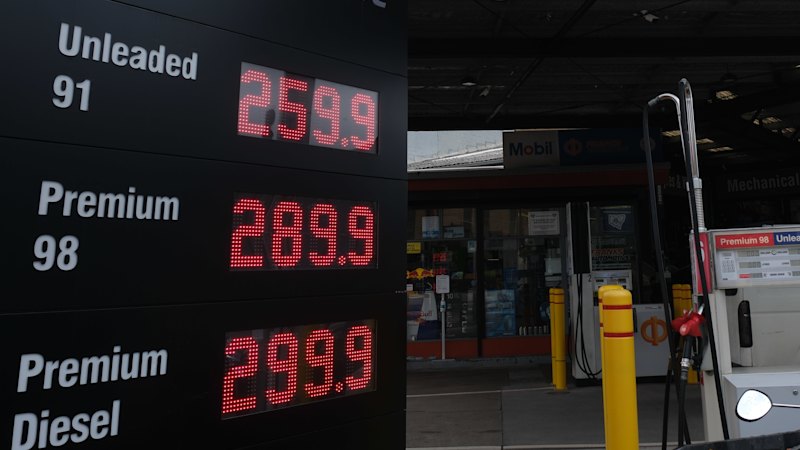
When life was hard in NSW, they used to say “things are crook in Muswellbrook”. In Victoria, the small hamlet of Tallarook finished the same rhyme. These days, Australians everywhere seem to think they are going to hell in a handbasket.
Consumer confidence has dropped off a cliff. The ANZ-Roy Morgan weekly measure of consumer sentiment has dropped 5.4 points over the past seven days and plummeted 20 per cent since the US and Israel started bombing Iran.
The Herald’s senior economics correspondent Shane Wright reports a combination of spiralling petrol prices, the war in Iran and the Reserve Bank’s latest interest rate rise has driven consumer confidence to a record new low, unseen since the measure was created in 1973 during the first oil shock.
The Council of Financial Regulators, comprised of the Reserve Bank, federal Treasury, the Australian Prudential Regulation Authority and the Australian Securities and Investments Commission, expressed concern about the war’s impact on the nation’s financial system but noted that most borrowers were able to manage increases, though some faced growing challenges.
Expectations about inflation also soared, reaching 6.9 per cent, even higher than during the post-pandemic inflation surge.
Between COVID-19 and running out of fuel, Australians have rarely been hit by such a devastating one-two combo of catastrophes.
The sense of community and social cohesion that is usually one of the great strengths of our country is being eroded by polarised political debates and the daily outbursts of US President Donald Trump that have allowed preening to replace policy.
Despite consumer sentiment plunging, there are many positives for Australians to cling to.
On the downside, the war in Iran has led to a sharp rise in fuel prices and serious concerns about our future supplies. But the climbing prices have prompted a change of mindset for many drivers who faithfully defended their petrol guzzlers but are now seriously considering the electric alternatives.
Trump’s Iran gambit and looming fuel shortages have changed the game irrevocably, and motorists have seen the “no diesel” signs and queues outside petrol stations and started perusing the price and availability of EVs. It is an eventuality that will have huge ramifications for climate change, the US and Chinese car industries, and Australian driving habits.
Similarly, potential shortages of fossil fuels highlight the need to accelerate the shift to renewables – an energy supply that is not dependent on international shipping. The renewable share of Australia’s electricity grid passed 50 per cent for the first time in the final quarter of 2025, and the target is for 82 per cent renewable electricity by 2030. Surely, the aftermath of this conflict will help accelerate this transformation.
It is a silver lining and a reminder that, even as nosediving consumer sentiment reflects a clear and present feeling that things are crook, humans have an enormous capacity to adapt and, eventually, things will get better.
Get a weekly wrap of views that will challenge, champion and inform your own. Sign up for our Opinion newsletter.
 The Herald’s View – Since the Herald was first published in 1831, the editorial team has believed it important to express a considered view on the issues of the day for readers, always putting the public interest first.