


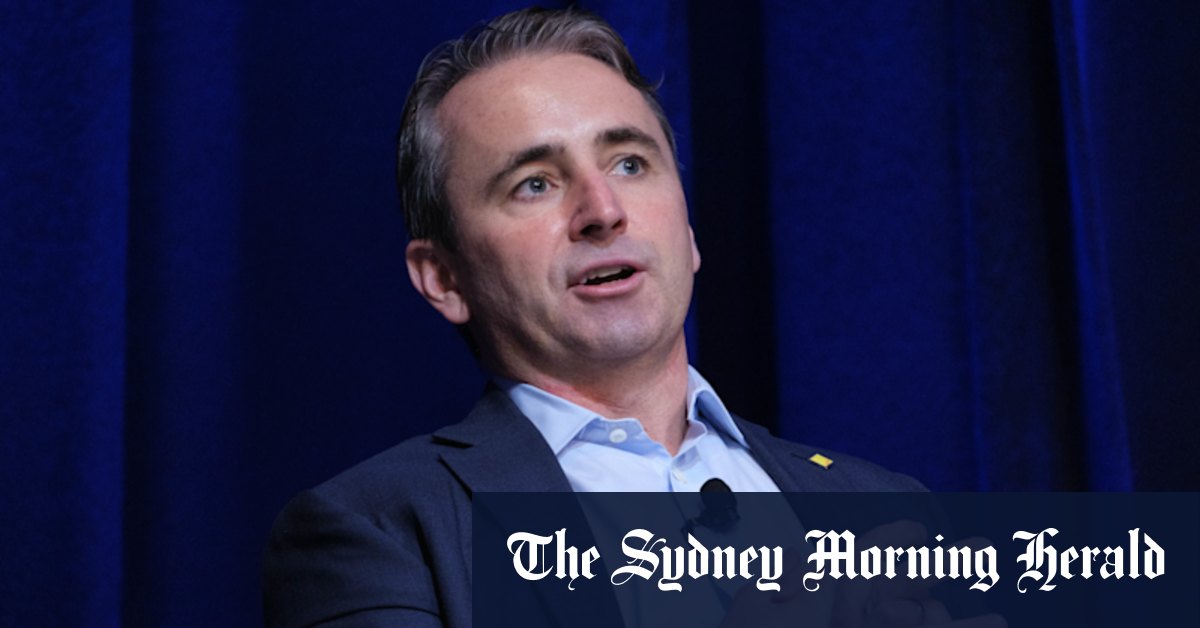
Principal at fund manager Alphinity, Andrew Martin, said O’Malley’s comments on Comyn’s tenure were a positive for the company, though they were probably not surprising to those inside CBA. “He’s done a great job, the business is going well. Stability is a good thing,” he said.
Loading
Aside from Sullivan, who leads the largest division in CBA, other potential candidates to ultimately replace Comyn include business banking boss Mike Vacy-Lyle and finance chief Alan Docherty.
CBA has long been regarded as the technology leader among the big four, and in his speech to shareholders on Wednesday, Comyn highlighted the bank’s investment in artificial intelligence, including hiring 2000 engineers last financial year and its training of staff.
However, the bank’s leaders were also questioned over its decision in July to cut 45 jobs and replace them with AI systems – a move later reversed.
Kathryn Sullivan, a CBA employee who was one of 45 customer service employees whose roles were made redundant in July, said she had worked at the bank for 25 years. She asked what measures the bank had to prevent current staff from losing their jobs to AI.

Kathryn Sullivan was among the 45 workers CBA replaced with AI.Credit: Alex Ellinghausen
“We made a mistake,” O’Malley said in response.
“We didn’t adequately consider all the relevant business considerations. And I think that’s been communicated.”
Under Comyn, CBA has been the dominant bank of Australia’s big four, delivering profit growth over most of the past five years despite growing competition in home loans from the likes of Macquarie Group.
CBA’s share price has been on a tear in recent years, sparking debate over whether it is overvalued. CBA shares have gained 20 per cent in the past year, as investors have flocked to the bank against a volatile global backdrop.
In the lead-up to Wednesday’s AGM, the Australian Shareholders’ Association highlighted the importance of succession planning at CBA, while also praising Comyn’s performance in the top job. The ASA said Comyn was of “key importance” to the bank and that he was one of the country’s top business leaders.
“He is yet to turn 50 and has publicly stated he has no plans for retirement but nevertheless after seven years as CEO, succession planning is of vital interest to all shareholders,” the ASA’s pre-AGM note said.
With AAP
The Business Briefing newsletter delivers major stories, exclusive coverage and expert opinion. Sign up to get it every weekday morning.
