










Beijing: In between NASA astronauts blasting off for the moon, Anthony Albanese’s prime-time appeal to keep calm and carry on, and Donald Trump’s threat to bomb Iran “back to the Stone Ages”, you might’ve missed that China has devised a plan for peace in our time.
Unfortunately for Beijing, an avalanche of major global news overshadowed the release of its five-point plan for “restoring peace and stability” in the Middle East, which it jointly proposed with Pakistan this week. But it’s also struggled to get serious traction for another reason.
Trump’s war in Iran has gifted China a stronger narrative to pitch itself as the more stable, responsible superpower, but when it comes to its peace-brokering chops, Beijing has a credibility deficit.
This is not China’s first peace proposal. There have been many over the past decade. Much like its previous offerings – including, a 12-point plan to end the war in Ukraine and a three-point plan for a “lasting solution to the Palestine issue”, both proposed in 2023 – this latest initiative is a broad, quixotic wishlist of endpoints with no suggested pathways or timelines to achieve them.
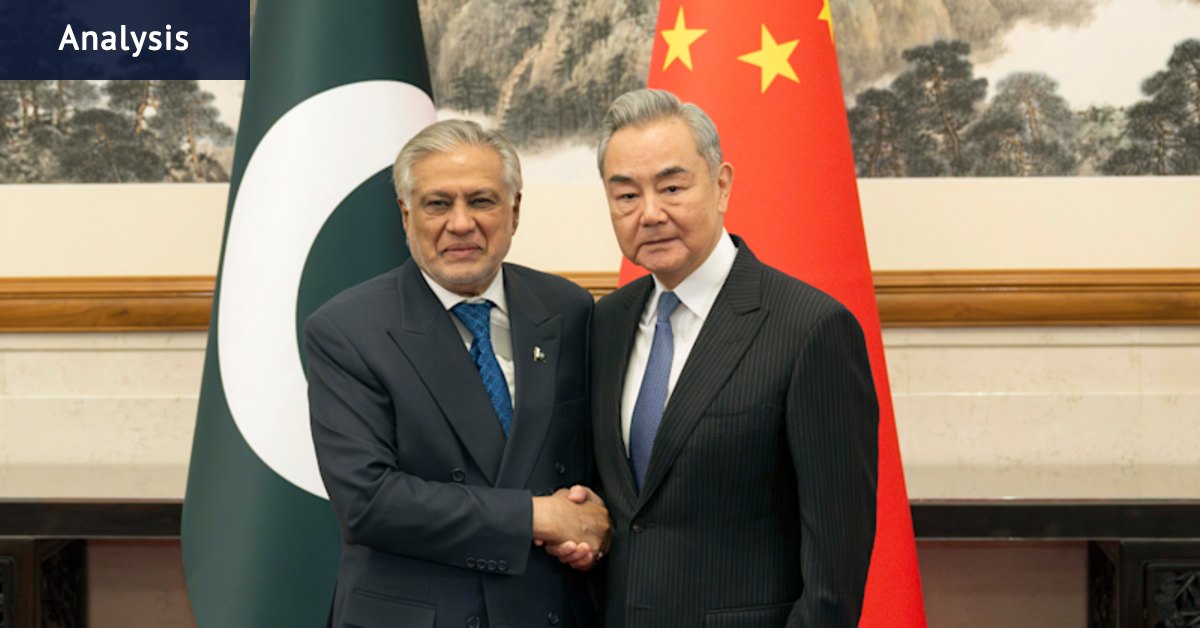
Put forward by Chinese Foreign Minister Wang Yi and his Pakistani counterpart Mohammad Ishaq Dar in Beijing, it’s a one-page document calling for the “immediate cessation of hostilities”, peace talks, securing safe transit through the Strait of Hormuz, protecting civilians, and upholding the UN system.
Sure, it’s better to have the world’s second-biggest economic and military power on the record in favour of peace than the alternative, but simply stating a plan isn’t going to deliver global praise.
“What’s really missing is the commitment element. What is China willing to do for this plan to actually work?,” says Andrea Ghiselli, an expert in China-Middle East relations at the University of Exeter.
A serious proposal might also mention the war’s instigators, yet strikingly there is no reference to the US or Israel in the document. It calls for Iran’s sovereignty to be protected, but makes no mention of its nuclear program – certain to be a sticking point in any negotiations.
Beijing and Tehran have close ties. Wang recently phoned his Iranian counterpart and urged him to start peace talks, and in the past 24 hours he has spoken with foreign ministers from Germany, Saudi Arabia and Bahrain, and the EU’s representative about the war. Positive outreach, but still lacking in the heavy lifting of conflict resolution.
What would this look like? Ghiselli suggests intervention from the top, though don’t count on it.
“There is no evidence of [Chinese President] Xi Jinping, for example, talking with [Israeli Prime Minister] Bibi Netanyahu, or with his Iranian or American counterparts. That would be quite a signal”.
Jonathan Fulton, a China-Middle East analyst at the Atlantic Council, has catalogued at least six other plans Beijing has bowled up since 2013 for peace in the world’s most conflict-prone region.
“None of these X-point plans have resulted in meaningful change for any of the problems they are meant to solve. Which leads one to think that announcing a plan is the point,” he writes in a recent analysis.
To be fair, it hasn’t been all empty rhetoric. China pulled off a diplomatic coup in 2023 when it brokered a rapprochement between Iran and Saudi Arabia, ending years of severed ties. It may surprise again.
For now, it’s been upstaged by Pakistan, which has emerged as an unexpected mediator between Iran and the US. Its military leader Asim Munir has cultivated a friendly rapport with Trump, and Islamabad has facilitated back-channels between the two countries and offered to host peace talks.
By co-launching the plan with China, Pakistan is arguably bringing another great power to the table, though its influence also highlights Beijing’s lack of it, or its disinterest in wielding it so far.
Since the war started in February, analysts have debated whether China’s decision to sit on the sidelines is a calculated strategy that prioritises flexing power in its immediate backyard. Or a reflection of its limited geopolitical clout in the Middle East, with Beijing unable to restrain its friend even as its economic interests were harmed by Iran’s attacks on other Gulf nations.
China likes to push its alternative vision of global governance, based on non-interference in other countries’ affairs and where no nation functions as a US-style hegemon or “world police”.
At the same time, it knows there’s an expectation that superpowers sit at the big table when crises hit.
Beijing wants to be seen at the table, but whether it’s prepared to get its hands dirty is another question.
Get a note directly from our foreign correspondents on what’s making headlines around the world. Sign up for our weekly What in the World newsletter.


