









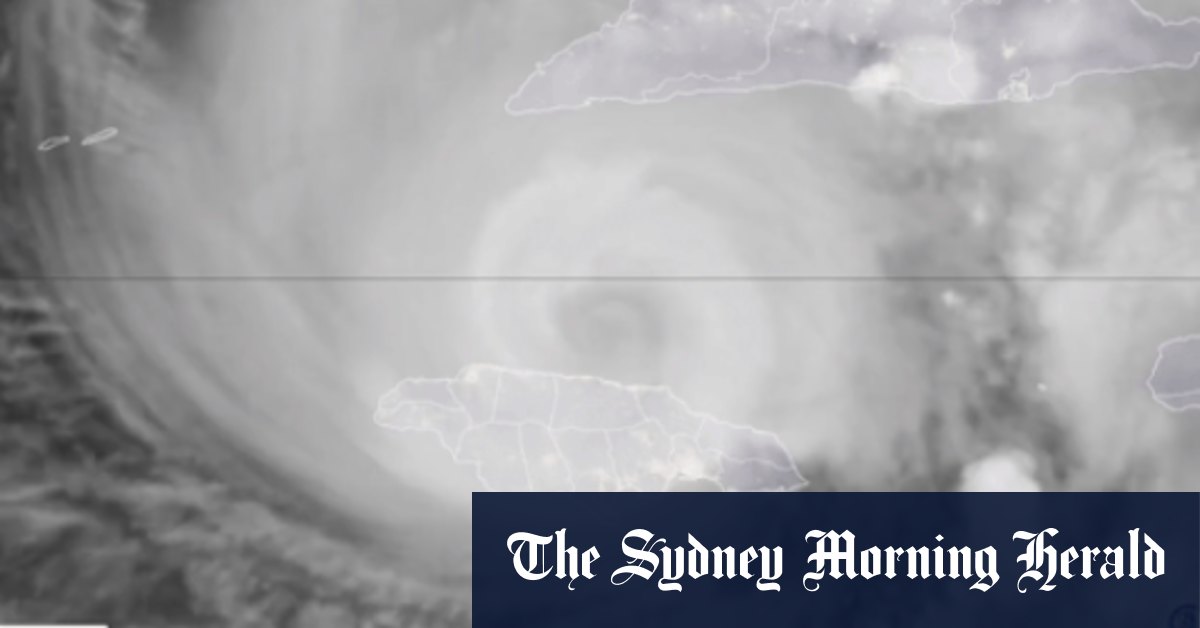
The hurricane was forecast to curve to the north-east on a trajectory toward Santiago de Cuba, Cuba’s second-most populous city.
“We should already be feeling its main influence this afternoon and evening,” Cuban President Miguel Diaz-Canel said in a message published in state newspaper Granma, calling on citizens to heed evacuation orders.

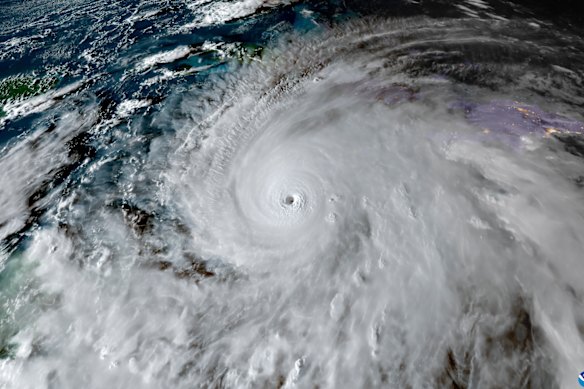
A satellite image of Hurricane Melissa.Credit: CSU/CIRA
“There will be a lot of work to do. We know that this cyclone will cause significant damage.”
In the Bahamas, next in Melissa’s path to the north-east, the government ordered evacuations of residents in southern portions of that archipelago.
Further to the east, the island shared by Haiti and the Dominican Republic has faced days of torrential downpours leading to at least four deaths, authorities there say.
Local media reported at least three deaths in Jamaica during storm preparations, and a disaster co-ordinator suffered a stroke in the onset of the storm and was rushed to hospital. Late Tuesday, many areas remained cut off.
No stranger to hurricanes, Jamaica has never been known to take a direct hit from a category 4 or 5 storm, and the government called for foreign aid even as it prepared for Melissa’s arrival.
Meteorologists at AccuWeather said Melissa ranked as the third-most intense hurricane observed in the Caribbean after Wilma in 2005 and Gilbert in 1988 – the last major storm to make landfall in Jamaica.
“It’s a catastrophic situation,” World Meteorological Organisation tropical cyclone specialist Anne-Claire Fontan told a press briefing, warning of storm surges up to four metres high. “For Jamaica, it will be the storm of the century, for sure.”
Colin Bogle, an adviser to aid group Mercy Corps in Portmore, near Jamaica’s capital of Kingston, said he had heard a loud explosion in the morning before everything went dark. Sheltering with his grandmother, he heard relentless noise and saw trees violently tossed in the wind.
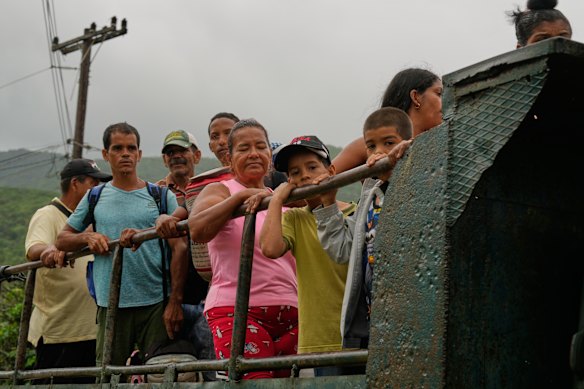
People evacuate before the arrival of Hurricane Melissa in Canizo, Santiago de Cuba.Credit: AP
“People are scared. Memories of Hurricane Gilbert run deep, and there is frustration that Jamaica continues to face the worst consequences of a climate crisis we did not cause,” he said.
Scientists warn that storms are intensifying faster with greater frequency as a result of warming ocean waters. Many Caribbean leaders have called on wealthy, heavy-polluting nations to provide reparations in the form of aid or debt relief to tropical island countries.
Melissa’s size and strength ballooned as it churned over unusually tepid Caribbean waters but forecasters warned that its slow movement could prove particularly destructive.
Food aid will be critical, Bogle said, as well as tools, vehicle parts and seeds for farmers. Like last year’s devastating Hurricane Beryl, Melissa crossed over some of Jamaica’s most productive agricultural zones.
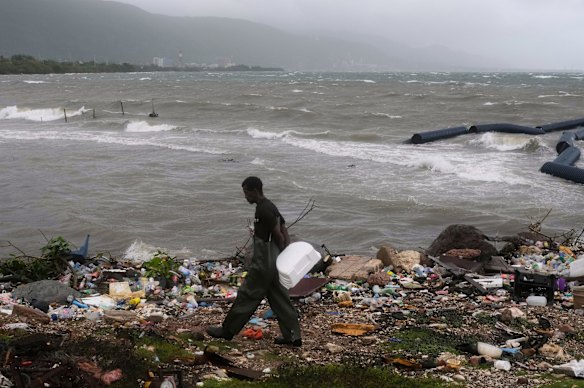
A man walks along the coastline during the passing of Hurricane Melissa in Kingston, Jamaica.Credit: AP
On Monday, Holness said the government had an emergency budget of $US33 million ($50 million) and insurance and credit provisions for damage a little greater than Beryl.
Melissa made landfall in south-western Jamaica, near the parish border between Westmoreland and St Elizabeth, one of the areas hit hardest by Beryl.
St Elizabeth was submerged by flooding, local government minister Desmond McKenzie told a press briefing. Its only public hospital lost power and reported severe damage to one of its buildings.
Several families were known to have been stranded in their homes but rescue teams managed to reach one group that included four babies, McKenzie said.
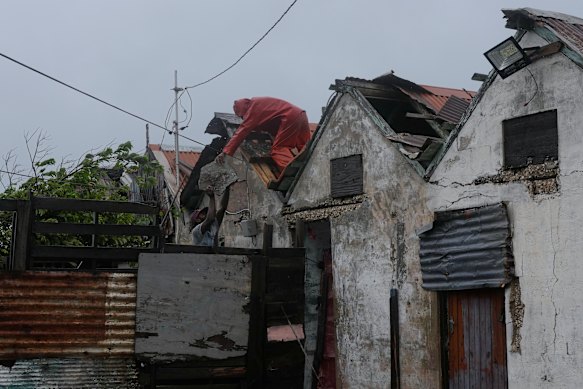
Men remove a loose section of roof in Kingston, Jamaica, as Hurricane Melissa approaches.Credit: AP
In Portland Cottage, about 150 kilometres from where Melissa made landfall, retiree Collin Henry McDonald told Reuters, as the storm advanced, that his community was seeing strong rain and winds but his concrete roof was holding steady.
“It’s like a roaring lion. It’s mad. Really mad,” he said.
Loading
The International Federation of the Red Cross said up to 1.5 million people in Jamaica were expected to be directly affected by the storm.
Reuters, Bloomberg
Get a note directly from our foreign correspondents on what’s making headlines around the world. Sign up for our weekly What in the World newsletter.


