


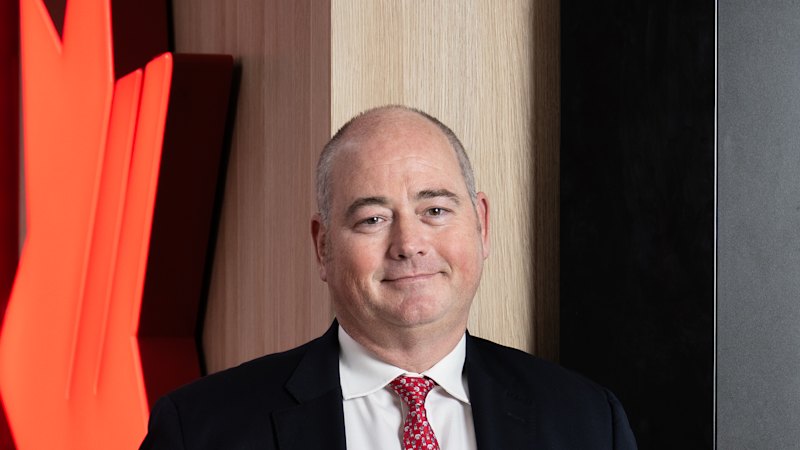
Irvine’s comments on energy came as NAB shares fell 3.5 per cent, after its full-year profits edged down 0.2 per cent, to $7.1 billion. NAB’s annual report also showed Irvine received a $1.7 million bonus in his first full year in the job, and his total realised pay was $7.6 million.
Loading
A key focus for investors is NAB’s business bank, its biggest division, where profits rose 1.6 per cent. Sydney-based rivals Commonwealth Bank and Westpac, the leading retail banks, have targeted business banking as returns in mortgages come under pressure.
NAB said it had grown market share in business lending, though its margins were lower over the year and bad debt charges edged up.
Atlas Funds Management chief investment officer Hugh Dive said it was “not a bad result” from NAB, but there was little margin for error when the share price was as high as it has been lately. He also questioned if competition was starting to affect NAB’s business bank.
“Are the Sydney banks [Westpac and CBA] starting to eat into the Melbourne banks’ core business? It looks like that’s happening,” he said.
Loading
Citi analyst Thomas Strong said NAB’s bad and doubtful debts were above market expectations, and investors were likely to focus on this trend. The market could also be concerned by NAB’s guidance for cost growth in the year ahead, he said, calling it “overall, a slightly soft result”.
Overall, NAB’s revenue increased by 2.9 per cent, helped by loan growth and wider margins, but the bank also had credit impairment charges tick up, mainly because of business customers facing financial difficulties. Taking a further bite out of profits, expenses rose 4.6 per cent, which includes a previously announced $130 million charge due to underpayments of wages and staff entitlements.
In its outlook, NAB forecast economic growth of 2 per cent for this year and 2.3 per cent next year, and Irvine said the Reserve Bank’s decision this week to keep rates unchanged was a sign the economy was “doing petty well.”
“The economy is growing, and it’s frankly growing at about full capacity without being able to generate too much inflation,” Irvine told journalists.
Aside from his comments on energy, Irvine reiterated that housing was “Australia’s biggest societal and policy challenge”, and it was crucial for the nation to increase the supply of homes.
He also called for a focus on “reducing complexity and red tape for businesses” – a long-running priority from big business – and said the country should prioritise giving Australians the opportunity to make the most of artificial intelligence.
The Business Briefing newsletter delivers major stories, exclusive coverage and expert opinion. Sign up to get it every weekday morning.
