


Everybody should have a hobby, Winston Churchill famously declared, ideally two or three. The wartime British PM daubed landscapes in oil, collected butterflies and even tried his hand at bricklaying to distract himself from the threat of Nazi invasion. Churchill, who was also a passionate advocate for the restorative properties of a power nap, preferably after a boozy lunch, believed hobbies helped stave off depression and boosted creativity.
Indeed, there is a body of evidence that suggests what might be seen as frivolous extracurricular activities – quilting, choir singing, bush dancing, boat-building, restoring motorcycles, whatever – can maintain our mental health and, in particular, improve our ability to focus for long periods. Especially if they generate the beneficial state of mind the Hungarian-American psychologist Mihaly Csikszentmihalyi called “flow”, when you are so absorbed in a task that it shuts out everything else.
“Sometimes a hobby finds you,” says Coral Ware, a former librarian who is still surprised that she now plays the ukulele in an amateur ensemble. “I had never played a musical instrument before, could not read music, still can’t, but had promised myself that one day, when I retired, I would learn to play an instrument,” she tells us. She met a ukulele teacher, gave it a go and one thing led to another. “I love performing, and when I am doing that I don’t think of anything else. That’s why I persist, even if sometimes they play some stuff that I don’t like, like Frank Sinatra.” She also dances classical ballet, gardens, knits, sews and reads “whodunits”.
Is watching TV a hobby? Are some hobbies better than others for you? Should we all have one?

What’s a hobby?
Definitions of “hobby” can vary, not least because the word itself is a little unfashionable, evoking creaky model railways and mildewed stamp collections – both of which were popular in Churchill’s day (today, we might prefer to describe our interest in vintage vinyl or Bitossi ceramics as a “pursuit” or “passion”).
That said, we still tend to recognise a hobby when we see it. Broadly, it’s an activity done for fun, outside paid work, that’s not passive relaxation (like watching TV) and that typically requires a degree of dedication.
A good hobby, it’s generally agreed by those who study these things, should be absorbing, offer opportunities to improve skills or knowledge (or scratch the completist itch) and should transport us away from our everyday cares. “You need to learn something, you need to have commitment, dedication to something, and then it becomes part of your identity after a while,” says Yazdan Mansourian, an expert on leisure behaviours at Charles Sturt University.
‘The spirit of a hobby, the essence of a hobby, is choice. If it becomes compulsory, if it becomes a kind of a to-do list, it’s not a hobby any more.’
A hobby’s purpose should be intrinsic: you don’t do it for any other reason than the enjoyment of the hobby itself. Think, fishing, sudoku-solving, Lego-building, scrapbooking, bonsai-growing, language-learning, pub-quizzing, birdwatching, pot-throwing, harpsichord-playing, colouring-in, woodworking, no-knead sourdough-baking. (Also, depending on your definition: pickleball, tai chi, scouring op shops, niche cinema, bodybuilding, wild swimming, unicycle riding.)
“There are varieties of leisure experience, and it’s useful to make even fuzzy distinctions,” suggests Joshua Rothman in his 2025 New Yorker essay Do We Need Hobbies? “To a degree, it matters how you do what you do. Certain kinds of video-gaming might be a hobby; others could be more like an escape. I listen to a lot of music, but I’d consider music an interest, or maybe just a source of happiness. Photography, on the other hand, is – for me – a traditional hobby. I read publications, acquire skills, buy and sell equipment, set goals, and mull various photographic problems and dilemmas in a not-quite-professional way that’s also not exactly amateurish.”
Tom Hanks hunts for vintage typewriters. Julia Roberts knits. Rod Stewart builds vast model railway dioramas. Angelina Jolie collects vintage daggers. The American songwriter Jimmy Webb built a collection of memorabilia from the defunct supersonic airliner Concorde, including several ultra-rare cockpit dials, a pair of passenger seats and even a flight attendant’s hat. Joshua Sapan, former CEO of the AMC television network (Breaking Bad, Walking Dead), amassed the world’s largest collection of lightning rods.
In Japan, there are not only regular trainspotters but hobbyists who choose to specialise in niche minutiae of the rail network: among them the yomi-tetsu, who collect and absorb train schedules (tetsu means train); the eki-tetsu, who admire stations; and the ekiben-tetsu, fascinated by the many and varied (and usually delicious) boxed meals sold at stations. Such a passion might be described as ikigai, meaning, broadly, something that brings value and joy to life.
Another Japanese word, otaku, commonly translated as “geek or nerd”, might be used to describe people whose hobbies verge on unhealthy obsessions. And beware the hobby that morphs into a side hustle or chore, says Mansourian. “The spirit of a hobby, the essence of a hobby, is choice. If it becomes compulsory, if it becomes a kind of a to-do list, it’s not a hobby any more. It becomes work again.”

Aren’t hobbies a bit old-fashioned?
Hobbies were once mostly the preserve of the wealthy. The British nobility of the 17th century (who had time for recreation, unlike the rural poor they lorded over, for whom turnip-pickling, pig raising and darning were work, not fun) enjoyed falconry and hunting on their vast estates during the day, cards and dancing after dark. A century later, Jane Austen, like her characters, wrote letters, played the piano and sewed. In the Victorian era, middle-class homemakers were gripped by “pteridomania”, an obsession with collecting and displaying rare ferns, some in elaborate greenhouses, others in new-fangled terrariums. “No home was complete without a fern under glass,” observed the 1877 book The New Practical Window Gardener.
… a Miss Margaret Allen modelled ‘fascinating’ clay horses and bred Dalmatians; actress Mrs Ian Gibson was a ‘ping-pong enthusiast’ …
In the early 20th century, when working hours began to become more civilised and there was time for recreation that wasn’t necessarily drinking or watching TV (it not yet having been invented), fads emerged for coin collecting, railway modelling, macrame, flower-pressing, pigeon fancying. In 1933, a crowd of 30,000 Brits turned out to watch a model yacht race, of all things.
People’s hobbies became newsworthy, The Sydney Morning Herald in 1938 reporting the pastimes of some “well-known girls”: a Miss Margaret Allen modelled “fascinating” clay horses and bred Dalmatians; actress Mrs Ian Gibson was a “ping-pong enthusiast”; Mrs Lorimer Dods combined a talent for sculpture with her “skiing prowess”; Miss Jean Monckton, a member of the Australian hockey team, played the piano-accordion; Miss Joan Marks painted, cooked, sewed and taught “with equal skill”.

Getty Images
The paper ran a regular column, Hobby Corner, in which readers would share their tips and interests. The big one was stamp collecting, popularised by King George V (known as the “collector king”) in Britain and Australia and President Franklin Roosevelt (who himself sketched stamp designs for the postmaster-general) in the United States. In the US, the pastime blossomed during the 1930s and 1940s, having been promoted on the radio to the Great Depression-era unemployed as an affordable hobby. By 1949, philately was the most popular hobby in the US, according to the Hobby Federation, with some 2 million active collectors out of 19 million members of America’s 22,000 hobby clubs (10 million women, 7 million men and 2 million children).
By the time of the 1956 annual exposition of the Hobby Industry Association of America, in New York, where hundreds of booths were filled with recently popularised plastic models of planes, trains, cars and boats, there were some 6500 specialised hobby shops across the US and another 10,000 that carried hobby merchandise.

More recently, of course, it was the COVID pandemic that re-introduced many of us to the wonderful world of hobbies as we sought creative ways (sourdough bread baking, crocheting pot plant holders) to fill long days in lockdown and attempt to stay off our screens while “looking for meaning and purpose”, suggests Mansourian (who collected rocks as a child and now is a keen runner).
Public servant Lisa Reed also tried learning the ukulele, which didn’t stick; neither did knitting nor crochet. Somehow, though, she heard about metal detecting, bought an inexpensive machine and was instantly hooked. Not on the prospect of striking gold – her prized finds include largely worthless but interesting historical artefacts like old badges and tin toys – but on having a reason to get outdoors and enjoy a hobby with other people. “It makes me feel very content and happy if I do it every week,” she says.
Another COVID lock-in, web designer Jim Yencken, took up collecting vintage computer games then pivoted to building Lego sets, sometimes faithfully following the instructions, sometimes constructing his own unique creations. His current masterpiece, which he has displayed with a group of fellow enthusiasts called the Melbourne Lego Users Group, combines both his interests: an immensely detailed rendition of an imaginary landscape based on those in a popular Nintendo game called Animal Crossing, built from some 30,000 individual blocks (each drawn from 3D-printed, colour-coded containers in a neat IKEA-based drawer system so as to keep the townhouse he shares with his partner and six-year-old son as uncluttered as possible).

“I have spent far too much money on Lego,” he admits, estimating he runs to around 400 sets. It appeals, he says, as both a creative outlet and a way to zone out. “It is incredible for my mental health. I work a very, very stressful job in tech. It’s very difficult sometimes to put it to sleep, so that you can get to sleep. My mind’s always going and thinking about the next day and trying to solve problems that you know can probably wait, but my brain won’t turn off. And doing Lego sets, or sorting Lego pieces, is an incredible way to just turn off and be mindful and focus on what you’re doing.”
A fellow Lego enthusiast, Eve Sellars, is an artist with a background in financial planning. “So I have both a creative and a mathematical brain, and Lego just taps into both of those things. It’s all about problem-solving. It’s all about colour and creativity. It’s about engineering and making things fit and making things work. So it taps into both of those sides of my personality. It’s just perfect.”

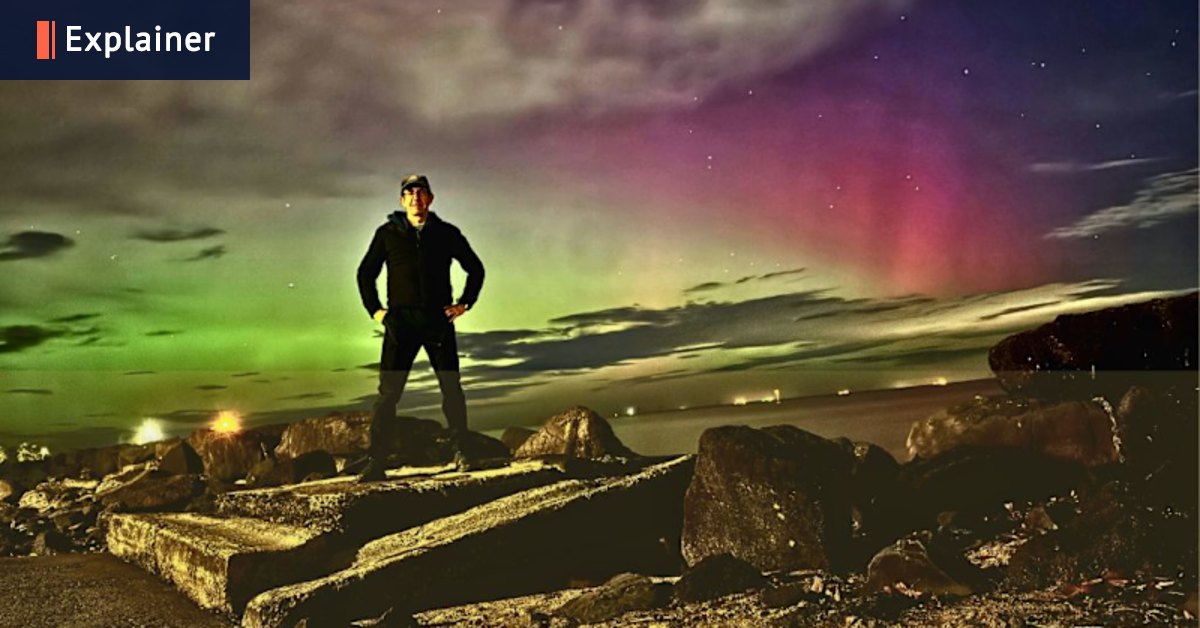
IT professional Justin Baker’s hobby is not just an opportunity to relax but to gain some perspective on existence. By night, he captures images of other-worldly galaxies, using a special telescope that automatically tracks the movement of light from distant objects. Some mornings when he checks the night’s takings, there’s nothing but a washed-out blur, sometimes there’s an extraordinary vision.
“Every morning, I get a buzz out of it,” he tells us. “It’s relatively inexpensive and peaceful and gives you a bit of opportunity to reflect on the bigger picture. Last week, I took a really beautiful picture of the Orion Nebula, which is probably the easiest and brightest thing to see from the southern hemisphere. And it’s just got these incredible colours and beautiful shape. It’s really quite mesmerising.”

What does science have to say about hobbies?
Why hobbies can satisfy in ways that passive recreation doesn’t is of increasing interest to science. “The research shows that people who have hobbies tend to have better mental health and wellbeing, and they’re more satisfied with their overall life,” says Sharon Parker, a professor of management at Curtin University’s Future of Work Institute in Perth (who, in her spare time, makes beautiful creations from super-heated glass).
“Having a hobby reduces depression, anxiety and stress,” says Danielle Le Lagadec, a senior lecturer at CQUniversity who last year co-authored a scoping review of 11 studies into hobbyists. “It improves wellbeing, quality of life, which is closely linked to depression and anxiety, of course. And then there’s social connections, the interactions, the support. All of these things are closely related.”
Her paper, published in the journal Issues in Mental Health Nursing, also suggests that hobbies can provide emotional relief from work demands. “Individuals can achieve a healthier and more fulfilling balance between work and life by making time for personal interests,” it concludes, adding that maintaining this balance is “key to a sustainable career” and may mitigate fatigue and burnout.
‘The right approach to gaming, cooking, or hanging out with friends can have restorative benefits that spill over into the workplace.’
This was borne out by another recent study, of some 2400 working professionals, reported in Harvard Business Review. The authors, led by workplace researcher Alexander Hamrick, focused on what they described as “leisure crafting”, an approach to recreational pursuits that emphasises goal-setting and personal development. They found the study’s participants who had structured leisure time had improved mental health, overall life satisfaction and even enhanced work performance compared with those who engaged primarily in passive activities. Moreover, they said, “Our research suggests that it’s not about the specific hobby but rather the approach to it. The right approach to gaming, cooking, or hanging out with friends can have restorative benefits that spill over into the workplace.”
It’s about being in the moment, suggests Luke Smith, a clinical neuropsychologist at the Monash Centre for Consciousness and Contemplative Studies. “When you find an activity you’re interested in, it naturally lends itself to that quality of just paying fully immersive attention to something.” Sharon Parker agrees. “That’s partly why it’s such a good form of recovery from work, because you’re in that flow state. You’re fully absorbed in the activity or hobby, what you’re doing and that, by definition, means you’re not thinking about work and worrying about work and ruminating about what you need to do tomorrow. It’s psychologically healthy for people, it gives your brain a bit of a rest.”
Especially in a society that increasingly values paid work over everything else, says Mansourian. “If you are not busy, it means you are lazy, you know. And then we actually overestimate the value of work [as a source of wellbeing and personal identity]. And then, in the long term, it exhausts people. And we don’t have enough time just to be, just to be who we are, to do something that we really wish to rather than we have to.”

That was the experience of David Donohue, who 10 years ago found himself in a senior management role that was all-consuming. “I found I was getting to work then getting home from work, and by the time I wound down, it was time to go to bed and then get up and start all over again. After a while, that gets wearing and takes a toll on your mental health to the point where you go, I can’t do this, why am I here?”
‘The thing I love is a process – clear steps, read the process, understand the process. Glue A to B … It’s not rocket science.’
He turned, almost randomly, to a hobby he enjoyed as a 1970s schoolboy: gluing together and painting model planes. “It’s just such an absolute contrast to work. The phone doesn’t ring. There’s no email involved. The thing I love is a process – clear steps, read the process, understand the process. Glue A to B. Don’t get glue on your fingers, glue on the outside of the parts. It’s not rocket science.”
Building such skills, however esoteric, to the point that you really are very competent in your activity of choice, can be extremely valuable, Parker tells us, because it involves mastery. “Your hobby is a really powerful form of growth and development and self-esteem,” she says. “The research … actually shows that people who engage in activities that involve mastery recover better from work. It helps you to feel good about yourself and recover and replenish yourself.” (But beware the urge to perfect your hobby skills at the expense of enjoyment: it’s beneficial to dabble, too, say the experts.)

Hobbies that engage you with other people, meanwhile, bring additional benefits, says Smith (who loves swimming and collecting vinyl records). “When you look at longitudinal studies that have explored human wellbeing, things like our success in life, our happiness, longevity and health, research tells us that the quality of our relationships and connections to other people is crucial for most of these things. So you could have an individual hobby, which is wonderful, where you feel really immersed and interested, but you could also have a hobby where you get to share that passion with other people.”
‘There are embroidery groups and knitting groups and they get together and have a good old natter …’
Absolutely, says Pauline Moncrieff, who solves cryptic crosswords with a group of like-minded puzzlers convened by the University of the Third Age. “I just love the group interaction as well. If you’ve got a hobby, it’s lovely to be able to do it with someone else. There are embroidery groups and knitting groups, and they get together and have a good old natter while they’re doing it. And I think it’s very healthy.”
David Donohue admits he’s not a “joiner” but found his hobby led him to find his own tribe, too, advertised on a little sign at the local library: The North Queensland Scale Modellers. “People talk about what they’re building, ask you what you’re doing, glue some stuff together, have a chat, a few jokes. It’s just very casual, no dramas, and it was really a comfortable place to be.”
Bottom line, says Mansourian: “Looking for meaning and purpose, that’s the main thing. We are looking for ourselves. We are looking for a sense of agency. We want to have a space to be whoever we are and do whatever we wish.”
Get fascinating insights and explanations on the world’s most perplexing topics. Sign up for our weekly Explainer newsletter.
