



Examine, a free weekly newsletter covering science with a sceptical, evidence-based eye, is sent every Tuesday. You’re reading an excerpt – sign up to get the whole newsletter in your inbox.
Two new studies have just been released, scrutinising what we can eat to keep our brain strong, quick and nimble as we age.
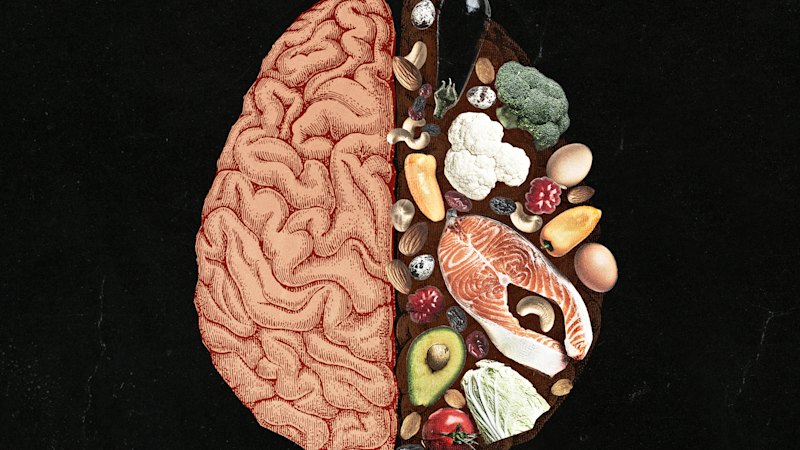
One backs up the idea that the so-called MIND diet – lush with leafy greens, toasty nuts, handfuls of berries and lashings of olive oil – staves off cognitive decline by at least a few years.
The evidence is getting so strong that some experts think diet should be recast as an official driving factor behind dementia risk.
But another study throws a big, meaty, T-bone spanner into the works.
So what’s the latest on how we can best protect brain health and repel cognitive disease with what’s on our plate?
The MIND diet 101
The MIND diet is shorthand for the Mediterranean-DASH Diet Intervention for Neurodegenerative Delay. It was developed by US nutritional epidemiologists who cherry-picked the best brain foods from Mediterranean cuisine, and a diet developed to prevent high blood pressure.
The MIND diet boosts vitamins, carotenoids, and flavonoids believed to protect the brain from oxidative stress and inflammation, according to Harvard University’s TH Chan School of Public Health.
Studies have consistently found people who adhere most strongly to the diet have better cognitive health and some (but not all) studies have linked it to lower risk of Alzheimer’s disease and dementia.
Here’s Harvard’s breakdown of the diet:
The MIND diet
The healthy items the MIND diet guidelines suggest include:
- 3+ servings a day of whole grains
- 1+ servings a day of vegetables (other than green leafy)
- 6+ servings a week of green leafy vegetables
- 5+ servings a week of nuts
- 4+ meals a week of beans
- 2+ servings a week of berries
- 2+ meals a week of poultry
- 1+ meals a week of fish
- Mainly olive oil if added fat is used
The unhealthy items, which are higher in saturated and trans fat, include:
- Less than 5 servings a week of pastries and sweets
- Less than 4 servings a week of red meat (including beef, pork, lamb, and products made from these meats)
- Less than one serving a week of cheese and fried foods
- Less than 1 tablespoon a day of butter/stick margarine
A new BMJ study has added to the existing body of evidence. Scientists studying brain scans showed middle-aged and older people who adhered most strongly to the MIND diet kept up to 20 per cent more of their grey matter over 12 years, which corresponded to a 2.5 year delay in brain ageing.
This evidence could be interpreted as more solid than other studies because it looked at an objective outcome (structural changes in the brain) directly, rather than relying on surveys or tests designed to gauge cognitive function.
It is, however, still an observational study which can identify only correlational links rather than direct cause-and-effect.
But overall, the body of evidence is looking good – so good that some experts are calling for diet to be added to the 14 official modifiable risk factors we can consider when trying to avoid dementia.
A (delicious) new factor for dementia prevention
In 2024, a leading group of international experts reviewed the evidence and published in The Lancet an updated list of 14 risk factors that – if avoided – could prevent or delay 45 per cent of dementia cases.
The latest update added high LDL cholesterol (estimated to influence 7 per cent of avoidable dementia cases) and untreated vision loss (2 per cent) to other important factors including hearing loss (7 per cent), depression (3 per cent) and low social contact in old age (5 per cent).
Some experts believe that, given the growing body of evidence we have for the benefits of the MIND diet, that food and diet should have been added as a 15th factor for dementia prevention.
“I was disappointed that diet wasn’t included in the Lancet Commission report,” says Scientia Professor Kaarin Anstey, Director of the UNSW Ageing Futures Institute.
Anstey led a 2019 study that investigated the dietary patterns of 1220 people in Canberra and NSW, and produced the first evidence outside the US that the MIND diet was neuroprotective. People following the diet had 19 per cent reduced odds of developing mild cognitive impairment or dementia.
“One of the problems with diet is it’s very complicated to measure,” Anstey says. “The literature is very big. There are lots of studies and they’re all slightly different in their methodology. So it’s not as simple as: ‘Do you smoke, yes or no?’”
That difficulty in gathering detailed data on dietary habits is one reason The Lancet experts may be holding back until more evidence is in before adding diet as a 15th factor for dementia risk (although food choices already underpin multiple existing factors, including cholesterol and obesity). And while most elements of the MIND diet seem brain-healthy beyond question, a new study urges caution for a one-size-fits-all approach to eating for cognitive wellness.
The meat enigma
Previous research has found that, for the general population, eating red meat daily is associated with a 16 per cent higher risk of cognitive decline. The MIND diet recommends less than four servings of red meat a week.
But a study published last week found high meat consumption in some people led to better cognitive health and less risk of dementia – contradicting a core stipulation of the MIND diet. What gives?
The study found people who seemed to benefit from eating plenty of meat had specific versions of a gene called APOE4.
About one in four people have a variant of this gene, which confers a higher chance of dementia and Alzheimer’s. About 2 per cent have a version that leaves them 10 times more likely to develop these diseases.
For people with these variants, according to the new study, eating more meat is better for their brains (only unprocessed meat, though – processed meats such as ham and hotdogs are bad for everyone).
It’s not well understood why this is the case, but the APOE4 protein helps carry cholesterol and fats in the blood. Issues with this process in the brain may have a key role in cognitive diseases.
The authors cite other research suggesting the gene could have emerged during a “hypercarnivorous” period in our past, millions of years ago – an evolutionary hangover once useful but now damaging to some people as they age.
“It suggests diet may not affect everyone the same way,” Dr Kirstan Vessey, a neurodegeneration expert at the University of New England, says of the meat study.
“Over 15 years, higher total unprocessed meat intake was associated with slower cognitive decline and roughly half the dementia risk in APOE4 carriers (one or two copies), compared with their lower meat intake counterparts.
“This pattern was not seen in people without APOE4 … the results suggest that when it comes to reducing the risk of developing dementia, diet advice may need to be tailored to genetics.”
Far more research is needed before you rush to get your genes tested and cram your fridge with steak – but the study does raise the interesting question of how precision nutrition (i.e. health advice tailored to our genome) could advance in the future.
In the meantime, it’s best to focus on what we know: as much as you can, ditch fried foods, sugary sweets, and processed meats, and boost your leafy greens, antioxidant-rich veges, berries, oily fish and nuts.
The Examine newsletter explains and analyses science with a rigorous focus on the evidence. Sign up to get it each week.
 Angus Dalton is the science reporter for The Sydney Morning Herald.Connect via X or email.