






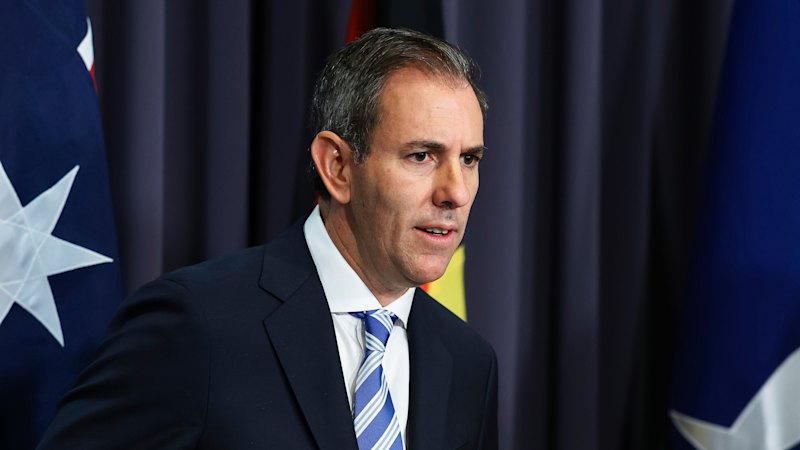


Billions in extra revenue generated by high-priced commodities like oil and gas because of the war against Iran will be saved rather than spent as the Albanese government seeks to quell inflationary pressures that are poised to force another interest rate rise from the Reserve Bank.
In a sign Treasurer Jim Chalmers and Finance Minister Katy Gallagher are concerned that a loosening of the fiscal purse strings could lead the Reserve into even tighter monetary policy settings, next week’s budget will contain more savings than new expenditures.
Private analysts have estimated the war, through its impact on commodity prices and inflation, could deliver a windfall of between $15 billion and $30 billion from this financial year out to 2027-28. Chalmers has said revenue was likely to be stronger in the near term but that it would fall away as the war and the global economy subsides.
But all of the extra revenue generated by the economic windfall will be saved and the cash will be put towards minimising a budget deficit that had been expected to ease slightly from $36.8 billion this financial year to $34.3 billion in 2026-27.
The move to pouch all the windfall highlights the importance of the government’s forecast $38 billion in savings over the next four years from its overhaul of the NDIS and removing the extra assistance to older Australians to cover their private health insurance.
Those savings, which will be the lion’s share of the cuts announced in the May 12 budget, will go towards repairing the budget bottom line and extra spending in other areas including defence, welfare, the cut in petrol excise and natural disasters.
The government has come under fire for its level of spending, which this financial year was expected to reach 26.9 per cent of GDP. Outside of the pandemic, it’s the highest share of government spending since 1986-87.
The budget is expected to confirm that spending as a share of the economy will remain below 27 per cent.
Gallagher said the government was committed to protecting the budget bottom line.
“We are making sure every dollar we save helps fund the services Australians rely on now and into the future,” she said.
“Finding savings gets harder every year, but that hasn’t stopped us doing the responsible thing, as we have done in every budget update since the 2022 election.”
In a speech on Monday, shadow treasurer Tim Wilson will argue poor budget policy since the government took office in 2022 had pushed up average tax rates on working people and driven inflation, which had then forced the Reserve Bank into interest rate settings that had cost borrowers an extra $24,000 a year.
He will tell the Australian Chamber of Commerce and Industry that the government is building a class of Australians depending on Labor being in office with its focus on securing power rather than bettering the nation.
In a signal of his own economic agenda, Wilson will say society and good economic policy supports self-starters who aspire to own a home and having a family while running their own business.
“Australia needs a budget that builds an economy that rewards contribution, restores integrity, and expands opportunity. We need a budget that restores living standards by backing self-starters and small business,” he will say.
“We need a budget that restores Australia’s security to re-industrialise through domestic industry and defence.”
Key elements of the budget and its broader macroeconomic settings will be briefed to the Reserve Bank, which on Monday starts its two-day meeting. Financial markets put the chance of a third consecutive rate hike at 75 per cent.
Another quarter percentage point increase would take the cash rate to 4.35 per cent. On a $600,000 home loan, it would increase repayments by a cumulative $300 a month since early February.
At its meeting in mid-March, the bank board split five to four in favour of increasing the cash rate to 4.1 per cent. At the time, governor Michele Bullock said the division was largely over a matter of timing for the next rate increase.
AMP deputy chief economist Diana Mousina, who expects the bank to lift again on Tuesday, said it was not necessarily a “done deal” that the RBA would tighten monetary policy.
“The risk of another rate hike is that it would take interest rates back to their post-Covid highs and could weaken private sector growth at a time it was improving,” she said.
”This is on top of the increase in fuel prices, which we estimate to be worth around one interest rate increase [0.25 per cent]. Basically, the RBA board need to weigh up if the upside inflation risks are more of a problem than a slowing in economic growth.“
The bank is expected to reveal its own modelling of how the war, and high oil prices, will affect the economy and inflation.
Last week, the Bank of England revealed its analysis of how Britain’s economy would deal with an oil price of between $US100 a barrel and $US130 barrel.
That analysis showed Britain’s official interest rate could be driven from 3.75 per cent to 5.25 per cent to deal with high inflation. While inflation would fall quickly, the economy could fall into recession with unemployment increasing towards 6 per cent.
The Bank of England held interest rates steady, as did the central banks of the United States, the European Union, Canada and Japan. All were worried about the inflationary impact of the war and also how it may lead to lower economic growth.
In mid-March, Chalmers released Treasury analysis that showed that if oil peaked about $US100 a barrel before falling by the middle of the year, inflation would lift by about 0.75 per cent while economic growth would slip by 0.2 percentage points.
That was six weeks ago. Brent crude has been above $US100 since April 22 and analysts now expect it will remain above that level into the second half of 2026.
Cut through the noise of federal politics with news, views and expert analysis. Subscribers can sign up to our weekly Inside Politics newsletter.


