









Households that bear the brunt of rising urban heat are rationing the energy to cool their homes, as they simultaneously face bill shock at the petrol bowser amid the war in the Middle East.
Research found households were already facing heightened concerns over summer heat and the cost of keeping cool before the United States and Israeli strike on Iran late last month.
In a national survey of 2600 people earlier this year, more than two-thirds of respondents reported feeling unwell on hot days or during heatwaves. That figure increased to four out of five for renters.
The research conducted by Sweltering Cities, which advocates for climate action and adaptation, suggests three out of five households found cost-of-living pressures made it harder to cope. But this rose to 78 per cent of people aged 18 to 34, compared with 55 per cent of over-50s.
Sweltering Cities founder Emma Bacon said this was an urgent issue, given the national risk assessment last year made it clear that extreme heat and heatwaves would increase this century under the current climate change trajectory.
Bacon said the survey had been conducted since 2021, but this was the most comprehensive, and the results about “people’s dread over summer” are the most confronting yet.
“People are rationing cooling, medications, food, putting petrol in the car, and any additional stress on any of those things affects the others,” Bacon said.
“In summer, a key impact people are then feeling is the inability to feel safe and comfortable during a heatwave.”
Since the 1950s, “intensifying global heat” has meant the time people are unable to do simple daily tasks – like walking, cleaning, or working outside – has doubled, a study published on Tuesday has found.
In 2024, the hottest year on record, more than 43 per cent of young adults globally and nearly 80 per cent of older adults experienced at least some periods when heat and humidity severely limited livability, up from 27 per cent and 70 per cent in the 1950s.
Bacon said people who could access rooftop solar or owned an electric vehicle were more insulated from the ups and downs of a spike in fuel or energy prices.
Of those who said cost of living concerns make it harder to manage during a heatwave, almost four out of five said they feel unwell in the heat.
Nationally, more than four out of five respondents reported having air-conditioning at home, but three out of five said cost concerns stopped them from turning it on. Fewer renters have air-conditioning, but a higher proportion ration it due to cost.
One in four people reported daily concern about their electricity costs during the summer, and nearly half the respondents said they worried about it at least once a week.
The war in the Middle East has sent the price of oil on a rollercoaster ride, as shipping access through the Strait of Hormuz has been disrupted.
The retail price of petrol and diesel in Australia has soared, prompting the consumer watchdog to warn petrol companies over price gouging, while some service stations have run dry or introduced purchase limits because of panic buying.
Tony Wood, the energy and climate change senior fellow at research organisation Grattan Institute, said there was a chance gas prices could also rise if the crisis in the Middle East continued, and that could in turn affect household electricity prices.
There were already movements in forward electricity prices, where buyers lock in the future cost, Wood said, and the government should ensure gas producers kept domestic prices reasonable by imposing a 100 per cent windfall tax.
“I don’t care much if our gas exporters make a lot of money out of selling gas overseas; I do care a lot if they make money out of gouging Australian consumers,” Wood said.
“If the government acts quickly and decisively, it should head off any impact on gas and electricity prices as a result.”
Sydney
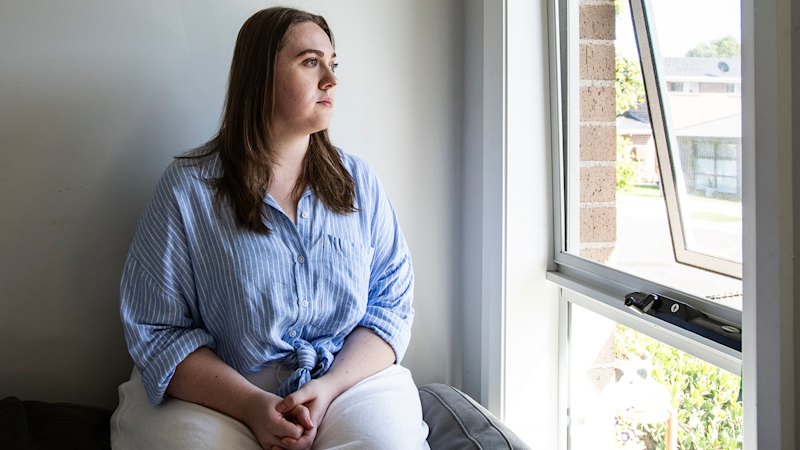
Cailey Thurlow, 24, rents a granny flat in Airds near Campbelltown with her partner. Despite being built relatively recently in 2017, Thurlow says the home is not equipped for the heat.
There is no screen door, so opening doors for airflow is a security risk, while the windows open outwards and block the breeze. There is no air-conditioning or built-in fans. Using the stove or oven heats the entire flat.
“It’s quite unbearable,” Thurlow said. “More often than not, it’s easier for us to just sit outside in the heat than be inside because there’s a noticeable 10-degree difference.
“I’m actually prone to fainting because of the heat, so if my body overheats, I’ll just go down like a sack of bricks. It’s really dangerous.”
Thurlow said her tight budget means she is less likely to run the portable fan in her flat when petrol prices are high because it is a higher priority to buy food and fuel to get to university or her two part-time jobs.
Melbourne
At SPAN Community House in Thornbury in Melbourne’s north, volunteers have built a “cooling garden” with financial support from Darebin Council.
The garden is equipped with a misting system that operates for 30-minute periods and can be switched on day and night.
It is designed, manager Zoe Austin-Crowe said, to make the community space more comfortable and welcoming during hot weather.
She said it would be especially important for people who didn’t have air-conditioning or who couldn’t afford to run it.
“With extreme heat being one of Australia’s deadliest natural hazards, and as heatwaves become more intense, neighbourhood houses like ours can play a bigger role in keeping people safe,” she said.
Garden volunteer Bron Lewis said community spaces like this would become increasingly important as the climate changes.
“If it’s a really hot day, you’re looking for some relief – you don’t want to necessarily be stuck hiding in your house or your unit, and you have a place that you can go to that has this misting system,” Lewis said.
Brisbane
Kelvin Grove renter Audrey Cetois describes her share house – a workers’ cottage built in the 1900s – as “genuinely awful” in summer.
“It’s terribly hot in here,” she said. “It has no air-conditioning, the fans were probably installed in the ’90s, so you can imagine how much air they move, and there’s no insulation.”
The advantage of this, Cetois said, is that the household’s electricity bills have remained low. But it comes at a cost to wellbeing, especially considering she works from home and is going through perimenopause.
“It’s awful to have hot flushes at the same time that you’re in a hot box,” she said.
During a heatwave in January, Cetois’ flat reached 46 degrees.
Get to the heart of what’s happening with climate change and the environment. Sign up for our fortnightly Environment newsletter.


