










Updated ,first published
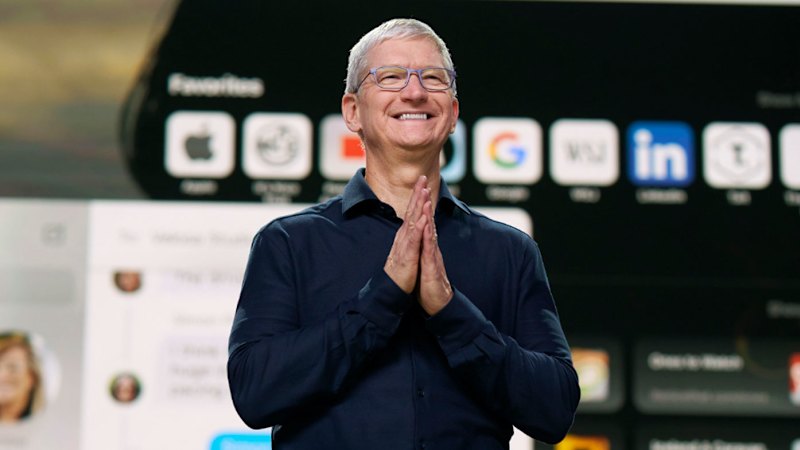
Apple chief executive Tim Cook has announced he will step down from the job in September, 15 years after taking the reins from co-founder Steve Jobs. While Cook will remain with the company as executive chairman, the move marks the end of an era that saw the company’s value balloon by more than $5 trillion over a decade and a half.
Cook, 65, has named well-liked Apple engineer John Ternus as his successor.
“I love Apple with all of my being, and I am so grateful to have had the opportunity to work with a team of such ingenious, innovative, creative, and deeply caring people who have been unwavering in their dedication to enriching the lives of our customers and creating the best products and services in the world,” Cook said in a statement.
Since Cook has been in charge, the iPhone has evolved from a single model refreshed once per year to a whole family of products, and established itself as the world’s most popular brand of phone. He also ushered in the Apple Watch, Apple Pencil, AirPods, HomePod, iPad Pro, Mac Studio, AirTag, and many hardware accessories.
Perhaps more impactful has been the company’s embrace of software and services, with Apple products now tied together by seamless connectivity, and sharing connections to the likes of Apple TV, iCloud and the App Store. Apple services annual revenue topped $US100 billion ($139 billion) for the first time this fiscal year.
Inside man gets the nod
Incoming chief Ternus currently serves as senior vice president of hardware engineering, and has taken a more visible role at the company’s events and presentations in recent years. The 50-year-old executive has spent half of his life at Apple, joining as a member of the design team in 2001.
“I am profoundly grateful for this opportunity to carry Apple’s mission forward,” Ternus said in a statement. “I have been lucky to have worked under Steve Jobs and to have had Tim Cook as my mentor.”
Ternus has been instrumental in the Mac computer’s recent resurgence against a stagnating Windows ecosystem, as well as the diversification of Apple’s lineup to include both meaningful “Pro” features and more accessible models.
But while Cook is a master supply chain organiser, known in his pre-CEO time for revolutionising the company’s inventory infrastructure, Ternus is an engineer first and foremost and is more closely associated with design and function.
That may serve the company well as it navigates the perceived need to embrace artificial intelligence, without tarnishing the connection with human creatives that Apple has always thrived on.
Apple’s existential challenge
The company has stumbled in recent years as it made promises about Apple Intelligence and improvements to Siri that have yet to eventuate. Earlier this year, it struck a deal with Google that would allow it to use the web giant’s underlying AI technology to boost its progress.
Ternus’ ascension also comes as Apple looks to introduce its first folding phone this year, and has been rumoured to be preparing smart glasses. The expensive Vision Pro headset has largely failed to find traction with consumers, and Apple now faces an existential challenge if the smartphone and laptop computer come under threat from glasses, AI pins or other new devices.
The company will also need to contend with new competitors, including Meta and AI giant Nvidia, as well as old ones such as Microsoft and Google.
As Ternus takes the top job, Apple has also said that Johny Srouji, the R&D specialist who has led the company’s initiative to produce its own chips, has been named chief hardware officer.
Get news and reviews on technology, gadgets and gaming in our Technology newsletter. Sign up to receive it every Friday.


