









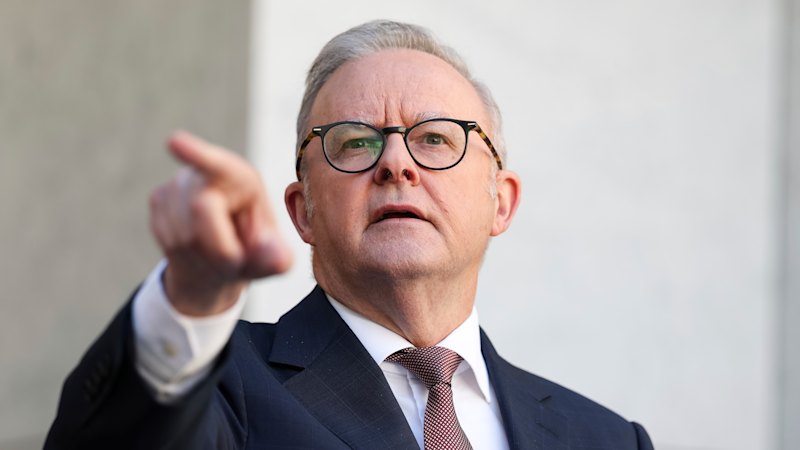


The prospect of a new tax on gas exports has been killed by Prime Minister Anthony Albanese, who is staking his personal reputation on Australia’s relationship with its Asian neighbours Japan, South Korea and Malaysia that have warned against the move.
To shore up fuel imports and national security amid a global oil crisis sparked by the Iran war, the government has been seeking deals with Asian exporters of petrol and diesel.
Countries that supply Australia with much of its fuel, such as Japan, Malaysia and South Korea, depend on Australia as a major source of their gas supply and are also major investors in Australia’s huge gas export industry, based in Western Australia and Queensland. They have for years petitioned the government against imposing new taxes on the industry.
However, a campaign by left-wing think tank the Australia Institute and independent senator David Pocock to impose in the May budget a 25 per cent levy on all gas exports has gained widespread support in the community.
Albanese, who will host Japanese Prime Minister Sanae Takaichi from Friday, said his top priorities were boosting Australia’s petrol and diesel imports and maintaining the country’s reputation.
“Australia is a reliable supplier of energy. That’s what we do, that’s our reputation,” he said in Perth on Wednesday.
“That’s my reputation as well, as prime minister, and I have good relationships with all of our partners.”
Earlier, Albanese said in a speech to the Western Australian mining lobby that the current fuel crisis was the “worst possible time” to risk Australia’s relationship with gas investors in Japan, South Korea and Malaysia, who are also among Australia’s major fuel suppliers.
“Our gas exports are directly linked to our national fuel security,” he said. “This is why I can confirm that the budget will not undermine existing contracts on gas exports.”
The campaign has called for a 25 per cent tax on all gas exports, which was forecast to rake in up to $17 billion a year by forcing multinational gas exporters to pay their “fair share” for the nation’s finite resources.
The Iran war has disrupted about 20 per cent of the global oil supply and there is a real prospect of the need for fuel rationing and significant economic damage if the war drags on and Asian refineries run short of oil.
Australia imports about 90 per cent of its petrol and diesel. Most of it comes from Asian refineries, which source about 70 per cent of their crude oil from the Middle East.
Albanese struck a deal with Malaysian Prime Minister Anwar Ibrahim during a visit to Malaysia two weeks ago, pledging to remain a reliable gas supplier with “no surprises” as Malaysia said it would put Australia at the front of the queue for fuel exports.
Federal taxes on gas exports, under the Petroleum Resources Rent Tax, generated $1.5 billion in the past financial year, which Pocock has pointed out is less than the $2.7 billion in taxes paid through the excise on beer.
The gas sector told an inquiry into the gas tax proposal its total tax bill for 2024-25, including company tax and state royalties, was $21.9 billion.
Woodside, the largest Australian oil and gas producer, has been warning that the proposed tax would have been “devastating” for the sector and risked driving out investment in future energy supplies.
The Perth-based energy giant’s chief executive, Liz Westcott, said on Wednesday it was pleasing to hear Albanese’s assurances that his government would not introduce one.
“We’ve been acknowledging and agreeing that governments and communities should have a fair return for what is a finite resource,” Westcott said. “But the current tax regime – the Petroleum Resource Rent Tax – does provide a fair return, and Woodside gives back 44¢ in every dollar across a range of taxes.”
Pocock said the PM’s rejection of a gas tax “shows the Albanese government’s capture by the gas industry”.
“Despite broad support from Australians, the PM has sided with multinational gas companies,” he said.
Independent MP Zali Steggall, who has also campaigned for the gas exports tax, accused the government of prioritising resources companies above the national interest.
“It speaks volumes that this announcement was made at a major mining industry conference in Western Australia,” she said.
With Nick Toscano
Cut through the noise of federal politics with news, views and expert analysis. Subscribers can sign up to our weekly Inside Politics newsletter.


