









When Prime Minister Anthony Albanese finally acted on portions of the last great legacy bequeathed by the late Labor MP Peta Murphy after more than 1000 days, he went further than many thought.
Albanese’s suite of reforms, which includes a ban on betting companies’ ads featuring celebrities or appearing on sporting jerseys and in stadiums, stops short of Murphy’s call for a complete prohibition on online gambling ads.
But in the context of Albanese’s prime ministership, characterised at times by risk aversion and an unwillingness to make too many enemies, the reforms are notable because of the people they are likely to antagonise.
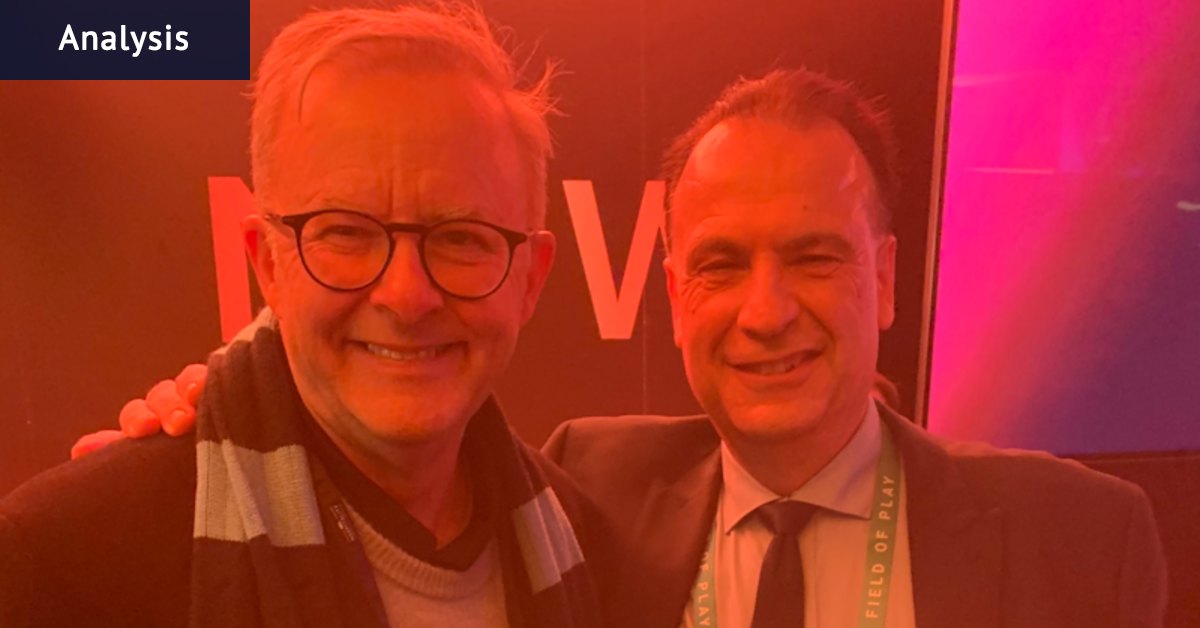
Chief among them is the Australian Rugby League Commission’s powerful chairman, Peter V’landys. He personally lobbied the prime minister hard against implementing a gambling ad ban (which he called “nanny state ideology”) and is currently seeking to negotiate a record-breaking $4 billion TV rights deal over five years for the NRL.
The league’s existing deal with Foxtel and Nine, owner of this masthead, is set to expire next year. And V’landys, in relentless competition with his Victorian rivals, is determined to beat the $4.5 billion, seven-year broadcast agreement the AFL inked in 2022.
“I’ve never seen the game wanted so much by so many broadcasters,” V’landys told the Daily Telegraph during the NRL’s season opening bonanza in Las Vegas last month. “We’re in the greatest position we’ve ever been in. I feel like getting a little auctioneer’s box and auctioning it off upstairs tonight.”
Before the Murphy report was released in 2023, free-to-air TV broadcasters Seven West Media, Channel Ten, and Nine Entertainment received around $30 million each a year in gambling advertising revenue, according to industry sources, a figure which has since fallen around 60 per cent, they said.
If Albanese’s reforms are in place by January 1 as the government hopes, that critical revenue stream will take a further whack. And with it, in all likelihood, the value of the NRL’s prospective deal.
V’landys and the NRL declined to comment on the reforms, citing the fact that they were still awaiting further detail. It was a similar response from the AFL and Cricket Australia. No doubt all are closely monitoring the situation.
But other bodies within the great sports-media punting ecosystem were quick to express their displeasure at a time when the traditional media world is already under great strain.
Free TV, the peak body representing free-to-air commercial broadcasters, said the new measures would have a material impact on the advertising revenue that funds free broadcasting, and come with significant implementation costs.
Chief executive Bridget Fair wants the government to urgently move on mitigation measures, including removal of the commercial broadcasting tax and fast-tracking the introduction of the News Bargaining Incentive, and a charge-and-offset scheme aimed at forcing big tech firms Meta and Google to pay publishers for news.
Responsible Wagering Australia, the peak body representing betting companies, called the new measures “draconian” and said it was “deeply disappointed” with the government.
Sportsbet, which has exclusive advertising deals with both the NRL and AFL worth hundreds of millions, called the reforms “severe and far-reaching”.
None of these organisations will win much sympathy from footy fans fed up with the deluge of gambling ads that have degraded the viewing experience in this country.
In fact, some gambling industry insiders are a lot less concerned about the reforms than those who have gone public. They think some players like Sportsbet went too hard flooding the zone with irritating ads while working with the footy codes to aggressively lobby against gambling reform in the corridors of Parliament House.
The sheer volume of gambling advertising, coupled with growing community frustration at the Albanese government’s tardiness, cemented public opinion in favour of reform. More than 1 million gambling ads are broadcast every year on Australian free-to-air TV and radio. As a country, we lose over $30 billion a year in gambling.
“They’ve [Sportsbet] pulled us into this mess because they’ve gone so hard with advertising. Because they’re the biggest fish they’ve got responsibility for the whole industry,” one industry insider said.
The Business Briefing newsletter delivers major stories, exclusive coverage and expert opinion. Sign up to get it every weekday morning.


