










Consumers don’t want to pay: University of Sydney’s Rico Merkert.Credit: USBS
According to an Australian Competition and Consumer Commission report from December 2025, domestic airfares had already reached their highest levels in years due to “strong demand … which puts upward pressure on airfares.”
Yet government fuel mandates are advancing, even as the capacity for the industry to produce the fuel remains deeply constrained.
The EU requires a mix of sustainable fuel to be blended with traditional fuel, starting at 2 per cent in 2025, rising to 6 per cent in 2030, 34 per cent in 2040, and 70 per cent by 2050, according to Sydney-based NoviqTech, which creates software to track emissions.
The UK requires 2 per cent in 2025 and 10 per cent by 2030.
Australia has no binding sustainable fuel blend mandate and no large-scale production facilities, although it is considering incentives to spur the industry.
Industry group Airlines for Australia and New Zealand CEO Stephen Beckett said the aviation sector wants to lower environmental impact and is aware of the risk for consumers.
“If you simply jack up the price of jet fuel, on top of all the other fees and charges being levied on airfares, the cost of doing business is going to go up,” he said.
“We need to make sure aviation remains affordable for all Australians.
“We want to decarbonise and need to get the policy architecture right, so the demand and supply-side policy work together, and not against each other.”
Despite the rapid growth of electric cars, battery or hydrogen-powered aircraft are not likely to make a significant contribution to reducing emissions from planes before 2050, according to industry group A4ANZ, making sustainable fuel crucial despite its cost.
Loading
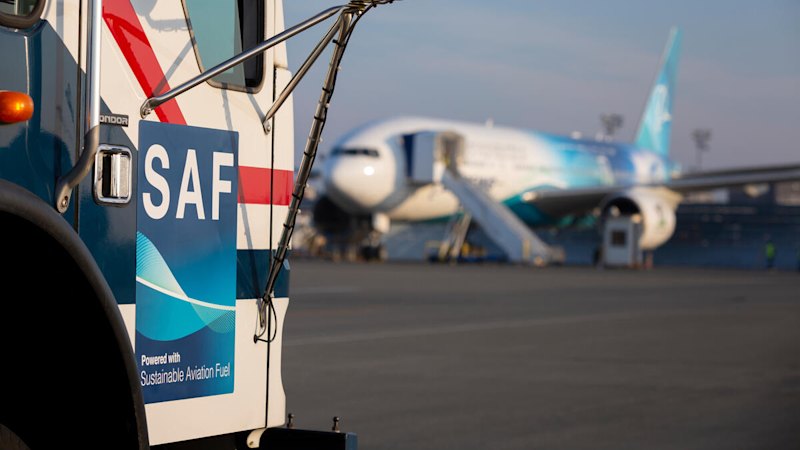
SAF comprised only an estimated 0.6 per cent of total jet fuel consumption in 2025, the International Air Transportation Association said in December.
It is on track to rise to 0.8 per cent this year.
At current price levels, the cost of SAF translated into an additional US$3.6 billion ($5.4 billion) in global fuel costs for airlines last year. Airlines spent $US236 billion on fuel last year.
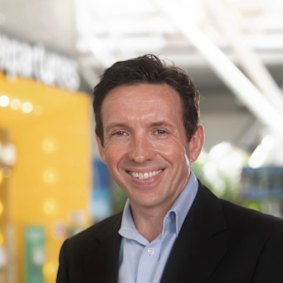
Industry seeks government support: Stephen Beckett CEO of Airlines for Australia & New Zealand.
In December, IATA’s director general, Willie Walsh, said: “If the goal of sustainable fuel mandates was to slow progress and increase prices, policymakers knocked it out of the park [succeeded wildly].
“But if the objective is to increase SAF production to further the decarbonisation of aviation, then they need to learn from failure and work with the airline industry to design incentives that will work,” he said.
The University of Sydney researchers queried 1001 consumers on what they were willing to pay for a more “green” flight, and found that SAF was “a very hard sell”.
“SAF did not resonate with most travellers,” the researchers said.
“Many simply don’t know what it is. When we described offsets that specifically fund research into or purchase of SAF, the average willingness to pay was small and statistically weak.”
However, respondents didn’t reject paying for voluntary carbon offsets, if not too expensive. They strongly preferred “local, tangible projects”, University of Sydney researchers said.
“Offsets linked to domestic projects were significantly more attractive than those in overseas developing countries,” they found. People were willing to pay “several dollars extra” on a long-haul flight.
The Business Briefing newsletter delivers major stories, exclusive coverage and expert opinion. Sign up to get it every weekday morning.


