


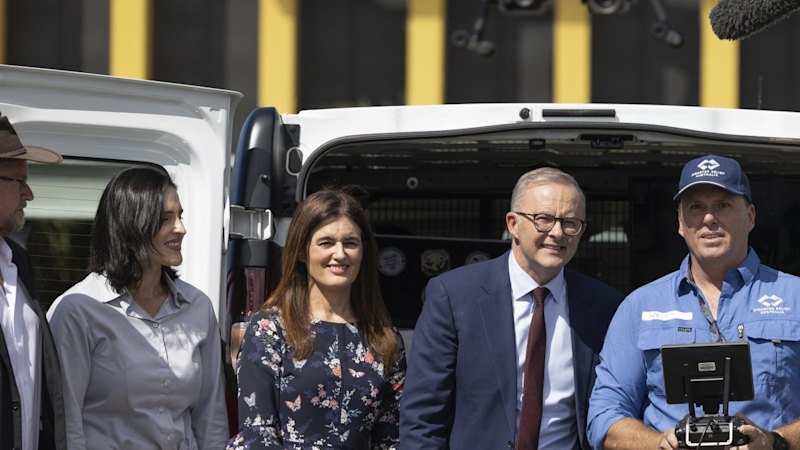

Australia’s top disaster relief agency has been shut down after an internal revolt and allegations of fraud led to the withdrawal of all taxpayer funding.
Disaster Relief Australia’s creditors voted on Friday to wind up the emergency agency after the federal government refused to extend its $38 million grant, leaving the volunteer organisation without two-thirds of its budget.
Disaster Relief Australia (DRA) was praised by Prime Minister Anthony Albanese and led by two of Australia’s most decorated military commanders, Major General Andrew Freeman and Brigadier David Smith, as it responded to national emergencies including the Lismore floods, Cyclone Jasper and the Black Summer bushfires.
But it has spent the past year mired in internal conflict, driven by disputes between its volunteer veteran and professional workforce.
In December, this masthead revealed claims that Disaster Relief Australia used opaque recruitment practices, prioritised marketing over missions, and pushed out whistleblowers who raised concerns.
Eight whistleblowers claimed DRA had lost its way by inflating membership numbers and fostering a culture of censorship and retribution. DRA denied the allegations.
DRA said at the time it had 6700 volunteers registered to assist in emergencies. Internal documents revealed that only 2503 were ready to deploy.
The organisation is also embroiled in a dispute with the AFL over a $300,000 donation, which the league demanded be returned in the wake of the allegations.
“The Australian Football League’s law firm demanded that DRA return a donation of $300,000,” Fort Restructuring said in a report to creditors last week. “The administrators are seeking legal advice in this regard. The return of the AFL donation will reduce the funds available to creditors.”
Fort Restructuring estimated the organisation owed $442,000 to staff and $647,000 to creditors. Liquidator Mark Robinson advised creditors that this would be repaid if DRA went into liquidation.
In a note to be sent to volunteers and veterans, Robinson said the liquidation was regrettable.
“We thank and acknowledge the military veterans and families who contacted us in recent weeks to speak to the positive impact Disaster Relief Australia had on disaster-impacted communities and them,” he said.
While the agency marketed itself as a volunteer workforce, the liquidators’ report shows employee costs almost quadrupling from $2.6 million to $8.3 million per year between 2023 and 2025.
As a proportion of all of its expenses on disaster relief efforts, employee costs surged from 27 per cent to 50 per cent over the same period.
The organisation also increasingly relied on government funding, growing from $3 million in 2023 to almost $11 million in 2025 – while donations fell from $3.2 million to $3 million, leaving DRA vulnerable to collapse once taxpayer funding was pulled earlier this year.
In March, the National Emergency Management Agency said it would withhold government funding over the serious allegations against DRA of misconduct, mismanagement and misuse of grant funding, and formal complaints against DRA relating to staff and volunteer wellbeing.
A WorkLogic report commissioned by DRA concluded that no allegations of organisational or management-level fraud or misuse of funds could be substantiated. That was not enough for the federal government, which “expressed reservations” about the report. The liquidators said a second report by Deloitte concluded there were no adverse findings against DRA or any current or former employee.
Despite multiple appeals to the National Emergency Management Agency and Emergency Management Minister Kristy McBain, DRA’s board was unable to convince the government to guarantee its funding.
The DRA Redress and Complaints Group, formed by the whistleblowers, said in March that they had attempted to resolve their concerns internally, but were ignored.
“From these challenges, there remains hope that something stronger can emerge – an organisation rebuilt on transparency, integrity, and respect for the volunteers and staff who form the backbone of disaster response in Australia,” they said.
Start the day with a summary of the day’s most important and interesting stories, analysis and insights. Sign up for our Morning Edition newsletter.
 Eryk Bagshaw is an investigative reporter for The Sydney Morning Herald and The Age.
He was previously North Asia correspondent. Reach him securely on Signal @bagshawe.01Connect via X or email.
