


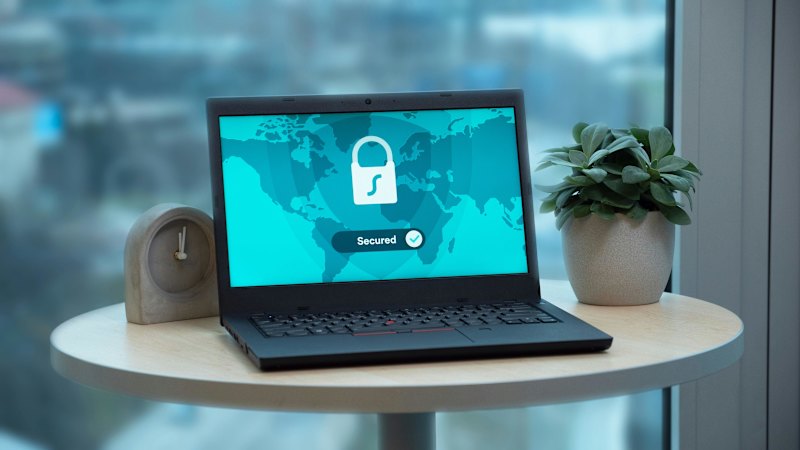

While once only the purview of nerds, criminals and the unusually paranoid, virtual private networks (VPNs) have become a vital and mainstream security tool. Though they’ve yet to completely shake a common association with the illegal or unsavoury elements of the internet, VPNs have been adopted by all sorts of web users for all sorts of reasons. And in Australia, where services have been asked to block kids from social media and scan people’s faces or IDs in order for them to access pornography, uptake is booming.
What does a VPN do?
When you access a service or website, data is being exchanged between you and that service. At its most basic, a VPN sits between and adds a secure jump to anywhere in the world. This can be useful in letting you access the service as though you were located somewhere else, for circumventing regional blocks, or for obfuscating your browsing so that nobody can track what you’re doing online. Available as smartphone apps, desktop applications and browser plugins, VPNs give you control over how your journey across the web appears to anyone who may be taking notice.
It’s not vital to understand exactly how a VPN works, but you can think of it as like an encrypted tunnel, or like your internet traffic dropping into Star Wars hyperspace. If your internet service provider (ISP) is looking at the traffic, they’ll just see it leave your device and go into the tunnel. At the other end, the service you’re accessing sees the traffic coming out of the tunnel. Neither gets a full picture of who and where you are, so nobody can easily package your browsing habits to sell to advertisers or hand over to regulators, and you get an experience matched to a region of your choice.
Is it shady to use a VPN?
While it’s true that VPNs can be used to cover crimes, they’re also a legitimate tool for privacy and data hygiene. In the vast majority of countries, including Australia, the US and the UK, VPN use is absolutely legal. Businesses use them every day to securely allow their employees to work from home, and individuals use them to keep their ISPs out of their browsing history.
One of the original use cases for VPNs was to allow people to safely use public Wi-Fi at airports and cafes, at a time when those networks were easy prey for snoopers. And though times have changed, opting for extra privacy is still a valid and legal choice. Whether because of your network, your ISP or the services you’re accessing, there are situations where you want to keep your location and personal identifiers separate from your activity.
What about recent Australian laws?
Australia has seen a significant increase in VPN use over the past half year or so, owing to two high-profile legal changes. First, social media companies are now obliged to block users under 16, meaning kids have looked to VPNs to appear as though they’re located overseas. Second, the government has ordered providers of adult material like pornography to verify that Australian users are over 18, meaning local visitors are met with requests for video selfies or ID cards which they may not care to provide.
The thing to remember is that accessing the information is not a crime. In these laws, the onus is on the service provider to gatekeep. That does mean they will attempt to identify you as an Australian, but it does not make you a criminal if you take steps to keep that information away from them. These particular checks and verification methods may not present a significant privacy or security risk, but we are in an era of increased digital surveillance and identity fraud, so some people will opt to use a VPN and it remains a legal choice.
Are there risks associated with VPN use?
There are downsides to using a VPN. Primarily, while neither your ISP nor the web service you’re connected to can see a whole picture of your activity, your VPN provider can. At least in theory. If the VPN you’re using is free, or cheap, there’s a risk your provider is paying its bills by logging your data and selling it. A high-quality VPN provider will want to protect its reputation by proving that it doesn’t even collect this data, with what’s referred to as a no-log policy.
Cheap VPNs can also leak your location or personally identifiable information accidentally, by exposing the route of your data when protocols fail. Good quality VPNs include a kill switch that locks the route to the tunnel, so failures may interrupt your browsing but will not expose you. Another downside is that VPN use can slow your internet. Not much can be done about that except to turn it off when you don’t need it. Most premium VPNs offer the ability to split your tunnel depending on the service, site or app, so when you don’t need the protection the traffic will avoid the VPN and be faster.
Do VPNs cover criminal behaviour?
In short, a VPN will make it harder for law enforcement to draw a line between a person and a crime, but it doesn’t make criminals invincible. If you turn on a VPN to download pirated movies and music, odds are you’ll avoid automated law enforcement and copyright litigation measures. But crimes which attract a more concerted investigation — like high-level fraud, terrorism, or child exploitation — won’t easily be covered by simple VPN use. Law enforcement can pick up plenty of crumbs that might lead a trail to a criminal’s door.
It’s also important to remember that there are many elements of the web that are tracking you and holding information about you. If, for example, you log into your Google account while you’re using a VPN, Google still knows exactly who you are.
How do I choose a VPN?
The best place to start is to look at the biggest and most respected names. NordVPN, ExpressVPN, Proton VPN and Surfshark all have good reputations. These services will cost you more (around $20 per month, though you can get steep discounts for paying yearly or two-yearly), but offer a good mix of speed, reliability and features like region-changing for common streaming services.
If you’re shopping around for an alternative service, be sure to do your research. Where is the service located? Some countries have mandatory data retention policies that you’ll want to avoid, or intelligence sharing deals, meaning privacy purists opt to stick with neutral zones like Switzerland. Does the service have a no-log policy, and has a third party verified it? Does the service have a kill switch? And does it have a good variety of servers? Having servers as close as possible to your location, and the location of your desired web service, will help with speeds.
Get news and reviews on technology, gadgets and gaming in our Technology newsletter every Friday. Sign up here.

