


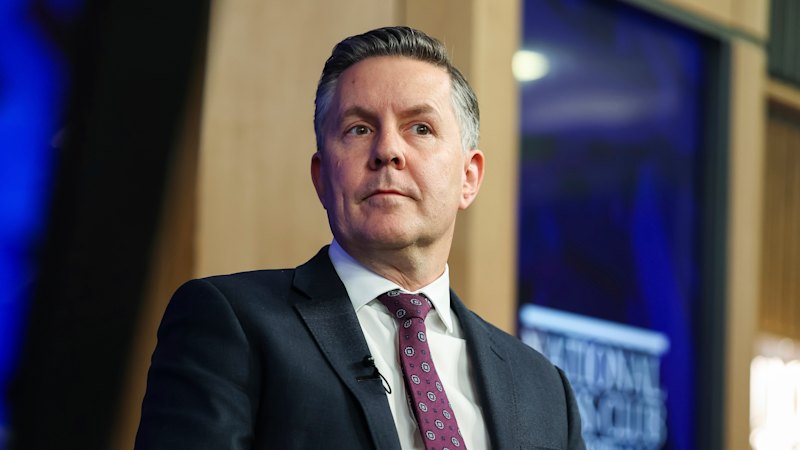
Health Minister Mark Butler says reining in “out of control” medical specialist fees and dealing with a severe shortage of nursing home beds for ageing Baby Boomers will be the next problems he turns to following Labor’s overhaul of the NDIS.
After campaigning on the cost of seeing a GP at last year’s election, Butler said Labor was now considering all its options to do the same with specialist fees as a plank of its cost-of-living agenda in its second term, even if this meant pushing laws to their limit.
“Non-GP specialist fees are out of control, and they genuinely are becoming a barbecue stopper – much more, I think now, than the bulk-billing rates in general practice, which was the focus of a lot of our work in the first term and was a big concern in the community,” Butler said in an interview with this masthead’s Inside Politics podcast.
“That concern has really shifted to stories of people not going to a specialist because they can’t afford the out-of-pocket, or not having a procedure because they can’t afford the out-of-pocket, or if they do have the procedure, getting news about the out-of-pocket only the day before.
“As far as we’re concerned, every option is on the table. [There have been] arguments that there are constitutional limitations on our ability to regulate specialist fees. We intend to test the boundaries of that. That’s how concerned I am about this, because it’s become a genuine access-to-care barrier.”
The Grattan Institute last year said the government should strip Medicare rebates from specialists who charged excessive fees, direct the consumer watchdog to study specialists’ costs, and allow GPs to take written advice from specialists to avoid unnecessary referrals.
Specifically, it proposed denying Medicare claims from specialists who charged more than triple the government-funded rebate – something that has long been proposed but would be difficult to implement.
Meanwhile, out-of-pocket fees for specialist services have soared. A La Trobe University study last year found that 40 per cent of private hospital patients were being slugged with out-of-pocket fees upwards of $1000. Almost a quarter of them were only informed of all costs once already at hospital or after they were discharged.
Payment data collected from insurers by Private Healthcare Australia has found gap fees for some procedures increased by as much as 300 per cent in five years recently.
Butler said his department was working with big private hospitals and insurance funds to investigate pressures on the system. Part of this involved probing whether current funding mechanisms were keeping pace with the way services are being delivered, especially as more people undergo hospital services at home or stay fewer nights after a procedure.
Another issue was making sure the specialist workforce was located in the right place, and working in areas of need. “Psychiatrists, frankly, are not doing the same level of admission work in private psychiatric hospitals, as we would have seen five or eight years ago,” Butler said. “That means that private psychiatric hospitals are suffering real viability pressures.
“[That’s] not because there’s not the demand for mental health support in the community. There is. It’s just they can’t get the psychiatrist to do it. We’re having some of the same pressures in maternity services, where we struggle to get obstetrician gynaecologists to work in some parts of the community.”
In aged care, Butler conceded the government needed to dramatically speed up the construction of facilities. Labor is considering giving providers low-interest loans to build nursing homes as one of a raft of measures to incentivise construction.
Butler said about 17,000 people turned 80 in 2011, the last time he was aged care minister. This year, about 80,000 Australians will turn 80 – the first of the Baby Boomers, who were born from 1946 onwards.
“We need to open a new aged care facility every three days – not just for a couple of years, we’ve got to do it for 20 years,” Butler said. “What we’re entering is the new normal. It’s not a spike.”
This means delivering 10,600 extra aged care places each year for the next two decades. Data analysis by Bolton Clarke said the net increase in available beds last year was just 800.
Butler said the $3 billion aged care spend that Labor announced last week – the funds will be recouped by scrapping concessional private health insurance rebates for over-65s – would start adding to construction with targeted capital subsidies.
“We think that will add about 5000 or so new beds every year, but we’ve got to get higher than that… We’ve still got more to do to get to the construction level that we need,” he said.
A review of aged care accommodation funding, handed to the government last week, recommended that the government should help providers with the cost of building homes.
One of its suggestions was for an interest-free loan scheme that would make $2 billion a year available to providers, with funding linked to the proportion of people with lower means who would use the facility.
Butler said its findings were now being considered.
Cut through the noise of federal politics with news, views and expert analysis. Subscribers can sign up to our weekly Inside Politics newsletter.
 Natassia Chrysanthos is Federal Political Correspondent. She has previously reported on immigration, health, social issues and the NDIS from Parliament House in Canberra.Connect via X or email.
 Paul Sakkal is Chief Political Correspondent. He previously covered Victorian politics and won a Walkley award and the 2025 Press Gallery Journalist of the Year. Contact him securely on Signal @paulsakkal.14.Connect via X or email.