


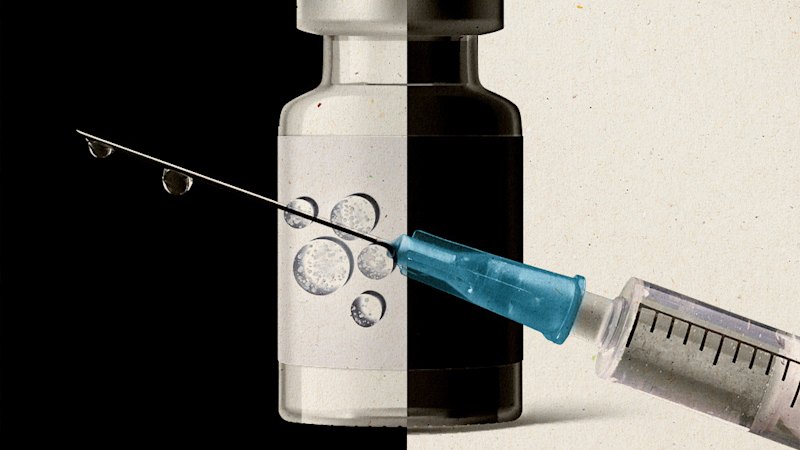

The most popular peptides being bought illegally in Australia are yet to attract serious attention from big pharmaceutical companies, who believe they would not be lucrative or safe enough products to bring to the legitimate market.
Injectable peptide drug use has surged in the past year among consumers seeking various unproven wellness benefits who this masthead has found are defying warnings of health experts and buying products online despite their illegality.
The most popular substances include BPC-157, which backers say improves muscle growth and recovery, GHK-CU for skin rejuvenation, and Melanotan-II, the “Barbie peptide” popular for tanning.
Ana Svensson, senior medical director for Oceania at Novo Nordisk, manufacturer of the popular glucagon-like-peptide-one (GLP-1) medication Ozempic, said these drugs were not safe enough for the company to make.
“Novo Nordisk is a scientific and research‑based pharmaceutical company, and we only develop medicines that are backed by strong science, tested in large clinical studies, and assessed by health regulators for safety and effectiveness,” she said.
“Substances such as BPC-157, Melanotan II and GHK-CU that are promoted online or sold through unregulated channels have not gone through rigorous TGA evaluation for evaluation of their safety, benefits and risks.”
None of the peptides that have surged in popularity online are listed on the research and development pipeline for Eli Lily, the $1.2 trillion giant behind weight loss drug Mounjaro, which was approached for comment.
Several scientific experts in the field said that despite popular hype, Big Pharma still viewed these products as risky.
Katinka van de Ven, an adjunct associate professor at UNSW specialising in drug policy said that while companies such as Novo Nordisk and Eli Lily were heavily involved in the peptide space, many of the drugs being promoted on social media were experimental, or at a very early research stage.
“It’s not that pharmaceutical companies are ignoring these substances,” she said. “It’s that most of them don’t yet meet the standard required to be developed into a regulated medicine. And in some cases, they may never get there.”
The process of bringing a new drug to the market can often take between 10 and 15 years and cost a company up to $2 billion. Just 10 per cent of drugs make it past the final phase – the all-important clinical trial. Pharmaceutical companies are not going to embark on that lengthy process if they are doubtful that it will pay off.
“Big Pharma companies take their job very seriously – they’re going to look at the data, and if there’s no solid evidence, it’s not really worth investing hundreds of millions of dollars,” said University of Queensland associate professor of medicinal chemistry Markus Muttenthaler.
Toby Passioura, co-founder and Chief Scientific Officer at biotechnology start-up Insamo, said that despite technological advances that had made it easier to create synthetic peptides, researchers still did not have a clear picture of how they worked.
“For these sorts of molecules in particular, I think for many of them, there is not a lot of understanding of how they work. If you don’t know that, it’s very difficult in a modern sense to get a drug approved,” he said.
Then there is the patent problem. For something to be patented, it has to be new and inventive. Many popular peptides such as BPC-157 and GHK-CU were first synthesised decades ago, meaning they are no longer covered by patents.
“If you were to file an application today for anything that’s already been supplied or even discussed in any articles or literature, it’s likely that that application would be invalid and thrown out pretty quickly because it’s no longer new,” said Kent Teague, a special counsel in the intellectual property team at Clayton Utz.
If companies cannot patent products, they have little incentive to go through the rigorous trial process.
“Imagine you’re a big pharma and you spend billions running all the trials,” Passioura said.
“But someone in India or China could just make the molecule and sell it to the rest of the world and you’d never make your money back.”
Despite Big Pharma’s lack of interest, the regulatory landscape surrounding peptides could change dramatically, with United States’ Food and Drug Administration meeting this year to consider easing restrictions on 12 synthetic peptides, following a request from the Trump administration’s Health Secretary Robert F. Kennedy Jr, who claims to have personally benefited from some of these drugs.
The US market for pharmaceuticals is so large that the FDA matters far more to the industry than any other national regulator.
“The FDA has a very difficult position because on the one hand there’s this political pressure, but on the other, it’s run by very responsible people,” said Muttenthaler.
The Business Briefing newsletter delivers major stories, exclusive coverage and expert opinion. Sign up to get it every weekday morning.
 Kishor Napier-Raman is a senior business writer for The Sydney Morning Herald and The Age. Previously he worked as a CBD columnist and reporter in the federal parliamentary press gallery.Connect via X or email.