


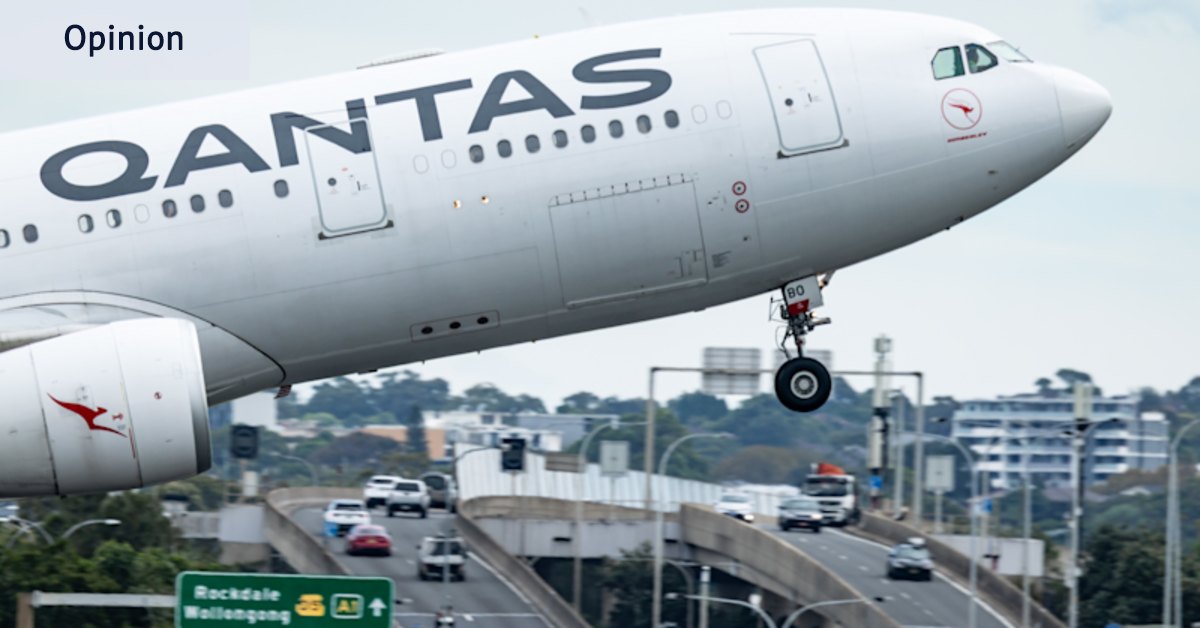
Cancelled flights, exorbitant one-way international airfares, moves to bolster the balance sheet – sounds familiar? Qantas is in the eye of the US-Iran storm as it attempts to use all weapons in its arsenal to blunt a hit of up to $800 million in additional fuel costs.
It has a COVID-esque feel to it without the existential hue, without ghost flights sold to customers or the airline’s passenger service catastrophe. But make no mistake, Qantas is in damage control as its profit is ravaged by Donald Trump’s Middle East war.
Qantas, like all airlines, is dealing with a rapidly evolving crisis by pulling every operational and pricing lever, including cutting capacity on domestic and some international flights and redeploying aircraft to in-demand routes to Europe.
Near-term fares on the kangaroo route have risen astronomically, thanks to skyrocketing demand for long-haul flights that avoid the Middle East stopover. Still, it’s not enough to protect the airline’s profit in the current half of this financial year.
And fares could be hiked even further, given the airline is making no promises about further measures “to mitigate fuel cost increases”.
Travel agents say many passengers with near-term bookings on Middle East carriers have booked fully flexible and expensive back-up flights to Europe via Asia, which they can cancel if the conflict ends in time.
Qantas flights to Europe are running at near 100 per cent capacity, even after capacity has been expanded. (Qantas doesn’t fly its planes through the Middle East, but uses its code-share partner Emirates for those routes.)
Qantas has mostly hedged the fuel costs until June, but its refiner margin was unprotected against jet fuel prices, which have soared fivefold in the war.
The airline has raised domestic fares as it attempts to claw back a portion of the higher fuel costs. The higher ticket prices have led to larger than previously expected gains in revenue per seat kilometre, an important metric for airlines’ business performance. In the international division, the growth rate of revenue per seat kilometre has doubled.
Yet even using these mitigation measures, Qantas will still sustain a hit to first-half profit in the order of $400 million to $500 million, according to aviation analysts.
It will place its already announced $150 million share buyback on ice (despite the fall in the airline’s share price, which would make the buyback cheaper) and will keep its capital expenditure load as light as possible.
Qantas is taking a conservative approach of fortifying its balance sheet given the absence of a sunset clause on this conflict and the re-opening of the Strait of Hormuz, which is essential for fuel prices to come down.
Whether this financial hit bleeds into the second half of the calendar year depends entirely on the mercurial US president. While stock markets are factoring in an end to the conflict, this is not being reflected in the public comments from the warring parties.
Regardless of whether the missiles stop tomorrow, there has already been a marked hit to Australian company profits. Westpac warned investors on Tuesday it will lift its credit provisions to reflect potential losses from borrowers with fuel-intensive operations. Waste management company Cleanaway cut its earnings forecast because of higher fuel and logistics costs as a result of the war.
Other companies will need to warn investors about adjustments to profit expectations over the coming months.
Without visibility into the longevity of the conflict, it has been difficult for companies to present an accurate picture of the damage to their earnings.
For travellers, meanwhile, there is likely to be a flood of discounted seats on carriers like Emirates and Qatar to refill planes once the immediate danger has passed.
Some have already been tempted to run the gauntlet and book cheaper flights on these airlines.
Welcome to the flying circus.
The Business Briefing newsletter delivers major stories, exclusive coverage and expert opinion. Sign up to get it every weekday morning.
