


Caris Harper
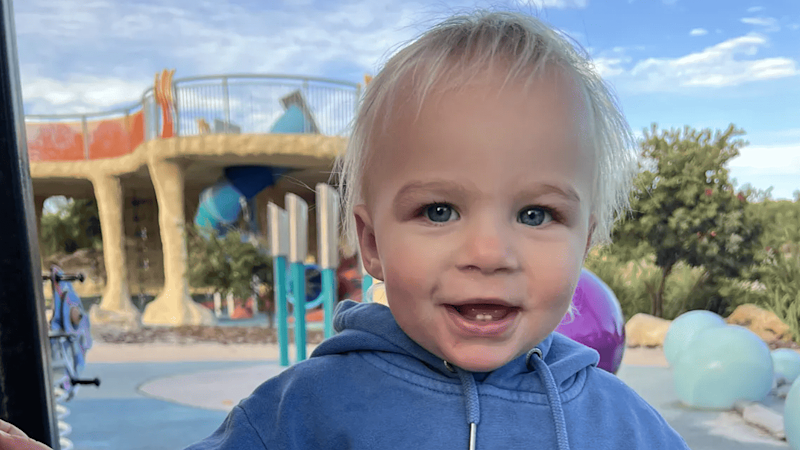
When Micah was one-and-a-half years old, his parents breathed a sigh of relief.
He was out of the woods for every new parent’s worst fear – Sudden Infant Death Syndrome, better known as SIDS.
“I remember saying to my partner when Micah turned one, well, now we’re good,” mum Drew La Reservee said.
“Now we’re out of that danger zone of SIDS, we’re fine and he’s healthy.”
But just seven-months later, La Reservee realised they had been tragically mistaken.
Micah died in his sleep about two years ago, and his death was considered Sudden Unexplained Death in Childhood (SUDC).
Different from SIDS, it is a category of death for a child 12 months or older where the cause remains unexplained after investigation.
La Reservee said she was grieving and searching for answers when she connected with other families in Perth who had experienced a similar loss.
She befriended Cassandra Otway through social media, after Otway’s daughter Sadie passed away in her sleep at two-years old, after having multiple febrile seizures throughout her life. Her cause of death was also marked down as SUDC.
Otway said before she met La Reservee, it had been agonising thinking she was alone.
“It was torturous trying to find people to connect with in those early days,” she said.
The pair went to Red Nose Australia for support, a charity focusing on preventing the sudden and unexpected deaths of babies and children, and helping parents through their grief.
La Reservee said it had felt isolating in the early days of her loss, because SUDC is not as recognised as SIDS.
“People say they specialise in grief and loss, but it’s not child loss,” she said.
“Sometimes we have to explain ourselves to doctors or medical professionals, and that’s really frustrating because at that level, everybody should know about it.
“It would be really nice to just say to someone ‘I lost my daughter to SUDC’, and not have to explain it.”
Both mothers said there needed to be more work done to educate people about the condition.
“When you do go into a labour ward or a hospital in general, there’s posts everywhere about SIDS and Red Nose, and nothing touches the surface on SUDC,” La Reservee said.
“Yes, there’s no preventable measure at this point, but that doesn’t mean we can’t still put awareness out there on posts in hospitals where it matters most.”
Melanie Andrew-Manning is completing her PhD on SUDC research – funded by Red Nose – and said the lack of education in the sector was frustrating.
She lost her daughter Mylee in her sleep at just 15-and-a-half months old.
“Whilst there’s a limited amount of research on SUDC, what I know from working in this space is that we get about 50 unascertained cases of childhood death a year here in WA,” Andrew-Manning said.
Red Nose Australia chief executive Amy Cooper said educating people on SUDC was extremely difficult due to its inherent “unknowns”.
“It makes it very hard for Red Nose to be able to educate on how to prevent Sudden Unexplained Death in Children because there are no known risk factors and there aren’t any specific prevention strategies as a flow-on for that.”
Andrew-Manning said while parents impacted by SUDC would continue to advocate for their children, it was important to get medical professionals, coronial services and the general public on the same page.
She said advocating for your child’s health, investing in sleep monitoring devices and having conversations with other families were ways parents could take as much control as possible.
“To anyone that’s going through what we did, I’m incredibly sorry that you have to face that because I know that it is the most devastating thing that you’ll ever go through in life,” Andrew-Manning said.
“Whilst your life will never be the same you can learn to live a new kind of normal and life can still be beautiful beyond loss.”
If you or someone you know has experienced SUDC, or the loss of a child or infant, you can reach out to Red Nose Australia’s free 24/7 support line at 1300 308 307, or access SUDC specific support and guidance worldwide through the SUDC Foundation.
