


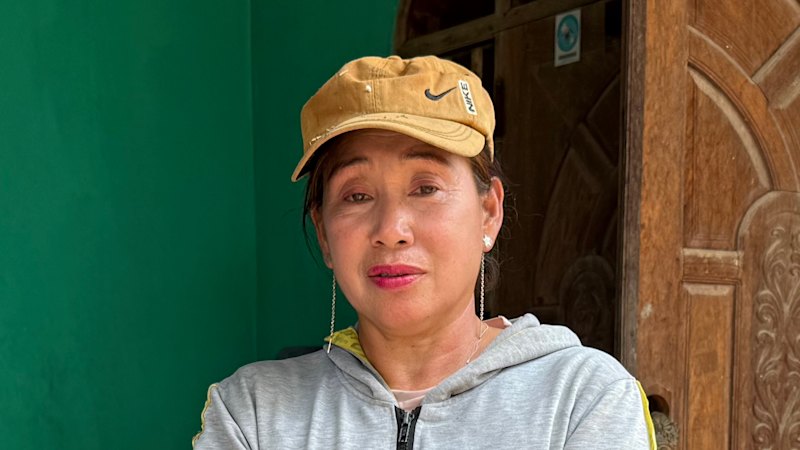

Vientiane: A woman involved with a business implicated in the Laos methanol poisonings that killed two Australian backpackers and four others in 2024 claims the operation is innocent and that it never actually distilled its own spirits.
Keo Sinorlai, a niece of the primary owner, told this masthead the crude method for producing Tiger brand vodka and whisky was to buy hospital-grade alcohol from a pharmacy and then dilute it with water and flavours until it was 40 per cent alcohol volume.
The families of young Australians Holly Morton-Bowles and Bianca Jones have previously been told that people from the business, on the outskirts of the Laotian capital of Vientiane, could still be prosecuted. Sinorlai, however, said tests had already cleared the business and that there was no pending court action.
The Melbourne friends died in November 2024 after unwittingly drinking methanol at the Nana Backpacker Hostel in the party hub of Vang Vieng, about 130 kilometres north of Vientiane, during a shot giveaway. Two Danish women, an English woman and an American man staying at the hostel also died, while many more became seriously ill.
Tiger vodka and whisky, widely distributed in stores for about $2.50 a bottle, were banned by Lao authorities after the methanol poisonings. The Australian government’s Smartraveller website also cautioned Australians not to drink it. The business was the only producer of Tiger spirits. Sinorlai said the backyard enterprise had been closed ever since, but the only reason it had not reopened was that her uncle, the main mixer, had serious health problems.
She said her “drunk” husband would have been the first to get sick if their finished product had ever been tainted with deadly methanol, a by-product from brewing drinkable alcohol (ethanol).
“I know people died in Vang Vieng. But if it was only this that they were drinking, they would not have died,” she said. “This business has been going on for 30 years.”
This masthead visited the Vientiane pharmacy where she said they purchased the alcohol and found one-litre bottles marked 90 per cent ethanol on sale for the equivalent of about $4.
As Tiger was widely distributed, the mixers would have needed to buy vast quantities. Pharmacy staff said the ethanol was sold in bulk to hospitals for use in sterilisation, but they were unsure if there had ever been similar arrangements with private businesses.
Sinorlai did not offer a theory as to what caused the deaths, but moonshine from backyards remained common in Vientiane and Vang Vieng and is sold by shops in plastic water bottles for as little as 60¢.
If her claims about purchasing the alcohol from elsewhere were true, it was possible the hostel served moonshine from a maker who had been too reckless, or did not know, to remove the methanol component.
The Vang Vieng distributor for Tiger said the brand was sold in many places. Only people drinking at the hostel became sick.
There is a question about whether Tiger did actually distil its own product – as the label claimed it did – and methanol made it into only some bottles.
No one has been prosecuted for the deaths of the five women, although a Lao court in January convicted 10 staff members for tampering with evidence in relation to the Americans’ case. They were given suspended sentences and fines equal to $185 – news to the Australian families, who only heard about the case after the fact through connections in Britain.
DFAT apology
The Department of Foreign Affairs and Trade (DFAT) apologised “unreservedly” for failing to keep them informed and appointed Pablo Kang, a former ambassador to Cambodia and the United Arab Emirates, as a “special envoy” on the case, bypassing the current ambassador to Laos, Megan Jones.
DFAT did not answer this masthead’s questions, citing privacy.
“Since their November 2024 deaths, the Australian government has been clear to the Lao authorities of the need for transparency and accountability,” the department said in a statement.
“We have consistently conveyed our expectations that charges should reflect the seriousness of the tragedy that killed Holly, Bianca and four other foreign nationals.
“We will continue to press the Lao authorities on Holly and Bianca’s cases and support their families in the pursuit of justice.”
The hostel remained closed this month, although renovation works were under way. A tourism source in the town, who asked for anonymity to protect their business, said tourist numbers had dived after the incident. An influx of young Israelis had since boosted business, until war broke out in the Middle East several weeks ago, at which time many went home.
“It [the poisonings] is definitely something you think about – we all saw it online,” Lori, a 21-year-old South African Israeli, said in one of the town’s bars. “I think you need to know and trust the places where you are drinking.”
This masthead spoke with one of the Australian family members before publication. Attempts to verify Sinorlai’s claims with Lao authorities were unsuccessful.
Get a note directly from our foreign correspondents on what’s making headlines around the world. Sign up for our weekly What in the World newsletter.

