


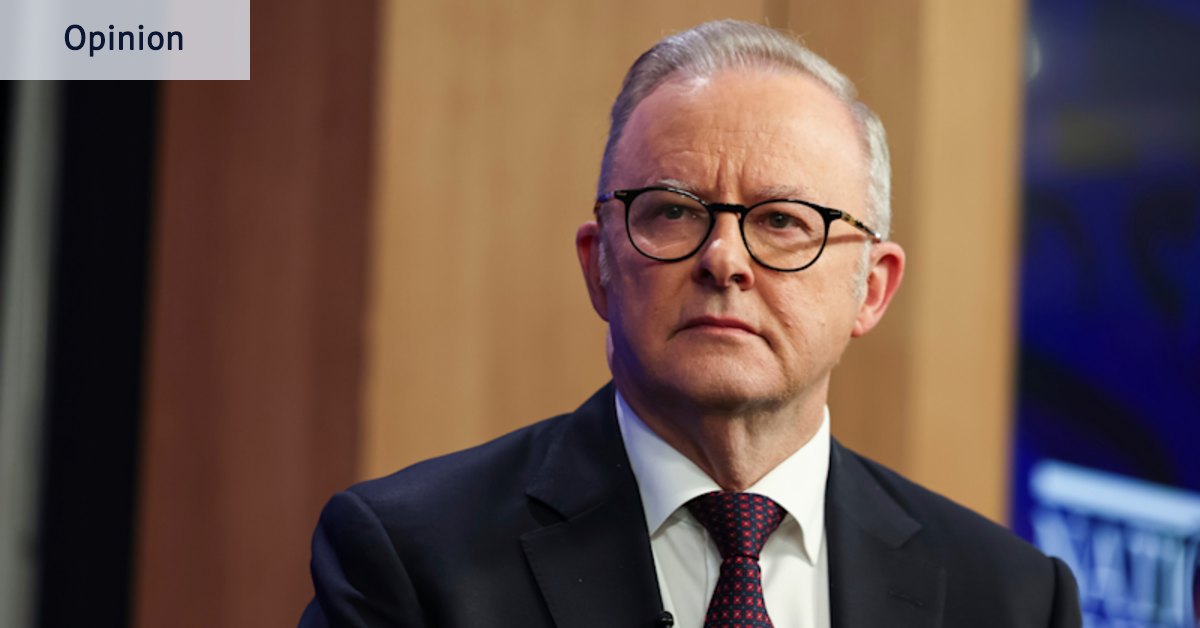
For many months, pollsters, strategists and social researchers have warned the prime minister about the frustration and expectation brewing among Australians and the danger in disappointing them. With three sentences tucked into a half-hour speech on Thursday, Anthony Albanese signalled he’s got the message.
Since last year’s landslide election result, those who take the electorate’s temperature in detailed chats over sandwiches or Zoom have detected an unmistakable sentiment emerging among voters: the system – especially the tax system – doesn’t work for them any more.
This isn’t just among those on lower incomes. The so-called middle-class report feeling besieged. Month by month, that sense only worsens.
Underpinning it is a belief that no matter how hard you work, even if you’ve followed the traditional playbook and studied at university or learnt a trade or gone out and got yourself a stable job to try and save for a home, put a bit extra away and have something to hand on to the kids, you can’t get ahead. The system not only doesn’t help, it works against you. And a government with a whopping majority is doing nothing about it.
In uncertain times, when people conventionally crave stability, advocating change seems risky. Until now, Albanese has seemed disinclined to dramatic reform. But in the background, that’s been changing as more and more evidence suggests this cost-of-living crisis defies those conventions. On Thursday, it changed in public.
“Providing stability and security amidst uncertainty does not mean standing still while the world changes around us,” Albanese declared in an address to the National Press Club scheduled at short notice. “Because if people feel like the country is not working for them, if they’re putting in the effort but not seeing the reward, if planning for the future feels like a luxury, then government cannot provide stability just by keeping things as they are. There is no security in maintaining a status quo that doesn’t work for people.”
Surging support for Pauline Hanson’s One Nation party is the strongest sign these aren’t just passing gripes. Albanese has now jettisoned his much-vaunted political caution, talking openly and directly about the need for system overhaul.
It’s notable that another major-party figure has started saying similar things. Federal Liberal frontbencher and leadership aspirant Andrew Hastie demonstrated he has also heard the complaint, in remarks on the ABC’s Insiders program last weekend.
“A lot of Australians feel like the system is rigged against them,” Hastie said, using words so close to what is coming from a range of different focus groups it suggests he’s got access to specific research. “They don’t feel like aspiration matters any more. They don’t see reward for their effort. A lot of them have lost hope completely of ever owning their own home.”
Hastie described a collapsing world order, the consequences of which “people feel and live every day”.
Freelancing in a way that stunned his own colleagues and certainly some in government, the MP from the resources state of Western Australia said events since February 28, when the United States and Israel attacked Iran, had left him prepared to countenance a windfall profits tax on gas exports.
“I just think we need to overhaul the whole system,” he said. “We either fix the system, or it’s torn down by people like Pauline Hanson.”
For all the valid criticism of Hanson and her party as just amplifying grievances with no solutions, Albanese and Hastie acknowledge by their statements the need to recognise the grievances are legitimate and show they’ve been heard.
Where Albanese broke with Hastie was in addressing another powerful driver of anxiety and pro-Hanson sentiment: the lament that things aren’t how they used to be. Hastie has tried to harness that, calling for a return to subsidised manufacturing and decrying the loss of the car industry in particular.
Albanese asserted that the response to uncertain times must be reform, not retreat, and while Australia couldn’t go back to the old days, it could aim to replicate the sense of prosperity and opportunity of earlier eras. But that was impossible using “an economic model designed in a different time and built for a more predictable world”.
“Any party or leader who promises otherwise, anyone who pretends that the solution to housing or jobs or wages or health is somehow to recreate the 1950s or ’60s, or whatever time they imagine everything was hunky-dory, is simply not being fair dinkum with the Australian people.”
Albanese’s new front-foot politics comes just over a month before his government needs to put words into action in the federal budget.
The Iran war makes that task diabolically more difficult, smashing the already volatile economic forecasts on which the whole thing is built. The sharp rise in fuel prices – eased only temporarily by $2.5 billion in excise relief – will cause a nightmarish spike in inflation. Any flow-on increase in job losses means more spent on unemployment benefits. But the public demand for a shake-up, for things to be different in future, will not adjust for any of that. The need to cut spending and boost productivity to grow the economy also remains.
For a month or so now, there’s been public speculation that the government may curb housing investment concessions available through the capital gains tax discount and negative gearing. It’s notable that despite having nixed this talk in the past, Albanese hasn’t shut it down.
Contrast this with how he handled another issue last week. Special Minister of State Don Farrell had talked up the prospect of increasing the size of parliament to reduce constituent numbers per MP and enable better representation. As soon as the opposition started running a government-out-of-touch narrative, Albanese killed it. That proves he’s no less inclined to assert authority when he judges something politically dangerous. But on rumoured changes to housing concessions, nada.
His Press Club language of “intergenerational equity” only boosted the speculation. Albanese endorsed aspiring to “a home of your own” and “the oldest and greatest Australian aspiration of them all – passing on greater opportunity to your children”.
The prime minister even nodded to the existential political imperative beneath.
“That is how we bring people with us,” he declared, adding: “It is also where we want to go.”
He called this budget a response both to an urgent challenge and great opportunities and the government’s most important and ambitious, saying the Australian character “demands that ambition too”.
It’s not just the Australian character demanding it; it’s Australians themselves. Having now confirmed he’s heard them, he’s just raised the stakes.
Karen Middleton is a political journalist and an author.
