


Industrial regions that have benefited from millions of dollars in bailouts for local industry are bleeding residents to other parts of Australia, complicating Prime Minister Anthony Albanese’s mission to prop up the nation’s ailing critical industries and shore up domestic capability.
Internal migration – residents leaving for other parts of the country – has driven populations down in the past five years in key industrial areas such as Mount Isa in Queensland, according to the latest data from the federal government’s Centre for Population.
The home to Glencore’s copper smelter and refinery, which the federal government helped bail out last year, has experienced a more than 10 per cent decline in population since 2001, according to the Australian Bureau of Statistics (ABS).
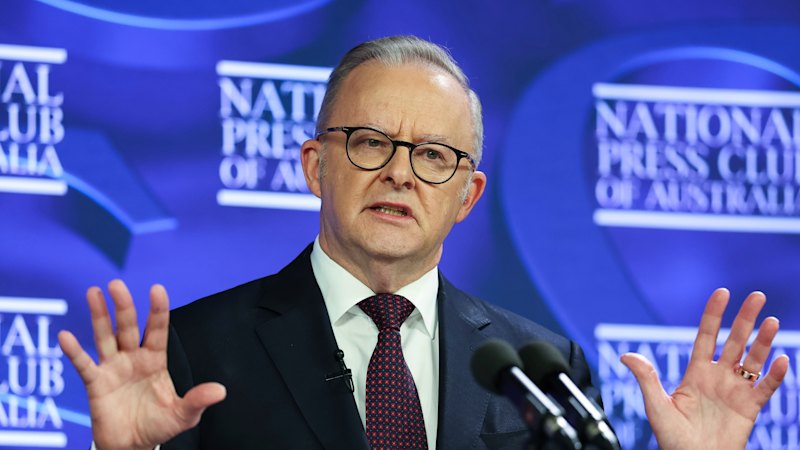
As Australia grapples with its vulnerability to global shocks after the war in Iran disrupted the world’s oil supply, and the Coalition renews a push for the nation to boost its sovereign capability, Albanese doubled down on his Future Made in Australia vision at his National Press Club speech this week.
He also signalled potential investment in revitalising oil refineries as the government seeks to boost Australia’s resilience. A surge in fuel demand after Iran effectively closed the Strait of Hormuz last month has caused shortages at hundreds of petrol stations around the country. The strangling of the strait, through which about 20 per cent of the world’s oil supply transits, also pushed domestic prices to record highs last month.
“We can’t assume that we’ll get it from somewhere else,” Albanese said at the National Press Club.
“We must act now to keep jobs here and create new ones to strengthen our economic sovereignty … so that Australia is not always the last link in the global supply chain.”
Albanese pointed to the government’s bailouts of struggling industries, including the Mount Isa smelter and the Whyalla Steelworks in South Australia, as evidence “we’ve been prepared to intervene to make sure that we are more resilient and self-reliant”. The interventions also saved thousands of jobs.
But the latest data from the Centre for Population shows those regions’ populations have stagnated or declined because residents are leaving without being replaced by enough newcomers from overseas.
Of the nation’s significant urban areas tracked by the ABS, six have failed to grow since 2001. Five of those are dominated by heavy industries. The sixth is Lismore, where two devastating floods since 2017 were followed by Tropical Cyclone Alfred last year, leaving many residents reconsidering their futures in the region.
Ageing populations have compounded the population losses from internal migration in NSW’s Broken Hill, a mining hub for more than 130 years (down 16.3 per cent); South Australia’s Port Pirie, where the government helped bail out Nyrstar’s smelter last year (down 0.9 per cent); and the coal mining town of Lithgow in NSW (down 5.5 per cent).
In Whyalla, where Albanese pledged $2.4 billion to save its failed steelworks last year, the population has fallen 1.6 per cent since 2001, according to the ABS.
Peter McDonald, the emeritus professor of demography at Australian National University, said geographically isolated regions that had experienced a decline in local industry would struggle to revitalise themselves because of their location.
“I don’t think there’s any obvious solution for those places,” he said, adding that population decline built on itself by shrinking the local economy.
McDonald said it was often young people who chose to leave for other parts of the country, and it was difficult to get them to return.
“They won’t come back unless there’s some kind of revitalisation, which is less likely for places that are remote,” he said.
A spokesman for Industry Minister Tim Ayres said the government was reckoning with the adverse effects that more than two decades of deindustrialisation was having on regional communities and national supply chains.
The spokesman said the Future Made in Australia policy was intended to strengthen economic resilience, and create “good jobs that young people growing up in Whyalla or Mount Isa, for instance, can aspire to in the future”.
The $23 billion Future Made in Australia fund was established in the 2024-25 budget to support industries needed for clean energy and low-carbon production, such as critical minerals, green steel and aluminium over the next decade.
Cut through the noise of federal politics with news, views and expert analysis. Subscribers can sign up to our weekly Inside Politics newsletter.
 Brittany Busch is a federal politics reporter for The Age and Sydney Morning Herald.Connect via email.
 Shane Wright is a senior economics correspondent for The Age and The Sydney Morning Herald.Connect via X or email.