


Whenever I’ve travelled to Japan, I’ve made sure to carry cash. Why? Because, unlike Australia, Japan is still a country where cash is king: a fact that always seems to rear its head when my pockets are empty, and my stomach is grumbling for a mouth-watering snack from a tiny stall that only takes cash.
Since the early 2000s, Japan has also relied on IC cards – contactless smart cards such as the Suica, PASMO and ICOCA – which you’ll see millions of Japanese people using to tap onto the public transport system and to pay for things from select stores.
Equipped with my credit card, Suica and a bit of cash, I arrived in Japan last month feeling smugly satisfied at my rare display of foresight (long-time readers will remember my misadventures from a trip to the US when I relied solely on card).
But my satisfaction was short-lived. Right across the country, I noticed a new red and white logo, and often a QR code, posted at almost every shopfront in sight. The infiltrator? PayPay.
The name left little mystery as to what this new business did.
But it took a bit of time to figure out exactly how it worked (largely because I ignored it until being forced to scan one at a store which didn’t accept card payments and discovering PayPay could only be used by those with a Japanese phone number).
When I quizzed people in Japan about why these QR code payments had become so popular, they said it was because it was cheaper for businesses.
That’s probably true. PayPay began in 2018 as a payment service provider, charging no fees in order to attract business. A few years ago, it introduced fees of between 1.6 per cent and 1.98 per cent (still lower than the fees Japanese businesses usually face to accept card payments).
But PayPay also arrived at a time when the Japanese government was trying to make the country less cash dependent. While cash usage in Australia hit just 13 per cent of transactions in 2022, notes and coins are still being used for about 40 per cent of transactions in Japan – and that’s after the Japanese government’s efforts to push people towards digital payments through rebates.
In Australia, meanwhile, it took little prodding to switch us towards using credit or debit cards and, more recently, tap-and-go payments through our smartphones. Aussies, it turns out, love contactless payments.
It also helped that Australians were very quick to buy into technologies such as smartphones and that major retailers such as Coles and Woolworths bought and rolled out contactless payment technology relatively early, prompting other businesses to follow.
Having just two or three major players in sectors such as supermarkets in Australia comes with plenty of downsides (including less competition and often higher prices) but it can also mean that when decisions are made, changes can spread very quickly. We may not all be fans of self-checkout machines, for example, but we’ve become used to them (just as we became used to contactless payments) rapidly.
The Reserve Bank and many of Australia’s financial institutions also committed relatively early to creating the “New Payments Platform”: a technology that allows nearly instant bank transfers through methods such as PayID.
We also have a weaker attachment to cash compared with countries such as Japan where extended periods of very low-interest rates, cultural traditions such as “otoshidama” (giving cash in envelopes to children for the new year), an older population with less ability (or interest) in learning new ways to pay, and recent memory of financial crisis mean physical cash still holds an important place for many.
For many countries in Asia that never took up card payments as widely as Australia, it has made more sense to move from cash to QR payments. It’s an easier transition to make than trying to push millions of tiny shop owners to invest in a terminal to process card payments. Some continue to take cash only, but many in Japan now accept PayPay, too.
By the time QR code payments became a thing, Australia already had card-processing technology in place across most businesses. And many Australian customers now have the muscle memory and expectation of tapping to pay instantly.
Australians may be disgruntled by that little surcharge that takes our morning coffee from $6 to $6.10, but we still seem to prefer that over fumbling around for cash.
This week, the Reserve Bank announced it would be changing the rules. By October, surcharging on debit and credit card transactions should end, it said.
While surcharging was meant as a way to encourage consumers to use cheaper payment methods, they’ve become harder to avoid, the rules are complex and confusing and surcharges are often not being properly disclosed, the bank found.
Some business groups argue that banning surcharges will mean the cost paid by businesses to process card payments will shrink their profits … or be passed on to customer through higher prices.
But the Reserve Bank reckons it will save customers about $1.6 billion in surcharge fees every year. The truth probably lies somewhere in between. Some businesses will pass on the costs, and others will grit their teeth and cop the cost themselves.
The bank has also pushed to cut a better deal for businesses. It will lower the maximum interchange fees (the cost paid by a seller’s payment service provider to the customer’s bank whenever a card is used) for debit and credit transactions.
Of course, that means the banks – which will lose money – may lift prices on some of their other products to make up for the loss, cancelling out some of the benefits for customers.
But there will also be more transparency when it comes to the fees that companies such as Mastercard and Visa charge businesses to process payments, making it easier – especially for small businesses that tend to have less negotiating power – to choose the best-value deal.
There are actually cheaper ways to pay, such as PayID or through QR codes. And if these options had appeared 20 years ago, there’s a good chance Australia would have adopted them. The problem? We’re now too used to the convenience of tap-and-go, businesses have already invested in technology, and there’s not enough incentive for widespread uptake of QR code-based payments.
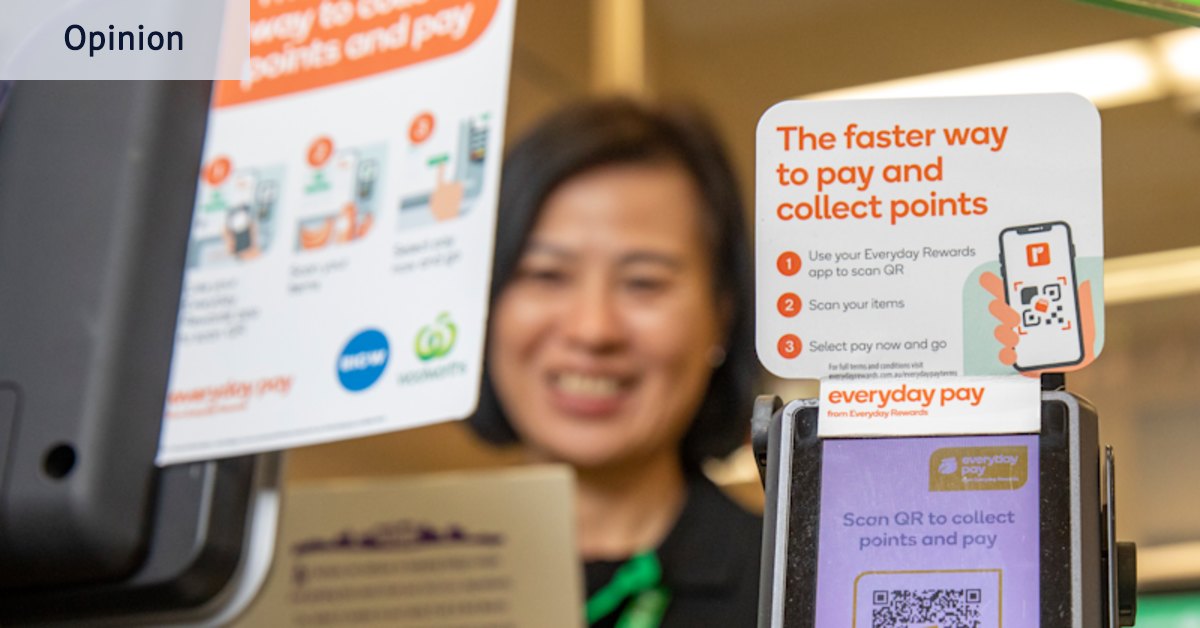
Woolworths, for example, in 2022, introduced a way to pay and collect reward points through scanning a QR code. But how many Australians regularly use that as their default method of payment? Even for a giant like Woolworths, getting customers to change their habits – when a more convenient option exists – is hard.
It probably also didn’t help that major supermarkets tend to absorb the cost of card payments themselves (which is why you never cop a surcharge when checking out with your groceries). There was no real financial gain for customers in switching to Woolworths’ QR code system.
QR code-based payments might have taken off in countries like Japan, but there’s little chance we’ll ever adopt it ourselves. While the ban on surcharges by the Reserve Bank might help reduce the cost of card payments in Australia, we’ll probably face higher prices in other ways.
It’s also possible that we, as customers, will think less about how much we’re paying to, well … pay. That rage we feel when we see a surcharge on our morning coffee will be gone, but we need to remember convenience comes at a cost. We’ll now be relying more heavily on businesses or the government to grow their appetite – and push – to develop and take up cheaper ways to pay.
While the QR code system offers a cheap and easy alternative for Japanese businesses reluctant to accept cards, it’s a clunkier way to pay – and one that tourists are largely locked out of.
Luckily for me (and my outsized appetite), the giant rice cracker store I came across in Osaka (which only accepted cash or PayPay) was happy to watch me fumble around for cash. The other customers? Less so.
The Business Briefing newsletter delivers major stories, exclusive coverage and expert opinion. Sign up to get it every weekday morning.
 Millie Muroi is the economics writer at The Sydney Morning Herald and The Age. She was formerly an economics correspondent based in Canberra’s Press Gallery and the banking writer based in Sydney.Connect via X or email.