


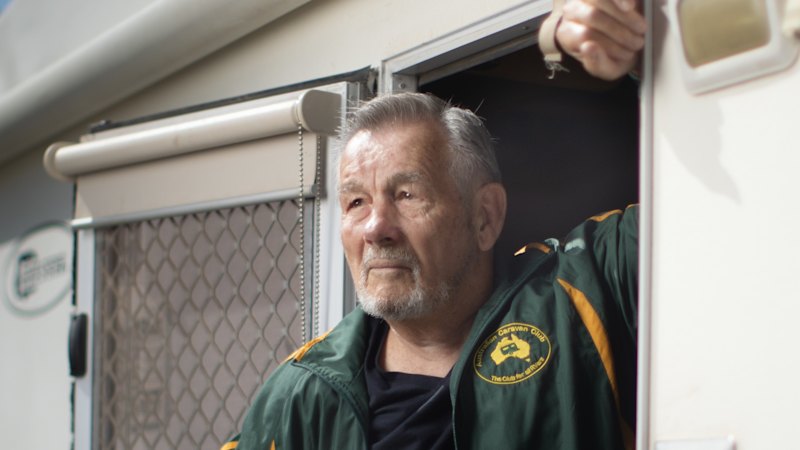
Easter was meant to be tranquil for David Williams.
He was planning to take his Ford Everest east to Wellington River, which is thick with perch and trout, find a quiet spot and pitch a swag.
That was the plan until the price of fuel went “through the roof”, says Williams. The Everest burns through 12 litres of fuel per 100 kilometres on bitumen, and closer to 20 litres on dirt tracks pulling a camper. “I’m going through nearly $400 of fuel. I just can’t,” he says. “And not knowing, if I do run short, how readily it’s going to be available up there.”
This Easter, he’ll be staying home. “The next two days, it’s just finding stuff to do,” he says. “Whatever loose ends need doing around the house, I suppose.
“I won’t be going anywhere other than driving to and from work until things improve – or I will just sell my four-wheel-drive.”
He’s far from alone. According to new data from Westpac, up to half of Australians are considering rethinking Easter holiday travel plans or making other changes to cut back on their fuel use amid worries about high prices and regional petrol station outages.
Up to 93 per cent of consumers were concerned about the impact of the war in Iran on their everyday expenses, the bank said, while 49 per cent were driving less often.
“When fuel prices and global events feel out of people’s control, discretionary spending is often the first thing to be reconsidered,” Westpac head of consumer Carolyn McCann said. “Easter is a clear example of that pressure coming through in real‑world decisions.”
On Thursday afternoon, Unleaded 91 was averaging $2.30 a litre and diesel $2.99 a litre in Melbourne, according to PetrolSpy and Motormouth data, as service stations started to pass on the federal government’s 26¢-a-litre fuel excise cut.
The pain is likely to continue. US President Donald Trump said on Thursday he would continue America’s bombing campaign in Iran for at least two to three more weeks, and said the reopening of the Strait of Hormuz was a matter for other nations.
Australia relies on imports for about 90 per cent of its liquid fuels – our largest import by volume – and we have far smaller fuel reserves than Britain, France, South Korea or New Zealand. We are one of the largest consumers of diesel globally on a per person basis.
Growing apprehension about fuel supplies prompted Victorian Premier Jacinta Allan to give a guarantee that no one would be stranded with an empty tank over the Easter weekend
When asked in parliament on Thursday whether there would be enough fuel for all Victorians to get home from their holidays, Allan was emphatic that motorists had nothing to fear.
“Let me be absolutely clear,” she said. “The prime minister and every state and territory leader around the nation is giving the same message to the Australian community. There is enough fuel. There is enough supply for normal demand over this period of time.”
The state government this week introduced into parliament changes to the 40-year-old Fuel Emergency Act to give it powers to compel fuel companies to provide information about the amount and location of supplies.
The powers are similar to those exercised this week in Western Australia by Premier Roger Cook under his state’s emergency fuel provisions.
The Fuel Emergency Act dates back to the 1970s fuel shocks, which flowed from the OPEC oil crisis, and gives the minister for energy and resources coercive powers to restrict fuel use and prioritise supply for essential services. These powers come into force only once a state of emergency is declared.
Four-wheel-drives are heavy consumers of fuel at the best of times. Add a boat or a caravan on the back and the fuel costs start to become prohibitive for the entire hobby.
The Australian Caravan Club has already had to cancel several musters and is expecting more to go if the fuel price remains high. “It’s the uncertainty – more the uncertainty than the price. It sucks,” says its treasurer, Rob Tudor.
“I’ve got a Land Cruiser. It takes 138 litres. A full tank would be worth nearly $500. I can’t afford it. As this drags on – and I think it’s going to get worse – it’s going to impact not just us going away, but the caravan parks are going to be clobbered.”
The Bellarine 4×4 Club was planning to head up to Ararat, “but we’ve cancelled that”, says president Nick Albers. And he had even bigger plans: a trip to Cape York in July. “The fuel cost for me was going to be, prior to this price rise, $4500. Now it’s around $11,000.
“It’s all right, it’s life. I’m just a bit worried about the whole thing – there was talk they were going to take recreational fuel off us as well. I might not even be able to go boating.”
Many of his club members also volunteer with Parks Victoria, doing maintenance to keep four-wheel-drive tracks and campsites open. “We won’t have a lot of people who can afford to even go to get the tracks open, if fuel prices keep going like they are,” says Albers.
Start the day with a summary of the day’s most important and interesting stories, analysis and insights. Sign up for our Morning Edition newsletter.
 Liam Mannix is The Age and The Sydney Morning Herald’s national science reporter.Connect via X or email.
 Chip Le Grand leads our state politics reporting team. He previously served as the paper’s chief reporter and is a journalist of 30 years’ experience.Connect via email.
 Nick Toscano is a business reporter for The Age and Sydney Morning Herald.Connect via X or email.